Informasi Seputar Kegiatan di DPD RI
AGENDA KEGIATAN
DEWAN PERWAKILAN DAERAH REPUBLIK INDONESIA
09 September 2026 oleh admin
Yogyakarta, dpd.go.id - Chairperson of Committee III of the DPD RI, Dr. Filep Wamafma emphasized that the People's School Program (Sekolah Rakyat) iis a form of affirmation and government presence in expanding access to education for children from poor and extremely poor families.
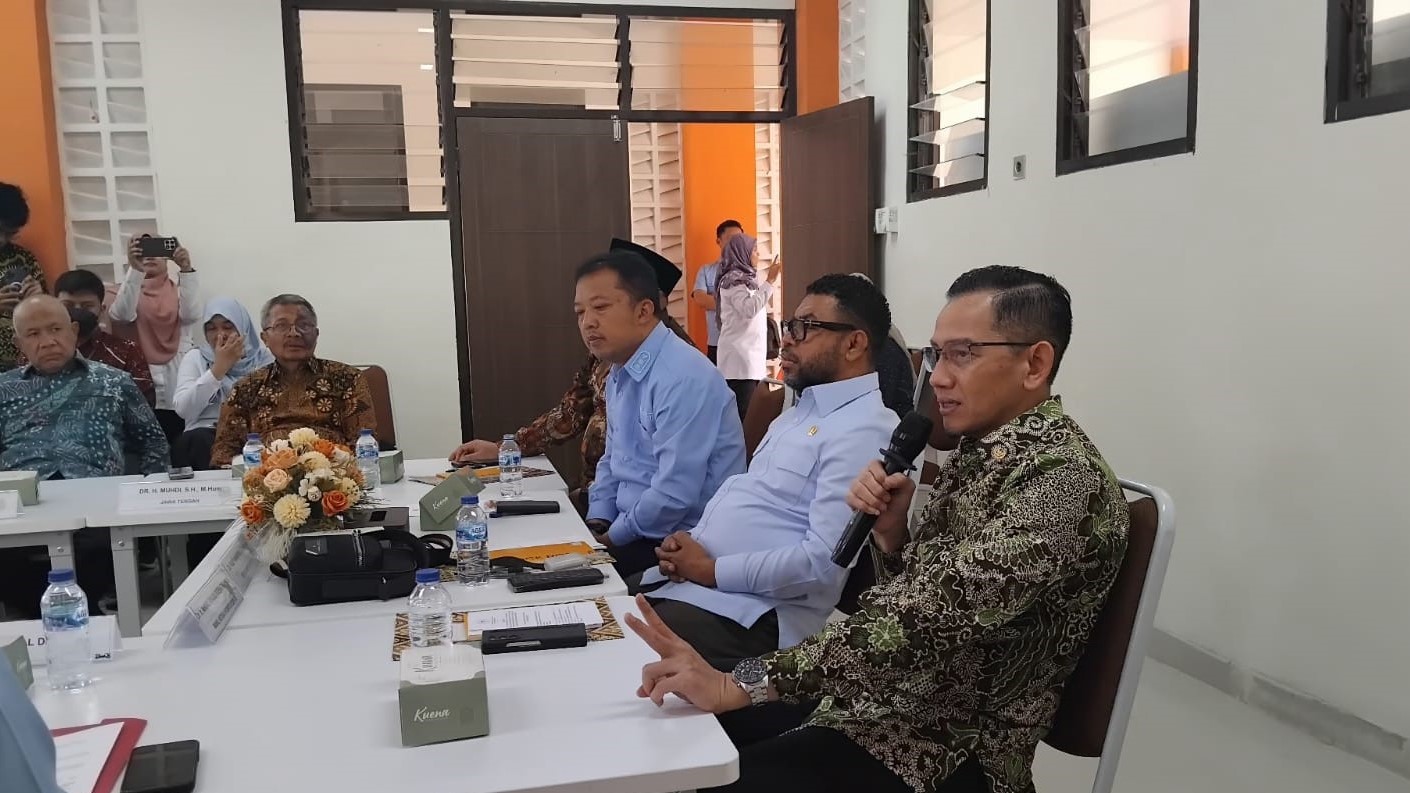
According to him, the program's success can be measured by the level of recipient participation, the quality of education, childcare, and child protection, as well as the program's ability to produce reliable human resources for its graduates. This was one of the key points noted by Committee III of the House of Regional Representative of the Republic of Indonesia (DPD RI) during its oversight of the People's School Program in Kulon Progo, Yogyakarta Special Region, on Tuesday (8/9/2026).
The Kulon Progo People's School has been operating for over a month and is still in the early stages of implementation. Several operational aspects still require adjustments, particularly regarding facility readiness, parenting patterns, inter-agency coordination, and the implementation of education and dormitory life.
"Committee III of DPD RI visited and appreciated the collaboration between the central and regional governments, including the involvement of educators, religious teachers, guest teachers, and provincial and district government officials in supporting the program. However, several aspects still need to be strengthened to ensure optimal and sustainable implementation of the People's School," Filep said in a statement received Tuesday (8/9/2026).
Targeting Accuracy Must Be a Priority
Filep further emphasized that the People's School was designed as an affirmative program for children from underprivileged families, especially those in deciles 1 and 2. With a student population of around 158 to 159 children at the reviewed location, Committee III of the DPD RI assessed that the accuracy of beneficiary data is an important foundation in ensuring the program's effectiveness.
"In this program, effectiveness is measured by targeting accuracy, a key principle in the implementation of the People's School. Every child who receives benefits must truly meet the criteria and come from a family within the program's target group. Therefore, the government needs to ensure regular verification, validation, and data updating, including through field checks on families' socioeconomic conditions," he said.
Furthermore, Committee III of the DPD RI emphasized that People's Schools have distinct characteristics from regular schools because students not only participate in the learning process but also experience life in a boarding environment. Providing boarding school education requires greater responsibility in ensuring the fulfillment of children's rights to education, health, care, safety, and protection.
"We believe that student development needs to be comprehensive, not just focused on academic achievement, but also encompassing character building, discipline, health, potential development, and strengthening self-confidence and motivation to achieve a better future," he said.
Monev is Important for Program Optimization
Furthermore, Filep urged the government to ensure the program's optimal implementation through regular monitoring and evaluation mechanisms. Among other things, all Public School facilities are expected to meet boarding school standards and be able to support students' needs in a safe, appropriate, healthy, and sustainable manner.
"Committee III of DPD RI is urging the government to strengthen standards for managing People's Schools, including the division of authority between the central and regional governments, standards for teaching staff and caregivers, dormitory standards, child protection, health, security, financing, and monitoring and evaluation mechanisms. Standards are needed to ensure that the quality of People's Schools does not vary significantly across regions," he said.
This series of monitoring and evaluation, Pace Jas Merah added, aims to ensure that program outputs and graduates meet expectations. According to him, the ultimate goal of the People's School is not only to ensure children from poor families receive an education, but also to provide them with a real opportunity to improve their quality of life and break out of the intergenerational cycle of poverty.
"Therefore, the government needs to prepare a sustainability scheme for graduates, including access to higher education, vocational training, the world of work, entrepreneurship, and other capacity-building programs," he explained.
Based on the results of the supervision, Filep stated that Committee III of the DPD RI encouraged that the evaluation of People's Schools should be based on at least four main indicators, namely:
"Committee III of the DPD RI will continue to carry out its oversight function and encourage the government to ensure that the People's School Program is implemented in a targeted, high-quality, accountable, and sustainable manner as part of the country's efforts to break the chain of poverty and improve the quality of our human resources," he concluded.
AGENDA KEGIATAN
DEWAN PERWAKILAN DAERAH REPUBLIK INDONESIA