Informasi Seputar Kegiatan di DPD RI
AGENDA KEGIATAN
DEWAN PERWAKILAN DAERAH REPUBLIK INDONESIA
01 September 2026 oleh admin
Denpasar, dpd.go.id - Tamsil Linrung, Vice Speaker of the House of Regional Representatives of the Republic of Indonesia (DPD RI), praised the regional government's steps to strengthen fiscal capacity by increasing Regional Original Revenue (PAD). He said strengthening regional fiscal capacity is crucial to maintaining state financial health and accelerating equitable development.
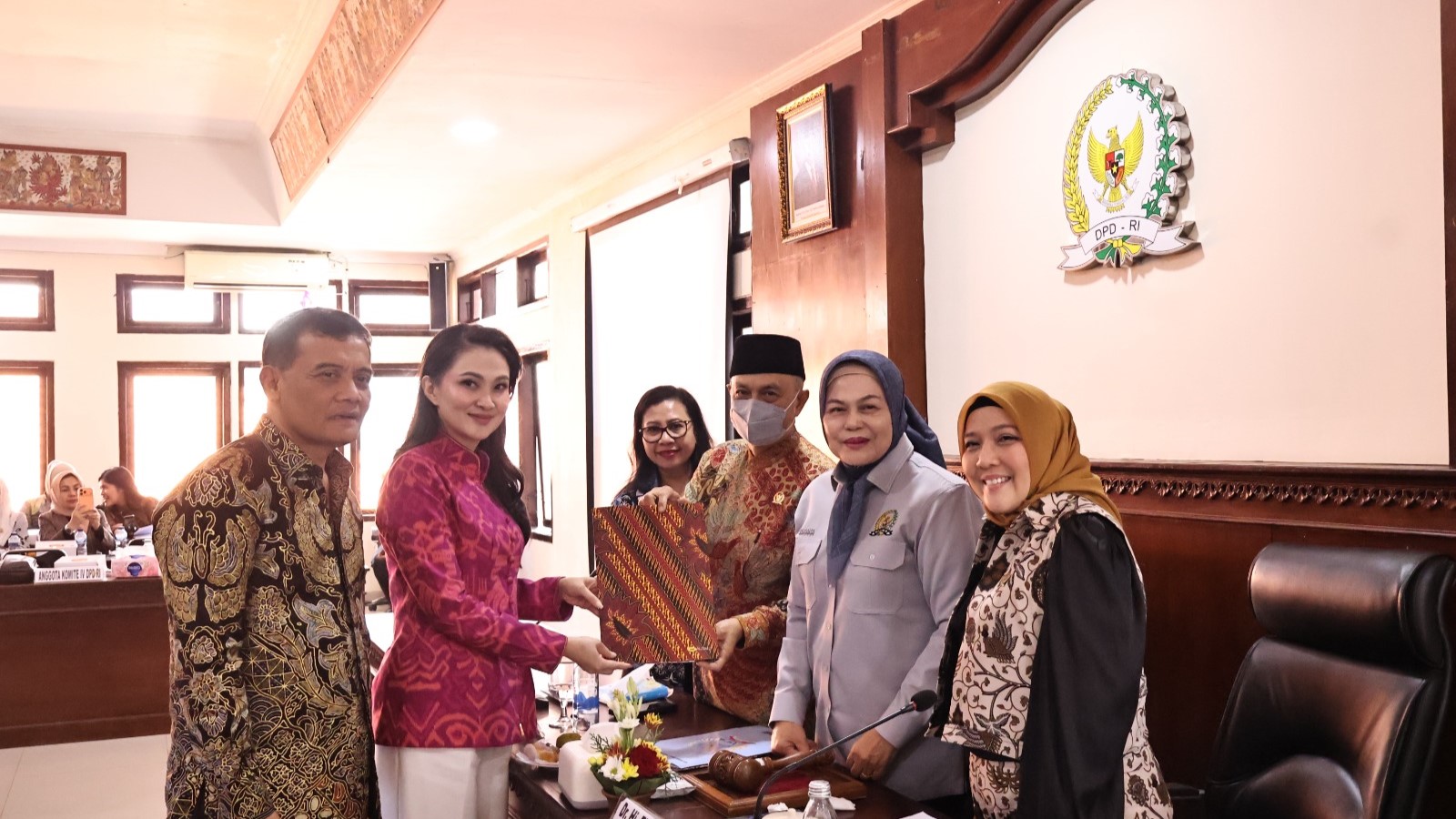
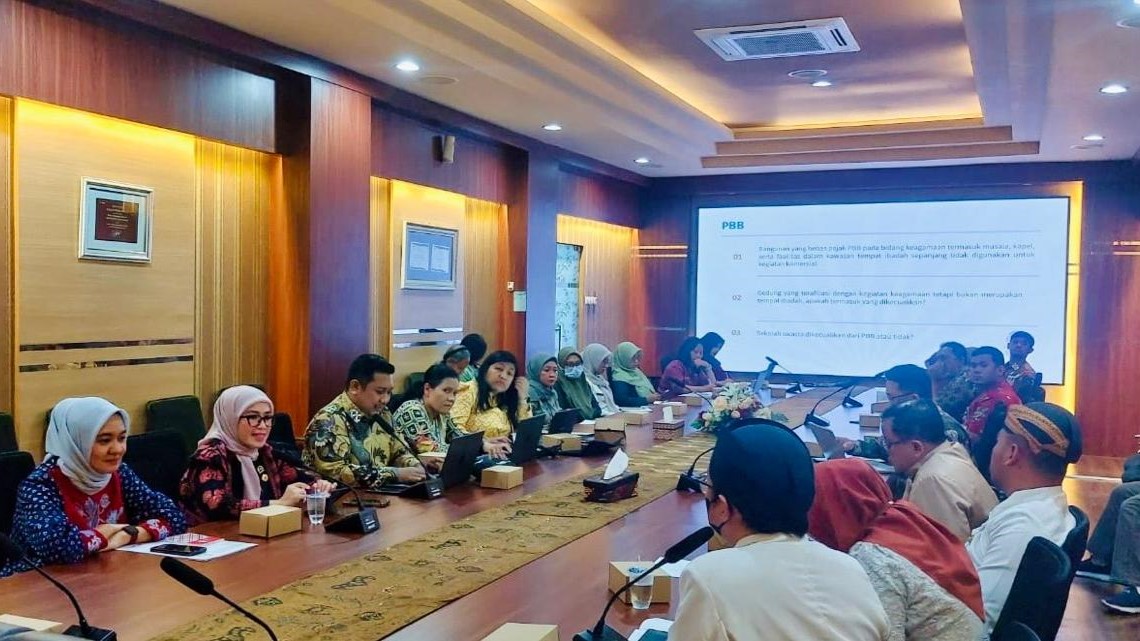
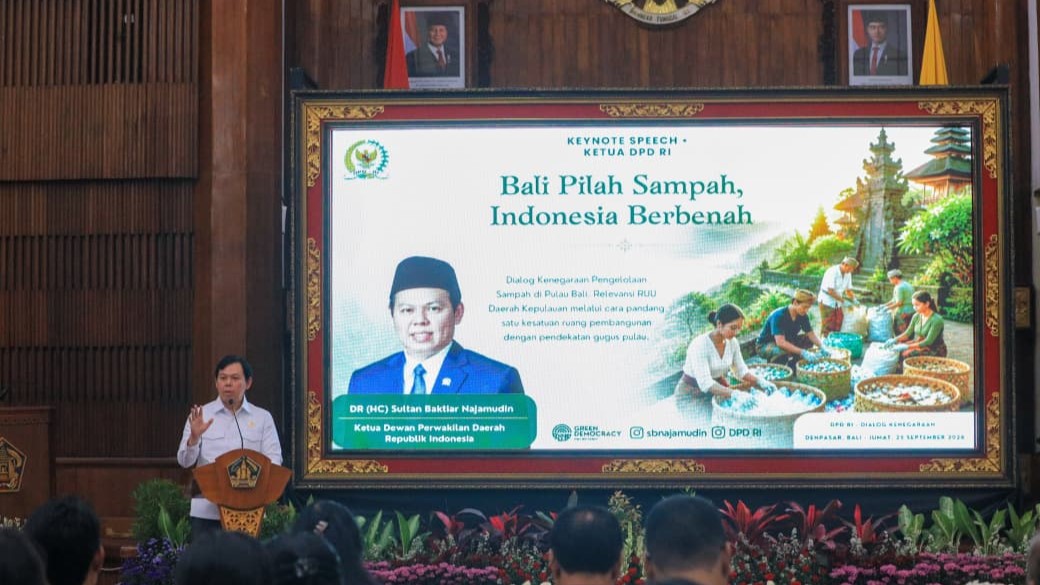
This was conveyed by Tamsil in the Hearing Meeting (RDP) of Committee IV of the DPD RI with the Association of Provincial Governments of All Indonesia (APPSI), the Association of City Governments of All Indonesia (APEKSI), the Association of Regency Governments of All Indonesia (APKASI), and the Association of Provincial DPRDs of All Indonesia (ADPSI), at the DPD RI Office of Bali Province, Denpasar, Monday (31/8/2026).
The RDP was part of a series of considerations by the DPD RI regarding the 2027 State Budget Bill. North Maluku Governor Sherly Tjoanda and Central Java Governor Ahmad Luthfi were present representing APPSI.
According to Tamsil, the national fiscal situation does require the government to implement efficiency measures and make choices that aren't always easy. However, efficiency remains a key focus. The central government ensures that the public continues to receive basic services and that regions continue to have room for action.
"We understand that the central government is maintaining fiscal health. But at the same time, we must ensure that efficiency does not compromise basic services and the pulse of development in the regions," said Tamsil.
He believes the state budget should not be viewed solely as an instrument to maintain the central government's fiscal balance. It must be present in the lives of the people, particularly through the development of basic infrastructure and public services in the regions.
Tamsil appreciated the President's swift steps to improve basic services, including repairing schools, bridges and health facilities.
"We don't want to hear any more stories of schools looking like chicken coops. We also don't want stories of students going to school wet, arriving at class still wet, and then returning home wet because they have to cross the river," he said.
Tamsil said North Maluku's experience shows that high economic growth doesn't automatically translate into equitable distribution of prosperity. Economic growth figures must be translated into something more concrete.
At the forum, North Maluku Governor Sherly Tjoanda outlined the development situation in her province. North Maluku has recorded very high economic growth, but still faces significant needs for basic infrastructure development and inter-regional connectivity.
According to Statistics Indonesia (BPS) data, North Maluku's economy is projected to grow by 34.17 percent by 2025, primarily supported by the processing industry and exports. However, this growth still faces challenges in equitable distribution. As an archipelagic region, limited connectivity makes it difficult for some farmers and fishermen to transport their produce to market.
"Infrastructure access and connectivity are crucial. They allow women to sell their goods. Farmers can transport their crops.
Connecting islands makes it easier for children to attend school and easier for communities to access healthcare," Sherly explained.
Tamsil, meanwhile, commended Sherly for beginning to strengthen her fiscal capacity. As the Governor of North Maluku stated at the forum, the provincial government continues to strive to increase regional revenue (PAD). Tamsil believes this initiative demonstrates that the relationship between the central and regional governments should be built on a spirit of partnership, not mutual dependence.
"This shows that regions aren't just asking for funds. They're also trying to strengthen their own fiscal capacity," Tamsil said. According to him, strengthening local revenue (PAD) is important because fiscal independence is one of the foundations for sustainable regional development. However, this independence does not mean that regions must operate alone.
Fiscal decentralization, Tamsil said, still requires a healthy, fair, and certain financial relationship between the central and regional governments.
Tamsil emphasized that the fiscal relationship between the central and regional governments should not be framed as a matter of competing interests. The central government has an interest in maintaining national fiscal health. Regional governments have an interest in ensuring the continuity of public services and development.
Both, he said, must be brought together in a single fiscal policy design that is both healthy and equitable.
"Both must be integrated into a single fiscal policy design that is both sound and equitable. That is the spirit of the Asta Cita development architecture," he said.
In this context, Tamsil reminded that TKD should not be understood solely as a central government spending item for the regions. One of the important aspirations conveyed by the Governor of North Maluku was certainty regarding the amount of Transfers to Regions (TKD) and the timing of their distribution.
"Regional governments need certainty regarding the amount of TKD they will receive and when it will be disbursed. Without fiscal certainty, it's difficult for them to develop consistent development plans," Sherly explained.
The DPD RI, Tamsil continued, will bring these aspirations to the discussion of the 2027 Draft State Budget. Because, according to him, national development cannot proceed at two speeds: the center moving quickly, while the regions are held back due to fiscal and connectivity limitations.
"A healthy state budget is not one that merely maintains fiscal discipline. A healthy state budget is one that maintains discipline while simultaneously delivering equitable development. Fiscal performance must be sound, but development must also be sustainable," he concluded.
AGENDA KEGIATAN
DEWAN PERWAKILAN DAERAH REPUBLIK INDONESIA