Informasi Seputar Kegiatan di DPD RI
AGENDA KEGIATAN
DEWAN PERWAKILAN DAERAH REPUBLIK INDONESIA
18 September 2026 oleh admin
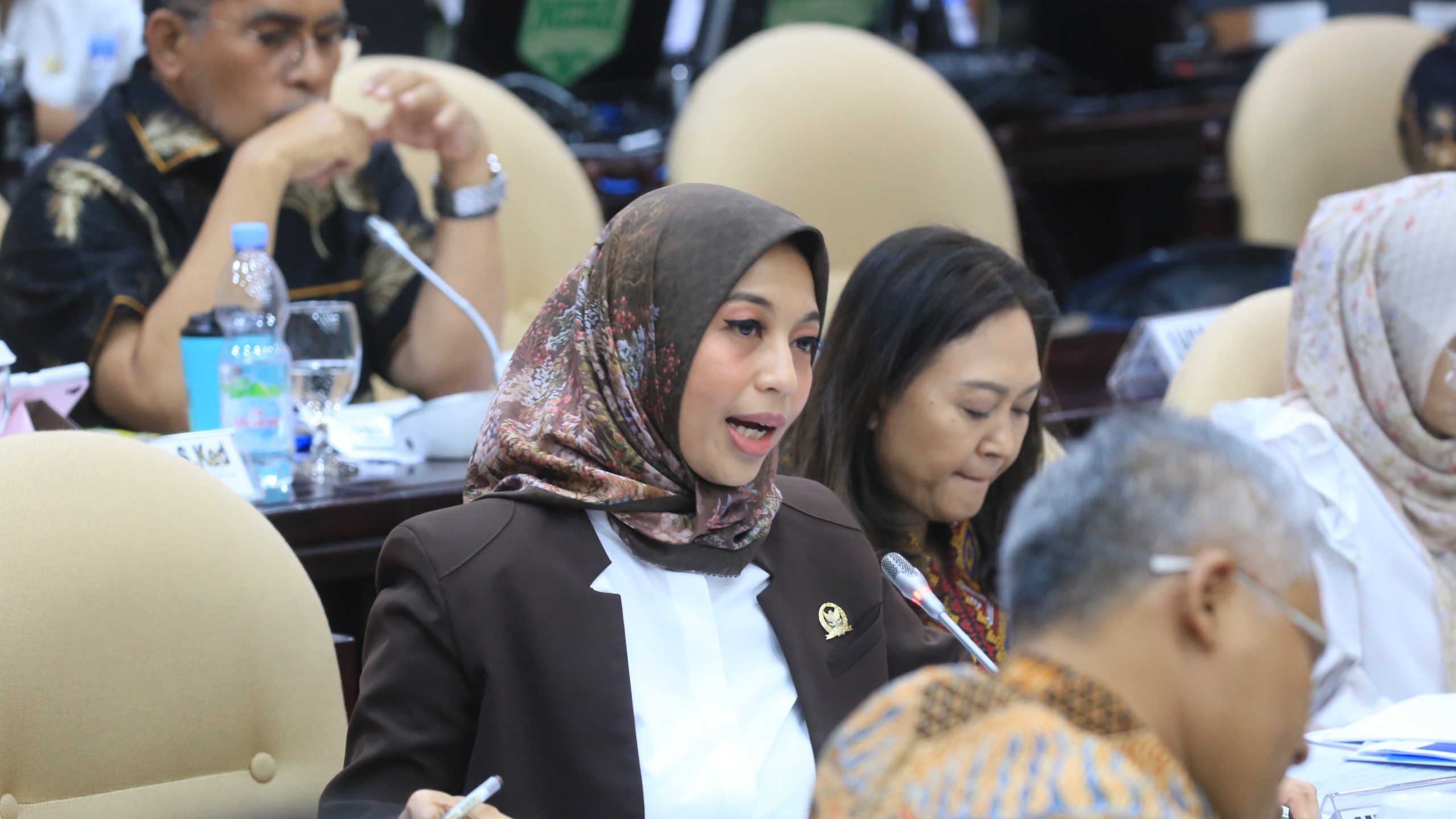
Jakarta, dpd.go.id – The House of Regional Representatives of the Republic of Indonesia (DPD RI) member representing West Nusa Tenggara (NTB), Mirah Midadan Fahmid, stated that the implementation of the National Integrated Socio-Economic Data System (Data Tunggal Sosial dan Ekonomi Nasional / DTSEN) as a single reference across government institutions is a crucial step toward improving the targeting precision of social protection and community empowerment programs. However, she emphasized that the quality and accuracy of DTSEN must be continuously maintained so it can keep pace with dynamic changes in citizens' socio-economic conditions.
"DTSEN must serve as an instrument that genuinely reflects the lived conditions of our citizens. We cannot allow data updates to lag behind changes on the ground. When a single data system becomes the baseline reference for multiple government programs, its accuracy determines whether families in need actually receive government intervention," Mirah stated.
Statistics Indonesia (BPS) explained that DTSEN has become the shared reference point for planning, targeting, and evaluating various government programs. DTSEN was established by integrating several existing databases: the Integrated Social Welfare Data (DTKS), the Targeting for the Acceleration of Extreme Poverty Elimination (P3KE), the Socio-Economic Registration (Regsosek), as well as various civil administration and population registries. As of July 10, 2026, Version 3 of DTSEN covers 290.13 million individuals and 95.98 million households nationwide.
Mirah stressed that special attention must be given to West Nusa Tenggara. BPS data shows that the number of impoverished residents in NTB reached 628,500 individuals, or 11.17 percent of the provincial population, as of March 2026.
"Those figures demonstrate that data quality is far more than an administrative matter. For vulnerable families, shifts in employment, income, housing, or household composition directly impact their ability to afford basic needs. Therefore, data update mechanisms must be agile enough to capture these realities swiftly and accurately," she said.
According to Mirah, data update channels involving central and regional governments, village administrations, social workers, and local communities need to be strengthened.
BPS noted that data maintenance relies on civil administrative records, censuses, agency surveys, regional government updates, ground verification, and direct public participation.
"We shouldn't simply wait for administrative records to change passively. Regional and village governments possess the closest, most real-time understanding of community dynamics. Neighborhood heads (RT/RW), community cadres, social assistance officers, and citizens themselves must be given accessible, structured mechanisms to report changing conditions," Mirah urged.
She also cautioned that the public needs to understand that decile placement represents relative socio-economic ranking rather than a standalone measure of poverty or an automatic guarantee of aid eligibility. BPS clarified that decile calculations evaluate multiple socio-economic indicators holistically, and each government program maintains its own specific criteria for beneficiary selection.
Consequently, Mirah urged the government to ensure that proposal and dispute mechanisms (mekanisme usul dan sanggah) operate effectively, remain easily accessible, and provide clear processing timelines for the public.
"When citizens notice that their family's recorded data is inaccurate, there must be a clear, transparent avenue for correction. People need to know where to lodge an appeal, what documentation is required, and how the verification process unfolds. Community participation must be built into the system as a core component, not just an afterthought," she stressed.
Mirah added that strengthening DTSEN must prioritize precision, timeliness, transparency, and accountability. This will ensure that data serves as an active instrument to align government policies with real conditions on the ground, rather than a static administrative list.
"For NTB, DTSEN must guarantee that no vulnerable family is overlooked and no intervention is distributed without solid data grounding. Ultimately, accurate data must lead to effective policies and real protection for our people," Mirah concluded.
AGENDA KEGIATAN
DEWAN PERWAKILAN DAERAH REPUBLIK INDONESIA