Informasi Seputar Kegiatan di DPD RI
AGENDA KEGIATAN
DEWAN PERWAKILAN DAERAH REPUBLIK INDONESIA
13 April 2026 oleh admin
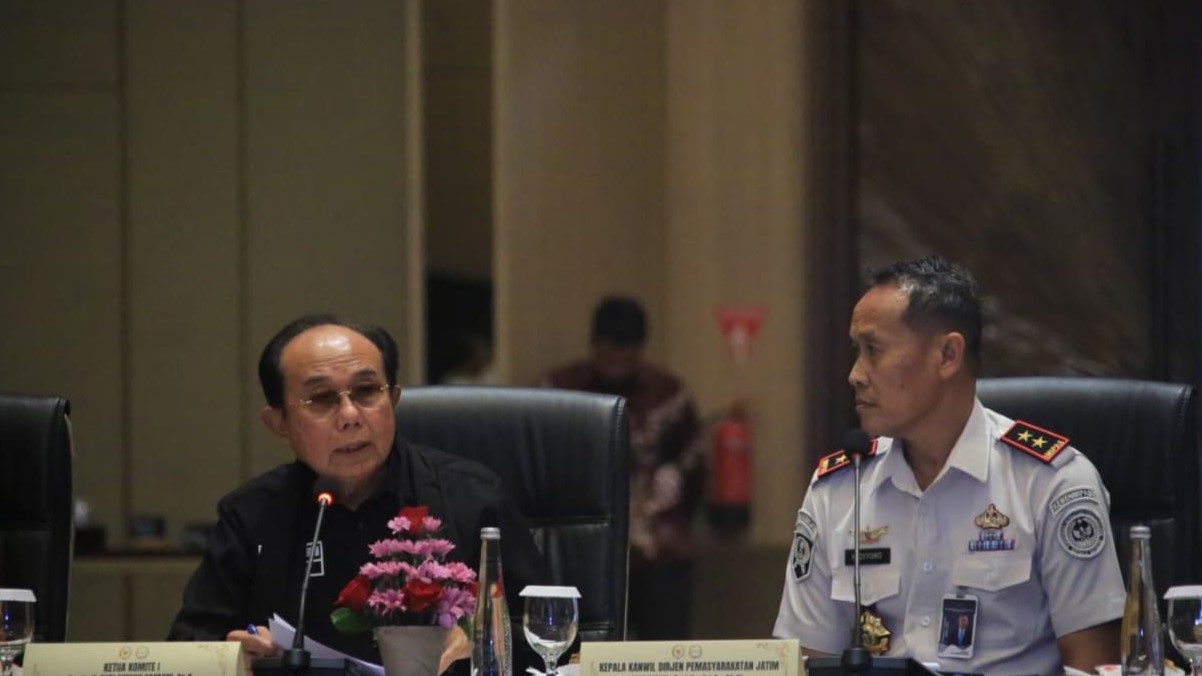
alang, dpd.go.id – Committee I of the House of the Regional Representatives of the Republic of Indonesia (DPD RI) emphasized the importance of accelerating the implementation of a new paradigm for restorative justice-based correctional services during a working visit to the Class I Correctional Institution (Lapas) in Malang. The visit was conducted in response to various community aspirations and the dynamics of correctional policy implementation in the field.
"Prison facilities are a vital part of the integrated criminal justice system, serving not only as security but also as a means of fostering and socially reintegrating inmates," stressed Andi Sofyan Hasdam, Chairperson of Committee I of the House of the Regional Representatives of the Republic of Indonesia (DPD RI). He added, "As the spearhead of the principle of protection, prisons must be able to realize correctional goals through education, rehabilitation, and social reintegration."
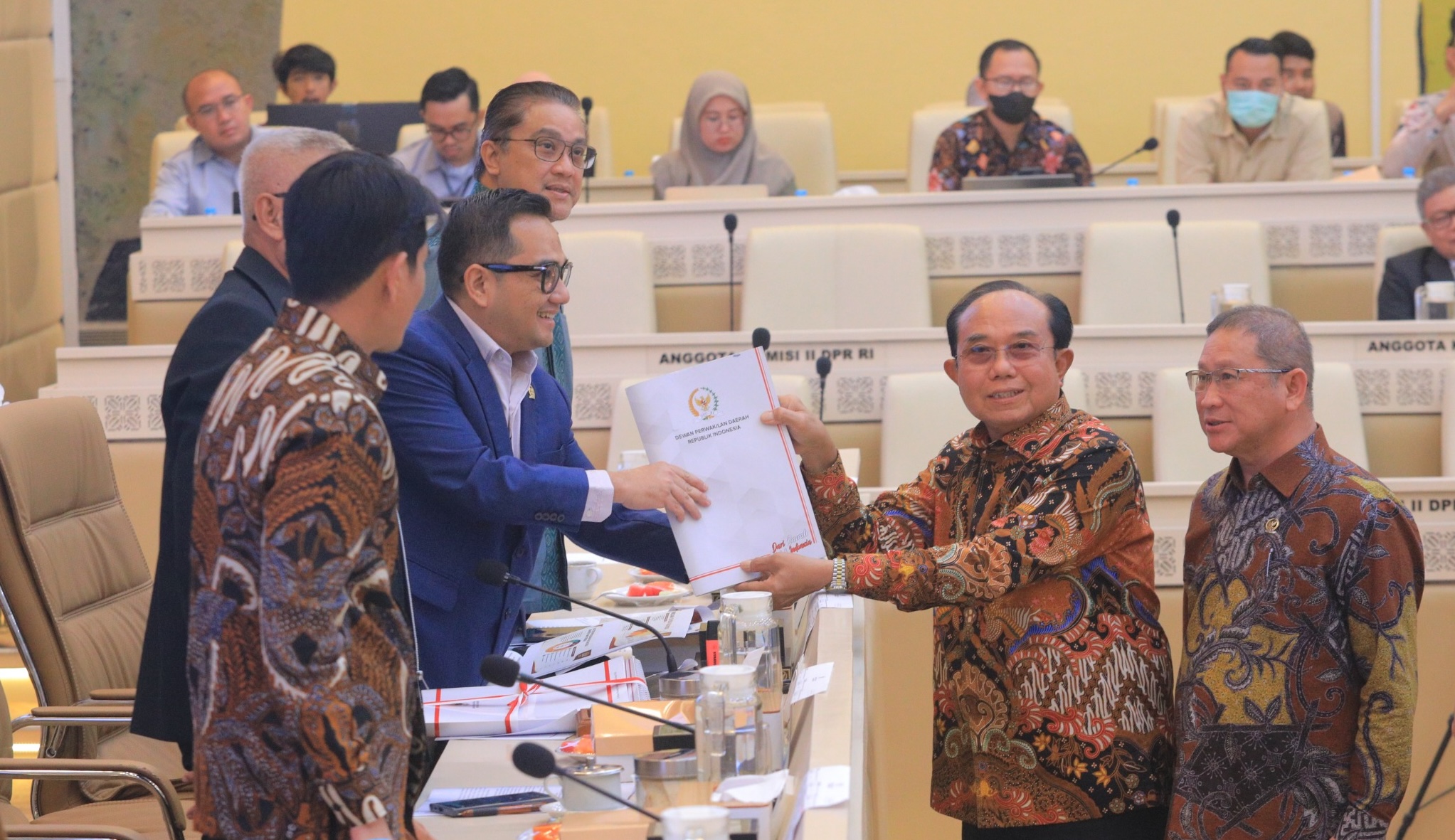
The working visit, led directly by Andi Sofyan Hasdam, was received by the Head of the East Java Regional Office of the Directorate General of Corrections along with staff, and was attended by the leadership and members of Committee I of the DPD RI.
On that occasion, East Java Senator, Kondang Kusumaning Ayu, explained that this visit aimed to inventory various problems in the implementation of Law Number 22 of 2022 concerning Corrections.
"We hope this meeting will make a real contribution to improving the national correctional system," he said.
Andi Sofyan Hasdam added that Committee I is currently focusing on immigration and correctional issues, ensuring their implementation prioritizes human rights. "Law Number 22 of 2022 has shifted the paradigm from retributive to restorative justice, prioritizing services, fostering, and respecting human rights," he explained.
However, Andi acknowledged that several serious challenges remain on the ground, requiring a swift and positive response. He noted that there are still limited capacity for correctional facilities, a minimal rehabilitation budget, obstacles to conflict management between inmates, and indications of levies in administering inmates' rights. He also highlighted the disparity in the number of officers and inmates, limited healthcare services, and disparities in facilities and infrastructure across prisons, all of which have the potential to reduce the quality of services.
Meanwhile, Kadiyono, Head of the East Java Regional Office of the Directorate General of Corrections, stated that this visit was a strategic opportunity to strengthen synergy. "We are taking this opportunity to convey the performance of the prison and receive input from Committee I of the House of the Regional Representative of the Republic of Indonesia (DPD RI) to improve the quality of correctional services," he said.
Kadiyono also revealed that in East Java there are 46 correctional work units consisting of 24 prisons, 14 detention centers, 1 LPKA, and 7 Bapas, with a capacity of 13,715 people and a total of 25,687 inmates.
"We continue to make various efforts to address overcapacity, including optimizing the Correctional Database System, strengthening coordination with law enforcement officials, and mapping inmates based on risk levels," he explained.
The head of the Class I Malang Prison added that his office faces significant challenges as one of the prisons unable to refuse inmate transfers. "This situation often results in overcrowding. However, we have taken various steps, such as reorganizing housing blocks, expediting TPP trials, and coordinating with the courts and prosecutors to expedite the legal process," he said.
During the discussion, members of Committee I highlighted various strategic issues, ranging from limited development budgets, the issue of overcapacity, which is dominated by narcotics cases, to the need to separate inmates based on case type. They also emphasized the importance of strengthening collaboration with law enforcement and the private sector in empowering inmates, including focusing on female inmates.
Several members also emphasized the importance of improving the capacity, integrity, and attitudes of prison officers. "Officer behavior is in the public spotlight and is crucial to the success of the correctional paradigm shift," said one member.
Closing the visit, Andi Sofyan Hasdam expressed his appreciation for the openness of the East Java Directorate General of Corrections and the Class I Malang Prison. "We will follow up on the results of this visit in Committee I's agenda to formulate comprehensive policy recommendations and encourage improvements to the correctional system in Indonesia," he concluded.
Also present were members of Committee I, including Carel Simon Petrus Suebu, H. Muhdi, Bahar Buasan, Kondang Kusumaning Ayu, H. Sudirman Haji Uma, Rev. Penrad Siagian, KH. Muhammad Mursyid, M. Sum Indra, Jialyka Maharani, Hj. Leni Haryati John Latief, Ismeth Abdullah, H. Achmad Azran, Aanya Rina Casmayanti, Hj. Ade Yuliasih, Shri I Gusti Ngurah Arya Wedakarna Mahendradatta Wedasteraputra Suyasa, TGH. Ibnu Halil, Abraham Liyanto, Maria Goreti, Muhammad Hidayattollah, H. Hasan Basri, Cherish Harriette, H. Mz. Amirul Tamim, H. Sjarif Mbunga, Ian Ali Baal Masdar, Bisri As Shiddiq Latuconsina, Sultan Hidayatullah Sjah II, KH. Abdul Hakim, Lamek Dowansiba, Frits Tobo Wakasu, Sopater Sam, and Paul Finsen Mayor.
AGENDA KEGIATAN
DEWAN PERWAKILAN DAERAH REPUBLIK INDONESIA