Informasi Seputar Kegiatan di DPD RI
AGENDA KEGIATAN
DEWAN PERWAKILAN DAERAH REPUBLIK INDONESIA
01 July 2026 oleh admin
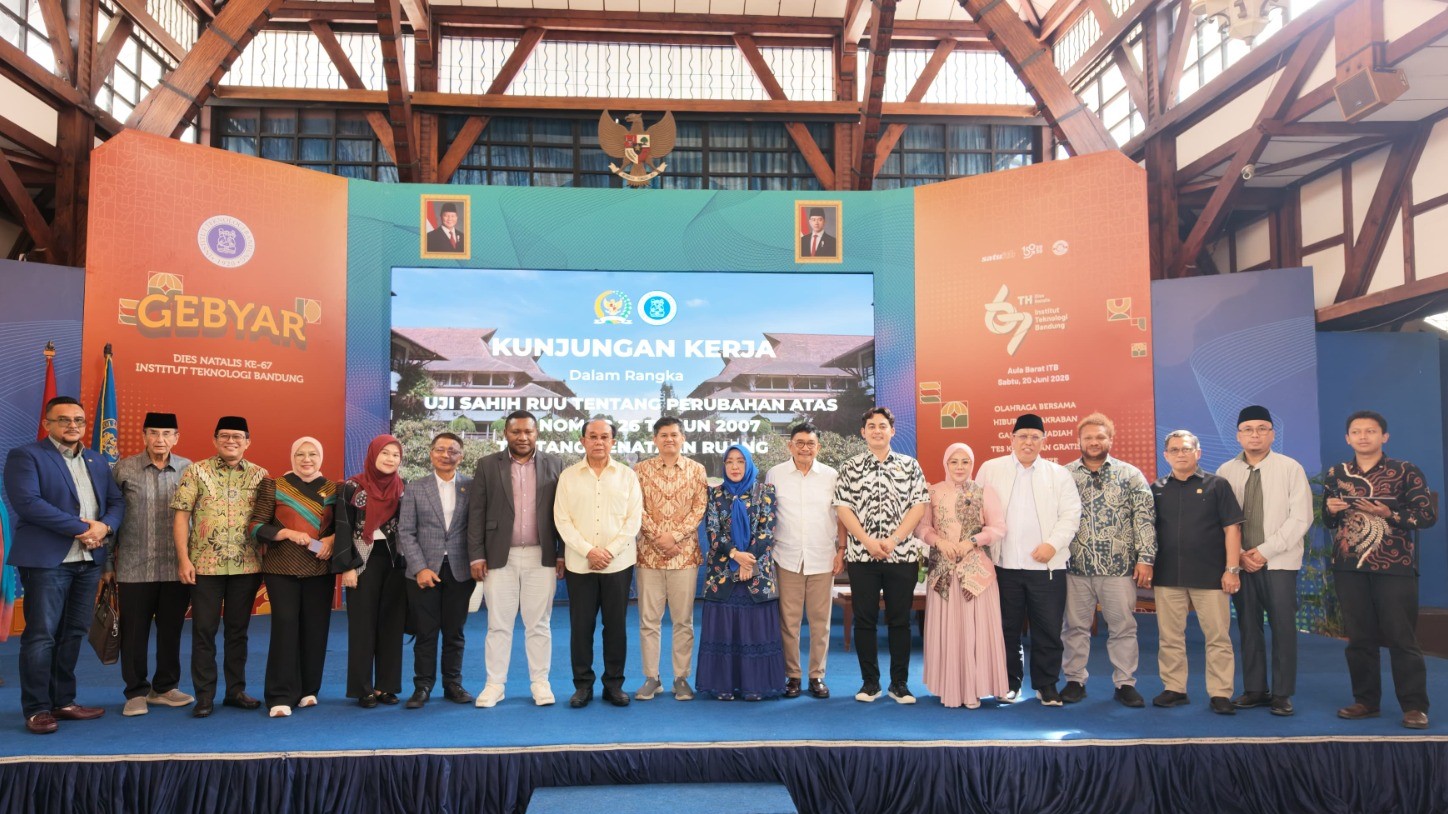
Bandung, dpd.go.id – Committee I of the House of Regional Representatives of the Republic of Indonesia (DPD RI) is currently drafting a revision to Law No. 26 of 2007 on Spatial Planning. As part of the legislative drafting process, the committee conducted a legislative validation (uji sahih) of the proposed Spatial Planning Bill on June 27, 2026, at the Bandung Institute of Technology (ITB).
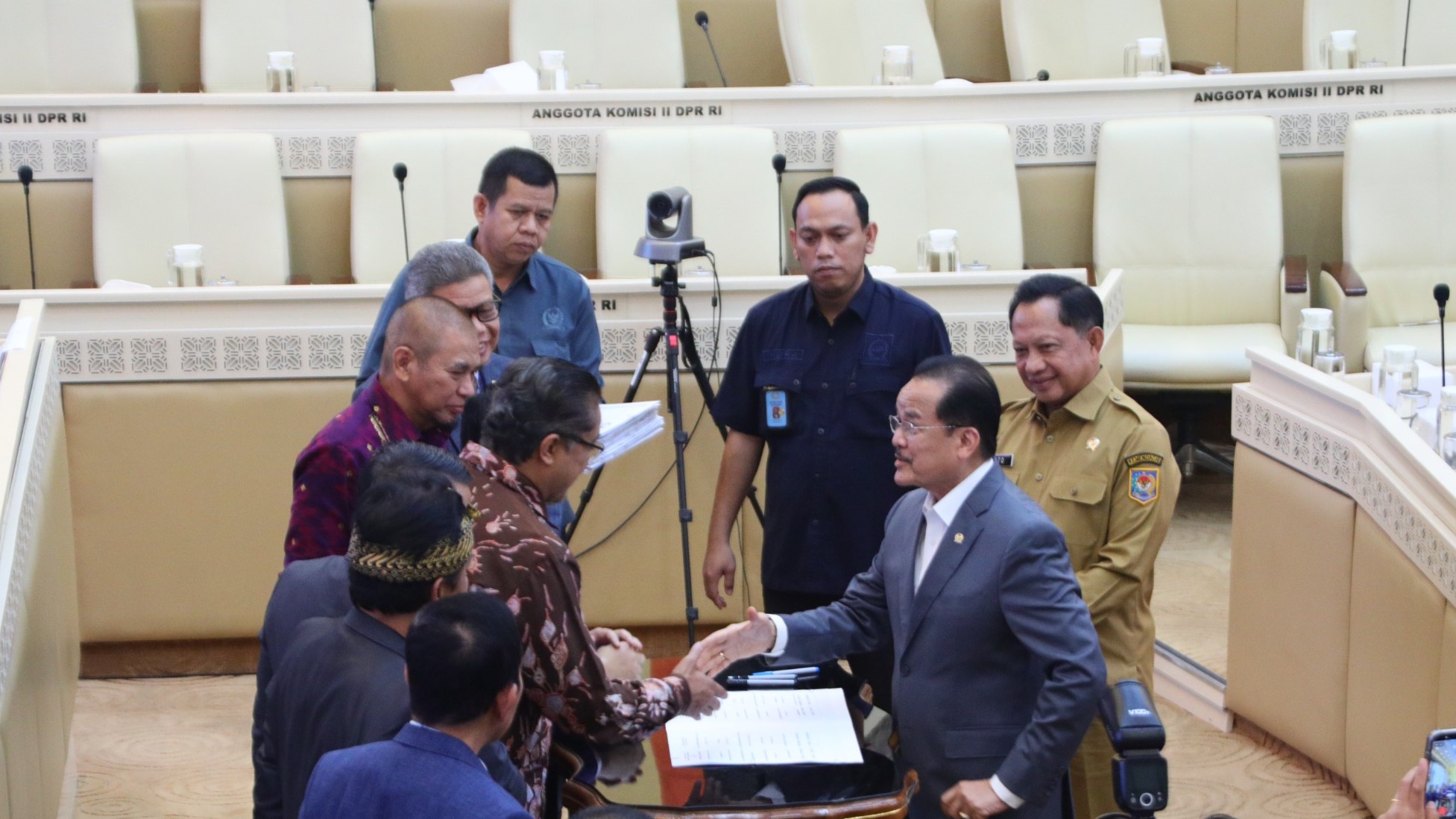
The delegation was led by Committee I Chairperson Andi Sofyan Hasdam and included committee members Muhdi, Aanya Rina Casmayanti, Sultan Hidayatullah Sjah II, M. Sum Indra, Sopater Sam, H. Achmad Azran, Ismeth Abdullah, Hj. Ade Yuliasih, TGH. Ibnu Halil, Pdt. Penrad Siagian, Muhammad Hidayattollah, Paul Finsen Mayor, Cherish Harriette, Abdul Hakim, Bisri As Shiddiq Latuconsina, Hj. Leni Haryati John Latief, H. Hasan Basri, H. Muhammad Mursyid, Irman Gusman, Jialyka Maharani, and Mz. Amirul Tamim. They were also accompanied by Hendricus Andy Simarmata and Wisnubroto Sarosa, members of the expert team responsible for drafting the bill.
In his welcoming remarks, the Vice Dean of ITB's School of Architecture, Planning, and Policy Development (SAPPK) noted that the legislative validation was highly relevant to the school's academic programs. He expressed hope that the forum would facilitate constructive discussions involving ITB academics and representatives of local governments from Bandung and surrounding areas.
Delivering introductory remarks, Aanya Rina Casmayanti, DPD RI Senator representing West Java, thanked the leadership of Committee I, SAPPK ITB, and representatives of regency and municipal governments across West Java for participating in the event. "We hope this legislative validation will accommodate constructive ideas from academics and local governments, enabling the DPD RI's Spatial Planning Bill to become more comprehensive and better aligned with regional needs," Aanya said.
Committee I Chair Andi Sofyan Hasdam emphasized that spatial planning is a strategic instrument for achieving sustainable, equitable, and competitive national development. As an archipelagic nation with diverse geographical characteristics, Indonesia requires a spatial planning system capable of ensuring integrated regional development, environmental protection, sustainable natural resource management, and improved public welfare.
"As an archipelagic country with highly diverse regional characteristics, Indonesia needs a spatial planning system that guarantees integrated regional development, environmental protection, sustainable management of natural resources, and greater public welfare," Andi stressed.
He further explained that although Law No. 26 of 2007 on Spatial Planning has served as Indonesia's legal foundation for nearly two decades, evolving national and global challenges have revealed the need for more adaptive regulations. Changes in regional governance, rapid technological advancement, accelerating urbanization, climate change, and increasing demands for food, energy, and water security require a spatial planning framework that is more integrated, responsive, and sustainable.
"Technological developments, changes in regional governance, urbanization, climate change, and the growing need for food, energy, and water security are challenges that must be addressed through a more adaptive, integrated, and sustainable spatial planning framework," he said.
According to Andi, these developments underscore the constitutional responsibility of the DPD RI, as the institution representing regional interests, to help ensure effective governance. Under Article 22D paragraph (1) of the 1945 Constitution, the DPD RI has the authority to propose bills related to regional government, regional formation and expansion, central-regional relations, and the management of natural and other economic resources.
Concluding his remarks, Andi stated that Committee I had drafted the Spatial Planning Bill to modernize Indonesia's legal framework for spatial planning, strengthen the role of regional governments, enhance cross-sectoral and interregional coordination, reinforce oversight and law enforcement, and ensure sustainable and equitable development.
"This Spatial Planning Bill is designed to strengthen the role of regional governments in spatial planning, improve coordination across sectors and regions, reinforce oversight and law enforcement, and ensure sustainable and equitable development," Andi concluded.
The legislative validation featured presentations by Andi Oetomo, a member of the bill's expert team and an ITB academic; Norman Nurdjaman, Chair of the West Java Chapter of the Real Estate Indonesia (REI); and Farhan Helmy of Dilans Indonesia/ASCODI, representing spatial planning stakeholders. The speakers discussed current challenges and realities in spatial planning practices, particularly in the Bandung metropolitan area, while offering recommendations and policy ideas to be incorporated into the revised Spatial Planning Law.
AGENDA KEGIATAN
DEWAN PERWAKILAN DAERAH REPUBLIK INDONESIA