Informasi Seputar Kegiatan di DPD RI
AGENDA KEGIATAN
DEWAN PERWAKILAN DAERAH REPUBLIK INDONESIA
08 September 2026 oleh admin
DENPASAR, dpd.go.id — The State Civil Apparatus (ASN) is a vital element in running government operations. Given its crucial role, various government policies have been drafted to accelerate the transformation of ASN management.
This policy direction is carried out through several transformation agendas, including reforming ASN recruitment and positions, facilitating national talent mobility, accelerating competency development, organizing non-ASN personnel, reforming performance and welfare management, digitalizing ASN management, and strengthening work culture as well as institutional image.
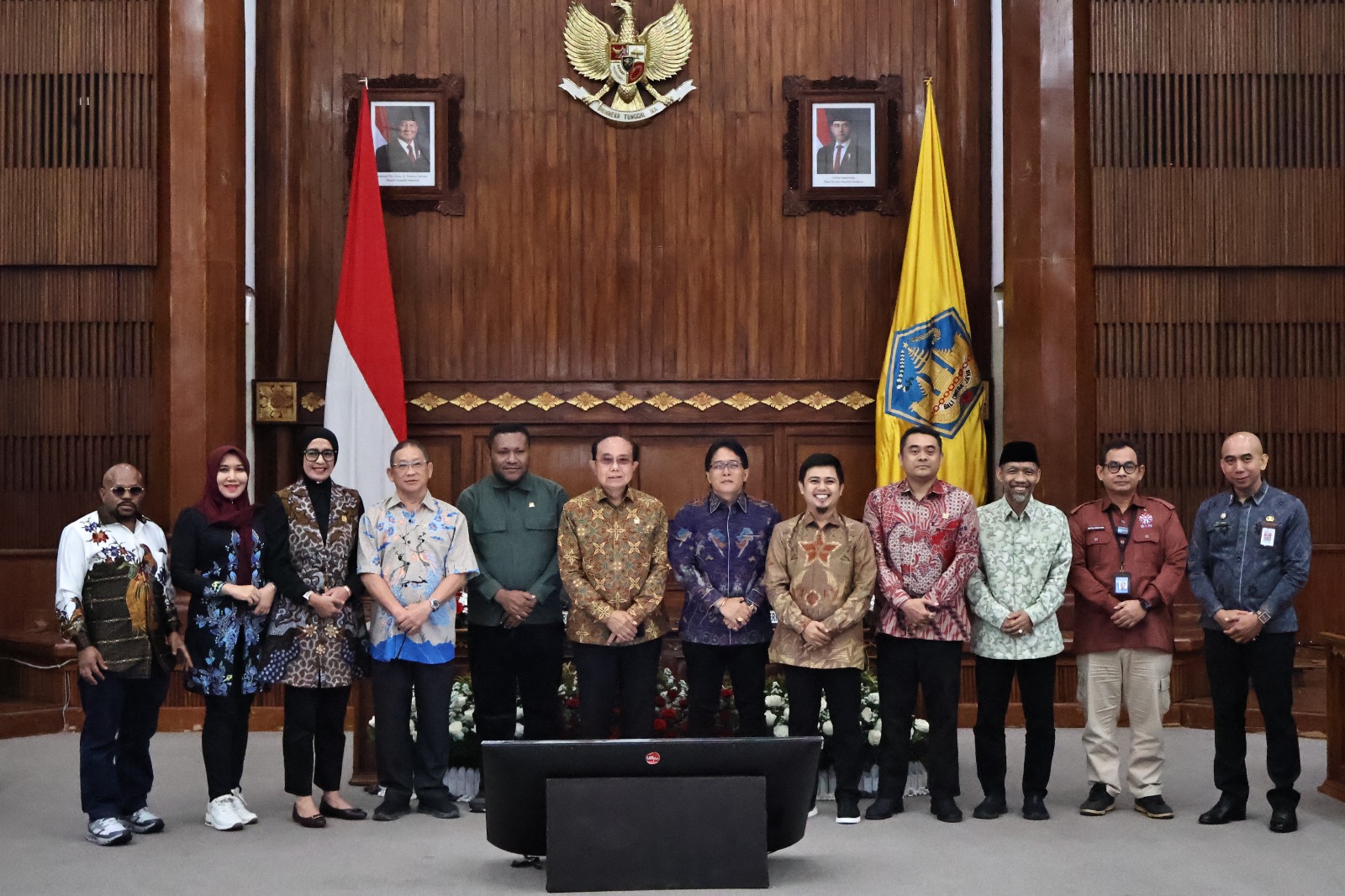
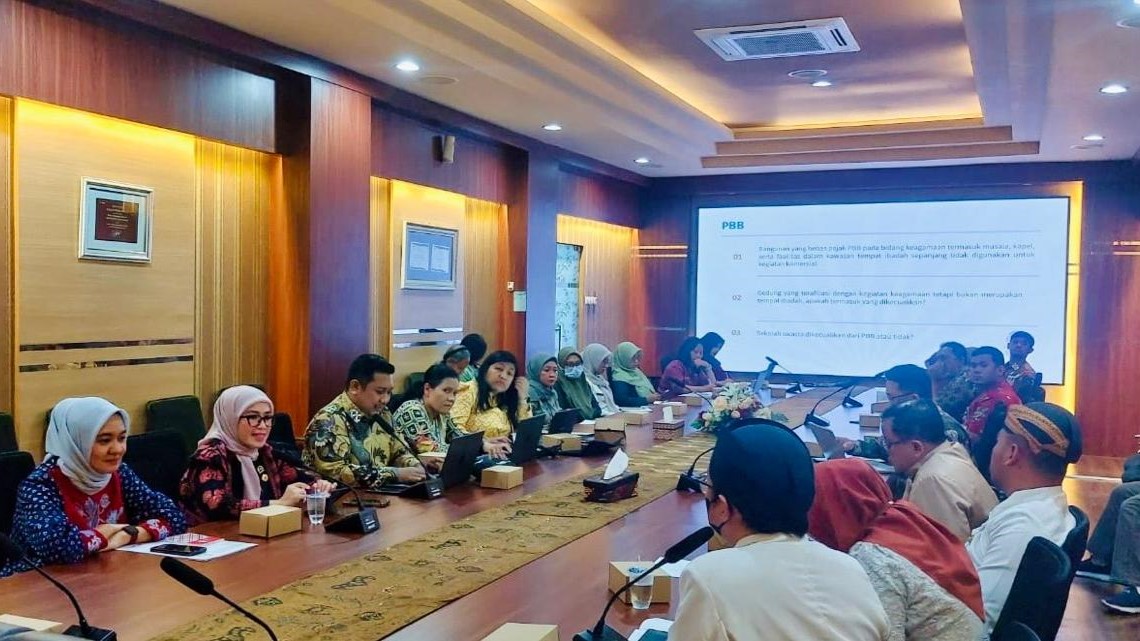
To monitor and observe the progress of ASN management structuring and development at the regional level, Committee I of the House of Regional Representatives of the Republic of Indonesia (DPD RI) conducted a working visit to Bali Province on September 7, 2026, held at the Auditorium of the Bali Provincial Governor's Office.
The DPD RI Committee I delegation was led by Committee I Chair and Delegation Leader, Andi Sofyan Hasdam. Also in attendance were several DPD RI members, including Carel Simon Petrus Suebu, Bahar Buasan, Shri I Gusti Ngurah Arya Wedakarna Mahendradatta Wedasteraputra Suyasa, Abdul Hakim, Denti Eka Widi Pratiwi, Lia Istifhama, A. Ian Ali Baal Masdar, and Sopater Sam.
The meeting was conducted in a hybrid format, both in person and online via Zoom. DPD RI members joining online included Ade Yuliasih, Penrad Siagian, Aanya Rina Casmayanti, Bisri As Shiddiq Latuconsina, Syarif Mbuinga, Sudirman Haji Uma, Abdul Hamid, Hasan Basri, Irman Gusman, Ismeth Abdullah, Ivanda Awalina Firdausi, Lamek Dowansiba, Mz. Amirul Tamim, Dailami Firdaus, Agustin Teras Narang, Maya Rumantir, Ratu Tenny Leriva, Leni H. John Latief, Maria Goreti, Frits Tobo Wakasu, Muhammad Hidayattollah, and Abcandra Muhammad Akbar Supratman.
Representatives from the Bali Provincial Government were also present, including regional agency heads, Head of Regional Office X of the National Civil Service Agency (BKN), and members of the Bali Provincial Regional Leadership Coordination Forum (Forkopimda).
In his opening remarks, the Vice Governor of Bali stated that the working visit of DPD RI Committee I was important for strengthening synergy in the structuring and development of ASN management. Following the enactment of the ASN Law, all stakeholders are urged to foster a professional civil service across Indonesia, including in Bali Province.
He noted that the Bali Provincial Government is committed to supporting ASN policies through the implementation of a merit system and talent management measured by integrity, competence, and objectivity.
The Bali Provincial Government has implemented various measures, including organizational streamlining, issuing gubernatorial regulations on the merit system, and establishing ASN career development schemes.
Through this agenda, the Bali Provincial Government hopes the DPD RI Committee I working visit can serve as momentum to reinforce synergy while conveying the Bali Provincial Government's aspirations to the central government.
DPD RI Committee I Chair Andi Sofyan Hasdam stated that ASNs are a strategic element in governance and public service delivery. Through Law No. 20 of 2023 on the State Civil Apparatus, the government is driving the rapid transformation of ASN management toward a professional, world-class civil service.
"This transformation is aimed at strengthening the merit system, talent management, competency and career development, organizing non-ASN personnel, reforming performance and welfare management, and digitalizing ASN management," Andi said.
Furthermore, the Committee Chair explained that several regions still face various challenges. These include maladministration in civil service systems, disregard for legal obligations, and transfers or job placements that are not yet fully based on competence, performance, and organizational needs.
"These conditions show that strengthening the merit system requires more than just policies and regulations; it demands consistent implementation, oversight, and guaranteed objectivity and neutrality in every process of ASN management," he said.
Given these dynamics, DPD RI views Bali Province as a relevant region to directly observe the practical application of the merit system and ASN talent management. The Bali Provincial Government has developed talent management through talent acquisition, development, retention, and placement. This policy is further supported by information technology through the integration of SIMPEG with BKN's SIASN.
Concluding his remarks, Andi Sofyan Hasdam expressed appreciation to the Bali Provincial Government for its positive response to the DPD RI Committee I working visit. "Hopefully, this activity will yield recommendations regarding policies and performance evaluations of ASN management structuring and development in Indonesia," he said.
Bali's Merit System Achievements In his presentation, Head of the Bali Province Personnel and Human Resources Development Agency (BKPSDM) stated that the Regional Government had issued Gubernatorial Regulation No. 64 of 2024 and Gubernatorial Regulation No. 53 of 2023.
ASN management structuring is being carried out through organizational and operational restructuring, including downsizing and adapting structures to be more effective and responsive to public service needs.
The Bali Provincial Government has also restructured its ASN corps across both structural and functional positions.
Regarding the merit system index achievement, Bali Province attained an index score of 0.94, placing it in Category IV (Very Good). Furthermore, the Bali Provincial Government has received a recommendation from the State Civil Apparatus Commission (KASN) to fill positions via talent management mechanisms.
Talent management within the Bali Provincial Government proceeds through stages of talent acquisition, development, retention, and placement—prioritizing individuals to fill target positions based on top competency and performance levels through structured, sustainable mechanisms to meet organizational needs. Applications utilized in these processes include Simata, Sikepo, KBS Corpu, Assessment Center, and Simpeg.
Meanwhile, BKN Regional Office X Bali presented 15 pro-career ASN policies, which include facilitating competency tests, offering opportunities for promotion higher than one's direct superior, strengthening the independence of High Leadership Position (JPT) selection, and accelerating the development and implementation of talent management. Regarding the digitalization of ASN performance, BKN Regional Office X Bali also presented progress updates spanning performance management to data integration designed to yield measurable performance outputs.
Highlights from Committee I Members The presentations from the Bali Provincial Government and BKN Regional Office X Bali drew responses from several DPD RI Committee I members.
Abdul Hakim highlighted the importance of ensuring that BKN and Bali Provincial Government policies can be implemented at the regency/city levels, both in Bali and in other provinces. He also pointed out the uneven distribution of teachers and educational personnel, which has led to teacher shortages in various regions.
DPD RI Member representing Central Java, Denti Eka Widi Pratiwi, questioned the benchmarks used when an official who holds an appropriate rank and position later experiences a decline in performance and integrity.
She also raised the policy of placing ASNs closer to their families alongside operational trends in its implementation. Additionally, Denti inquired about the distribution of ASNs, particularly agricultural extension officers, in supporting food security and sovereignty.
Senator Maya Rumantir emphasized the need for operational steps toward technology transfer within the strategy and synergy between the Bali Provincial Government and regency/city governments. This particularly relates to competency development through corporate universities that prioritize communicative and collaborative service.
Senator Carel Simon Petrus Suebu addressed the importance of maintaining synergy in ASN talent structuring and management. He also questioned various recurring issues in ASN management implementation in Bali.
Senator Leni H. John Latief noted that Bali's ASN management achievements are already quite strong. Therefore, she requested insights into remaining challenges and obstacles, as well as the Bali Provincial Government's strategies to overcome them.
Senator Ade Yuliasih noted that Banten Province could learn from Bali, particularly regarding the placement of teachers and healthcare workers. She also requested data and information on policies and governance regarding ASN distribution in remote areas carried out by the Bali Provincial Government.
Senator Lia Istifhama highlighted the financial burden that PPPK (Government Employees with Work Agreements) salaries place on the Bali Provincial Government's budget, asking whether this condition creates issues in field-level public service delivery.
Senator Penrad Siagian noted that the evaluation system and schemes for PPPK are deemed effective, including mechanisms for contract termination and managing part-time PPPK. Furthermore, Penrad highlighted that policies regarding PPPK and part-time PPPK will be managed directly by the central government in the future.
Meanwhile, Shri I Gusti Ngurah Arya Wedakarna Mahendradatta Wedasteraputra Suyasa assessed that the Bali Provincial Government has achieved significant progress in ASN management structuring and development. According to him, the Bali Provincial Government has consistently worked to reduce politicization in job placements.
He added that the presence of the Vice Governor of Bali, drawing on his prior experience as Regent of Badung, serves as a positive catalyst for advancing bureaucratic reform in Bali.
AGENDA KEGIATAN
DEWAN PERWAKILAN DAERAH REPUBLIK INDONESIA