Informasi Seputar Kegiatan di DPD RI
AGENDA KEGIATAN
DEWAN PERWAKILAN DAERAH REPUBLIK INDONESIA
01 September 2026 oleh admin
Jakarta, dpd.go.id – The continued lack of adequate energy access for communities in island regions demonstrates that national energy policy has not fully addressed Indonesia's geographic characteristics. The House of Regional Representatives of the Republic of Indonesia (DPD RI) believes this situation reinforces the urgency of the Draft Law on Island Regions as a lex specialis to affirm and accelerate the fulfillment of energy rights for communities on islands.
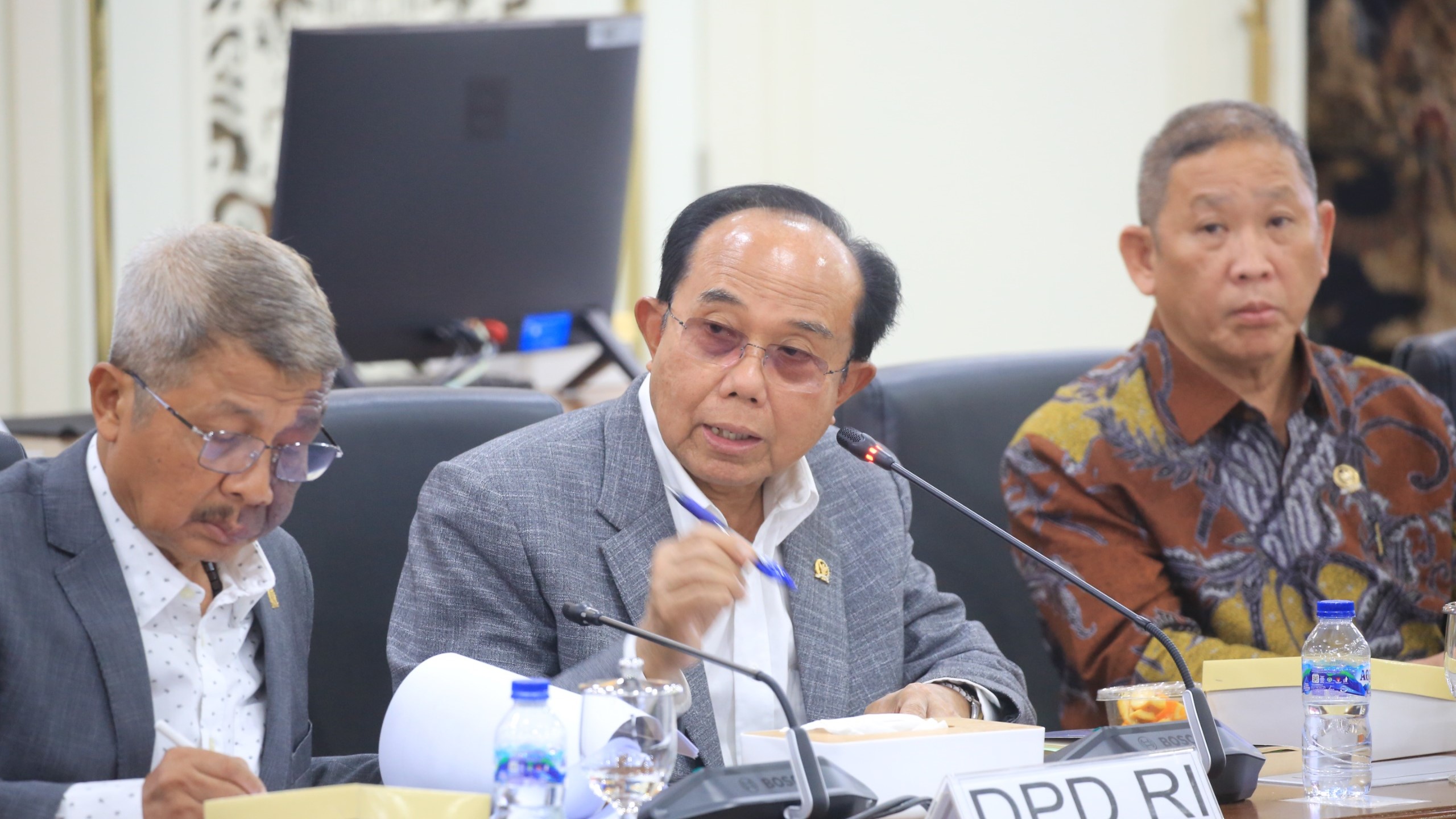
In the Hearing Meeting of the Special Committee on the Draft Bill on the Islands of the Indonesian House of Representatives together with the DPD RI Working Team and the Ministry of Energy and Mineral Resources in the BAKN Meeting Room of the Indonesian House of Representatives, Tuesday (1/9/2026), the Chair of the Draft Bill on the Islands of the Indonesian House of Representatives Working Team, Andi Sofyan Hasdam, said that the high cost of development and logistics in the islands should not continue to be a reason for delays in fulfilling the basic rights of the people.
According to Andi, as long as there are no specific regulations recognizing the characteristics of islands, the fundamental problems faced by the community will continue to recur, citing high costs. "This is why the Archipelagic Region Law is necessary. Without this law, the plight of the island communities will never be resolved. Because every time an initiative is proposed, the reason for it is the high cost," he stressed.
According to Andi, the cost differences due to geographic conditions should be the basis for the government to provide affirmative action, not a justification for leaving island communities behind in meeting their energy needs. "All citizens have the right to fair access to energy," he added.
Muhdi, Vice Chair of the DPD RI's Archipelagic Regions Bill Working Group, assessed that this affirmation needs to be accompanied by a strengthening of regional roles to ensure accelerated energy provision can be tailored to local conditions. He argued that strengthening regional authority does not diminish the authority of the central government, but rather ensures that national policies can be more quickly translated into practice.
Muhdi also sees solar energy as a relevant solution for remote areas difficult to reach by conventional electricity grids. Therefore, renewable energy-based electrification programs require sustainable policy and budget support within the framework of the Island Region Bill.
"The most feasible solution for remote areas is electrification through solar power," he explained.
Senator Penrad Siagian from North Sumatra stated that the geographic characteristics that make development in the archipelago more expensive should be the reason for affirmative action through special regulations. "This is a matter of fairness for all Indonesians. Of course, the costs will be higher, as accessibility and mobility will be greater. But that shouldn't be a barrier," he said.
For the DPD RI, Penrad continued, the energy issue demonstrates the concrete benefits of the Archipelagic Regions Bill. The regulation is expected to not only recognize the uniqueness of archipelagic regions but also transform the way the state designs policies, authorities, and financing so that communities on remote islands receive basic services equally.
AGENDA KEGIATAN
DEWAN PERWAKILAN DAERAH REPUBLIK INDONESIA