Informasi Seputar Kegiatan di DPD RI
AGENDA KEGIATAN
DEWAN PERWAKILAN DAERAH REPUBLIK INDONESIA
25 September 2026 oleh admin
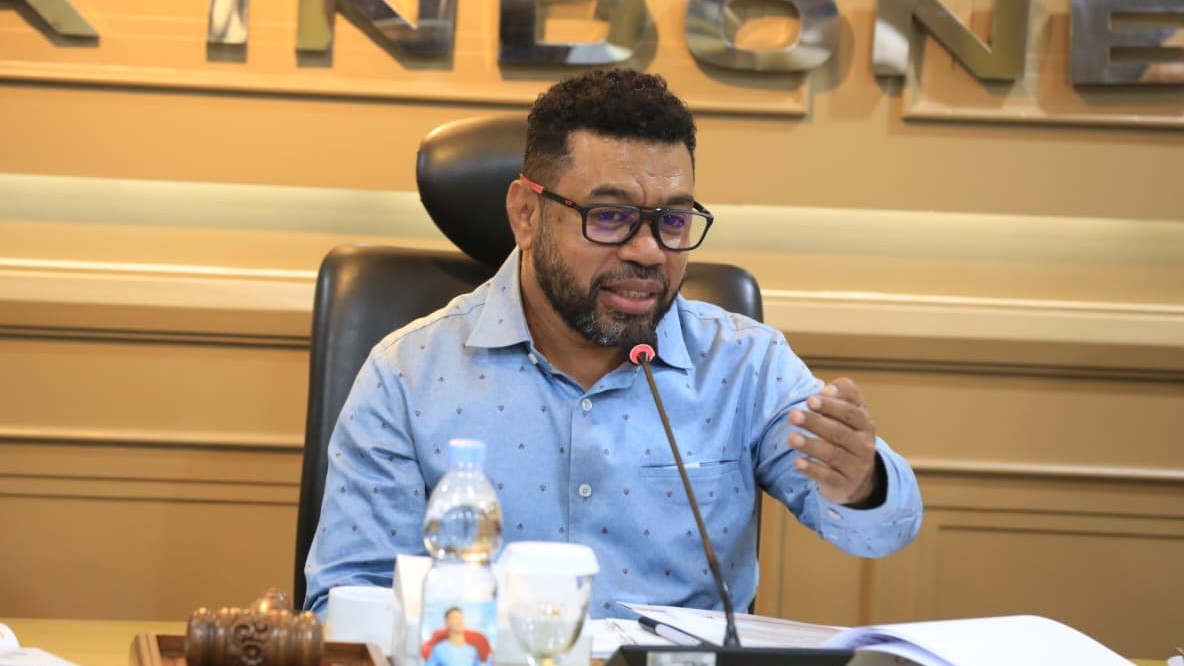
Jakarta, dpd.go.id - Member of the House of Regional Representatives of the Republic of Indonesia (DPD RI) for the West Papua Electoral District, Dr. Filep Wamafma, appreciated the Ministry of Health's policy of opening the selection for the Primary Provider Teaching Hospital-Based Specialist Doctor Education Program (PPDS RSPPU) Batch V Period II 2026/2027, especially because this program pays attention to the sons and daughters of the region, including underdeveloped, border and island regions.
Filep emphasized that the acceptance and selection process for this scholarship program must demonstrate support for the 3T regions as an affirmative policy measure. "Papuans have the potential to become specialist doctors. The challenges lie in access, cost, information, administration, quality of preparation, and most importantly, opportunities and guaranteed professional placement so they can return to serve the community in their home regions," Filep emphasized.
According to Filep, this policy has great urgency because Indonesia still faces a national shortage of around 65,000 specialist doctors until 2032. In 2026, the government expanded the RSPPU PPDS, adding 25 new study programs, for a total of 31 study programs in the first phase.
For West Papua, Filep believes the urgency of this program is particularly relevant, given that Ministry of Health data shows that only 40 percent of government hospitals in West Papua meet the standards for specialist doctors, while 60 percent do not. Furthermore, there is still a shortage of 24 healthcare workers to meet the standards in government hospitals in West Papua.
Conditions in Southwest Papua also demonstrate similar problems. Only 33.33 percent of government hospitals meet specialist doctor standards, and there is still a shortage of 16 health workers to meet these standards.
"This distribution data shows that Papua's needs are very urgent. Our hospitals clearly still need specialist doctors. Therefore, I request that the implementation of PPDS be truly linked to the needs of each region," said Filep.
The Importance of Special Access and Network Support for Participants from 3T Regions On the same occasion, Filep reminded that prospective participants from 3T (third- and third-most remote) areas face different challenges than those from larger cities. The organizing committee needs to ensure outreach and assistance with access to the PPDS selection system, which utilizes digital registration, SATUSEHAT SDMK (Human Resources and Community Empowerment), computer-based competency selection, interviews, and online monitoring of the selection process.
"Prospective participants from Papua may face limitations in internet access, equipment, travel costs, information access, document processing, recommendations, and test preparation. The government must ensure the selection process is conducted while maintaining quality and supporting access for potential candidates from various regions, especially those from remote, outermost, and interior areas," he said.
Therefore, the Chairperson of Committee III of the DPD RI asked the Ministry of Health to ensure the availability of 7 important things, including: (1) a special and responsive help desk for candidates from 3T; (2) reasonable tolerance for verifiable administrative issues; (3) equal access to information and selection simulations; (4) connectivity support for the online selection stage; (5) objection mechanism if participants experience administrative problems; (6) transparency of quotas and selection results based on region of origin; (7) and no levies outside the provisions.
"This is important because the government itself has previously emphasized that PPDS reform must eliminate unnecessary cost burdens and prevent unofficial fees," he said. Filep also requested that the Ministry of Health transparently convey quotas and affirmative action indicators until the announcement of successful selection.
"Within the affirmative action framework, matters regarding the quota for the 3T (frontier and outermost) regions, the number of doctors from Papua who apply, how many graduate, and how many return to work in Papua must all be measurable and clear," he stressed.
According to Filep, this transparency is crucial to ensure that affirmative action policies are not merely administrative. Furthermore, the government has stated that the RSPPU PPDS is designed to recruit local people to work in hospitals, and post-education placements are geared toward meeting regional needs.
"For Papua, the measure of this program's success must be whether the Papuan people finally have access to sufficient, close, and sustainable specialist doctors," he said.
Therefore, the central government, together with regional governments, needs to prepare a complete policy chain, for example, starting from affirmative selection, specialist education, graduation, return to Papua, complete hospitals with medical equipment, as well as the availability of incentives and a clear career path.
"We must not produce specialist doctors in Jakarta while hospitals in Papua remain empty. Education must be directly linked to the needs of regional hospitals," he said.
Filep then asked the Ministry of Health, LPDP, local governments, and hospitals to establish a special mentoring mechanism for prospective doctors from Papua and the 3T regions.
"I fully support the RSPPU PPDS program and ask the government to ensure that affirmative action not only opens doors, but also ensures that Papuan children are able to pass through those doors, complete their education, and return to serve their communities," he said.
"This isn't just a matter of medical education. It's a matter of fairness in healthcare, equitable human resource development, and the right of the Papuan people to access quality healthcare in their own land," concluded Dr. Filep Wamafma.
AGENDA KEGIATAN
DEWAN PERWAKILAN DAERAH REPUBLIK INDONESIA