Informasi Seputar Kegiatan di DPD RI
AGENDA KEGIATAN
DEWAN PERWAKILAN DAERAH REPUBLIK INDONESIA
16 April 2026 oleh admin
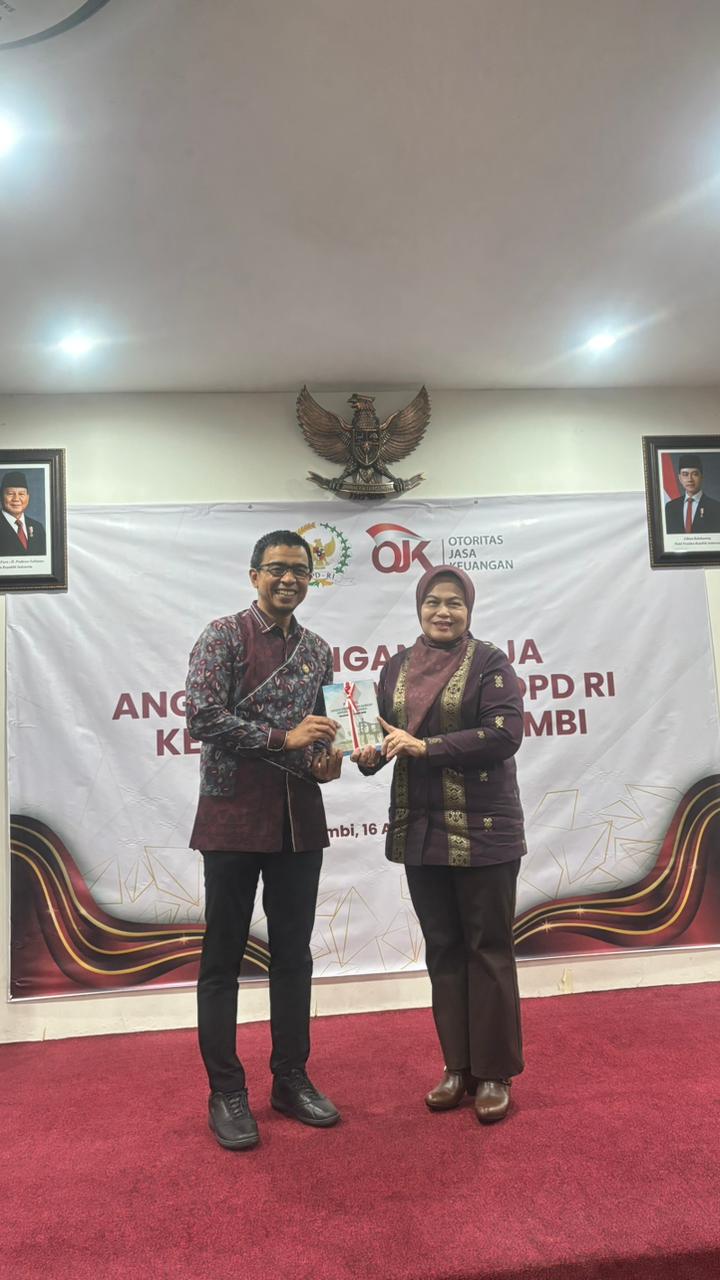
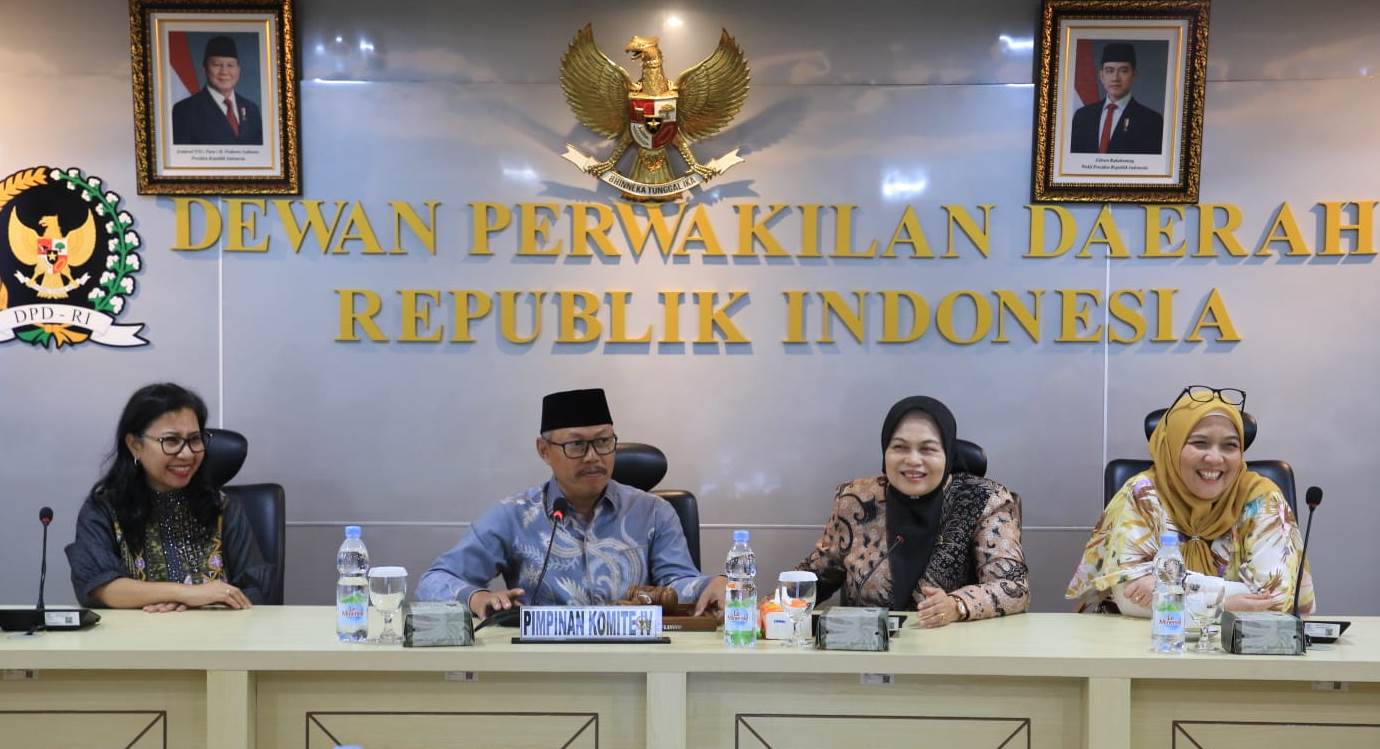
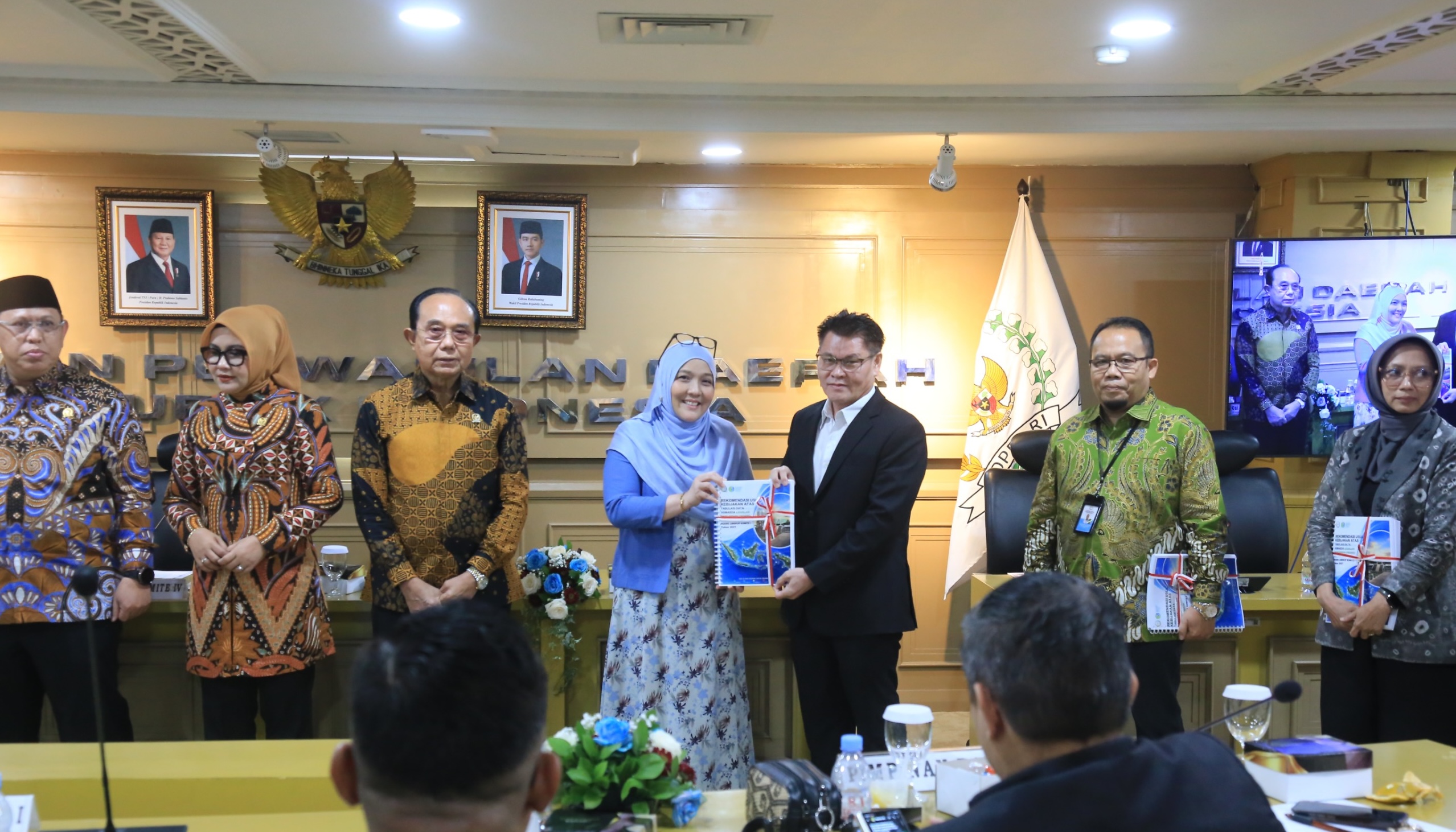
dpd.go.id Jambi — Committee IV of the House of Regional Representative of the Republic of Indonesia (DPD RI) conducted a working visit to discuss the realization and challenges of the People's Business Credit (KUR) and financial inclusion in Jambi Province. The meeting took place at the Jambi Provincial Office of the Financial Services Authority (OJK), involving stakeholders from the financial services industry, both banking and non-banking, as partners of Committee IV.
The Vice Chairperson of Committee IV DPD RI, Dr. Hj. Elviana, M.Si., stated in her opening remarks that this visit is part of the DPD RI's oversight function regarding the implementation of the state budget, specifically in the distribution of KUR. She emphasized the importance of gaining a comprehensive overview of KUR distribution to MSMEs and Ultra Micro (UMi) financing, including identifying obstacles faced in the region.
"We want to determine the extent of KUR absorption in Jambi Province, both in terms of coverage and effectiveness, so that more strategic and solution-oriented policies can be formulated to meet the needs of the local community," she said.
The Head of OJK Jambi, Yan Iswara Rosya, reported that as of the first quarter of 2026, KUR distribution showed a significant year-on-year (yoy) increase, reaching 109.74 percent. This growth was dominated by Ultra Micro credit, which grew by 178.31 percent.
He added that in March 2026, KUR distribution was led by Micro KUR at 54.07 percent. Furthermore, there were significant increases in two credit schemes: Ultra Micro at 2,401.11 percent and Micro KUR at 133.15 percent.
"OJK hopes that all stakeholders, including the Deposit Insurance Corporation (LPS) and the Statistics Indonesia (BPS), can identify areas that still require improvements in financial inclusion," Yan stated.
Representing regional banking, a representative from PT Bank Pembangunan Daerah (BPD) Jambi reported that the total KUR distribution ceiling reached Rp1.68 trillion, with 12,733 debtors. The distribution was dominated by the agricultural and plantation sectors.
Meanwhile, a representative from PT Bank Negara Indonesia (BNI) Jambi Area revealed that commercial credit was dominated by the agricultural sector at 43.33 percent and trade at 43.22 percent. Regarding KUR, agriculture dominated at 65.68 percent, followed by trade at 30.95 percent, as well as other sectors such as accommodation and household activities. The representative also highlighted several obstacles in the distribution of KUR, including issues related to the Financial Information Service System and the low level of financial literacy among the public.
"We continue to conduct educational outreach so that people in need can understand and access KUR facilities optimally," the representative stated.
Closing the event, Dr. Hj. Elviana, M.Si., reaffirmed the importance of increasing financial literacy and inclusion in the regions. She also encouraged the OJK and the banking industry to be more proactive in providing the public with an understanding of the functions and benefits of financial services.
"Financial inclusion in Jambi Province must continue to be improved because it plays a vital role in driving regional economic growth," she concluded.
AGENDA KEGIATAN
DEWAN PERWAKILAN DAERAH REPUBLIK INDONESIA