Informasi Seputar Kegiatan di DPD RI
AGENDA KEGIATAN
DEWAN PERWAKILAN DAERAH REPUBLIK INDONESIA
27 August 2026 oleh admin
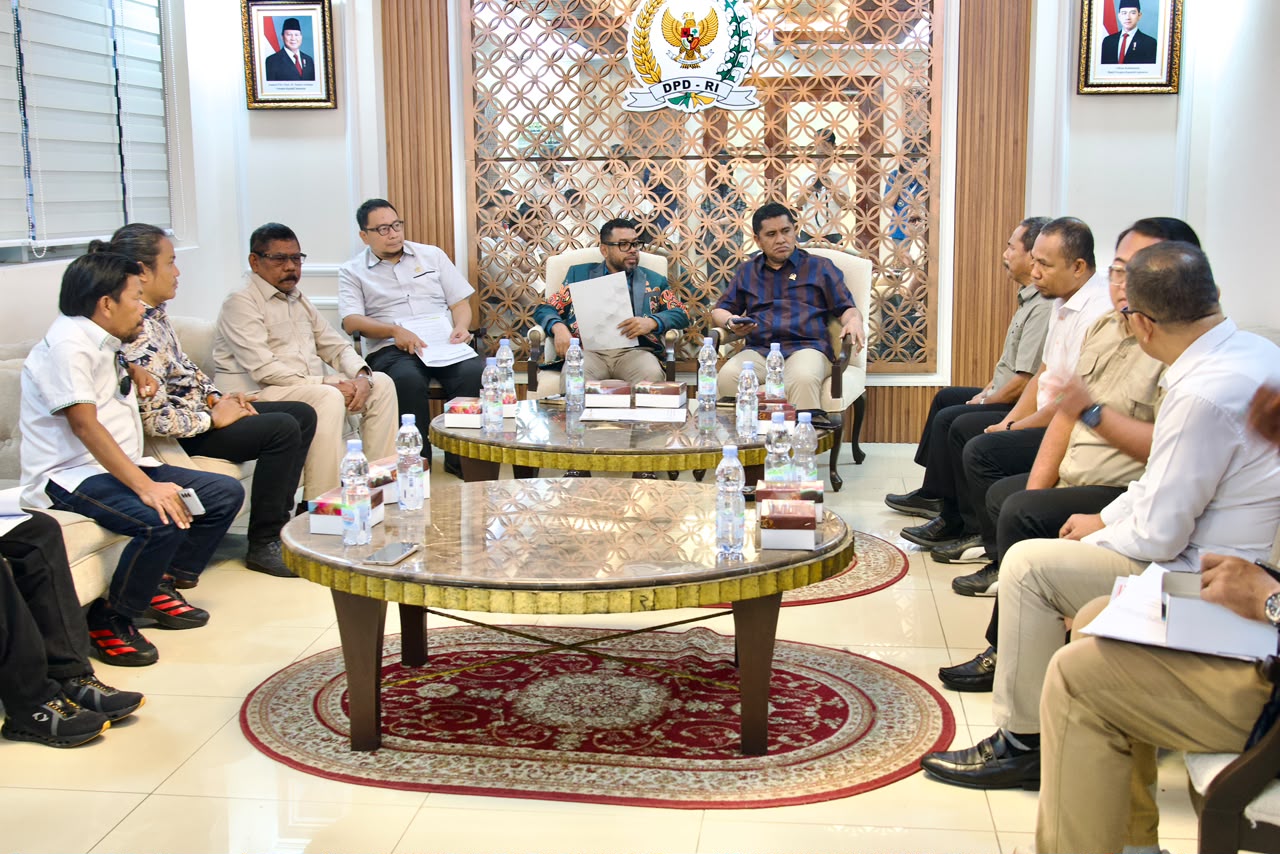
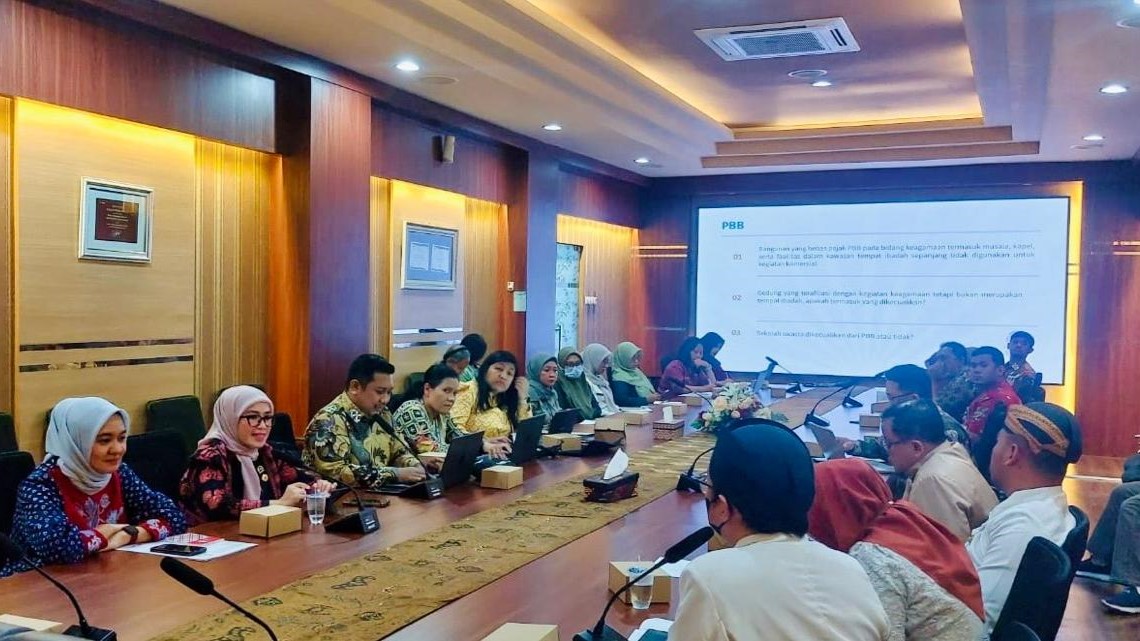
Jakarta, dpd.go.id – Committee III of the House of Regional Representatives of the Republic of Indonesia (DPD RI) received a delegation from the Ternate City Regional House of Representatives (DPRD) to gather public aspirations and discuss various public service issues, particularly healthcare services in Ternate City and North Maluku Province. The meeting was held at the DPD RI Secretariat in Jakarta on Wednesday, August 26, 2026.
The meeting served as an important opportunity to strengthen coordination between representative institutions at the national and regional levels in responding to public concerns. Key issues discussed included access to healthcare services, hospital facilities, the availability of healthcare professionals and specialist doctors, inter-island referral systems, and leprosy control in Ternate.
The meeting was attended by Chairperson of DPD RI Committee III Dr. Filep Wamafma, S.H., M.Hum., DPD RI Member representing North Maluku Hasby Yusup, S.E., and members of the Ternate City DPRD.
Filep Wamafma said the meeting with the Ternate City DPRD was part of DPD RI’s representation and oversight functions to ensure that central government policies fully address the needs of communities in the regions.
“This meeting is important because the Ternate City DPRD has direct knowledge of the challenges faced by the community. The aspirations conveyed today will be consolidated with field data and followed up with the central government, particularly on matters relevant to the Ministry of Health,” Filep said.
Ternate as a Healthcare Referral Center and Challenges in Equitable Access
Ternate City is one of the healthcare service and referral centers in North Maluku, with seven general hospitals, one specialized hospital, and 11 community health centers (puskesmas). However, the province’s archipelagic geography means that access to healthcare services remains uneven.
The meeting highlighted that residents from island communities and several regencies across North Maluku often have to travel to Ternate to access certain healthcare services, particularly when they require specialist doctors or medical facilities that are unavailable in their respective areas.
The availability of healthcare professionals and specialist doctors was also identified as a challenge. Ministry of Health indicators show that the fulfillment of specialist doctor standards in government hospitals in Ternate remains suboptimal, with only 50 percent of the required specialist standards currently met. Several specialties remain in need, including internal medicine, anesthesiology, and radiology.
Responding to the issue, Filep stressed that the development of healthcare facilities must be accompanied by adequate medical personnel.
“The construction of healthcare facilities and the provision of medical equipment must be accompanied by sufficient professional medical personnel. This will ensure that services are delivered by qualified experts to the fullest extent,” Filep emphasized.
He said Committee III would encourage the Ministry of Health to adopt affirmative policies to address the shortage of specialist doctors and healthcare workers in North Maluku, including support from the central government for the placement of medical specialists and other professionals.
Leprosy Remains a Public Health Challenge
Leprosy was another major issue discussed during the meeting. Data from the North Maluku Provincial Health Office in 2024 showed that the prevalence of leprosy reached 5.8 cases per 10,000 population, while the national elimination target is below 1 case per 10,000 population.
The Case Detection Rate (CDR) was recorded at 48.16 cases per 100,000 population, significantly above the national target of fewer than 5 cases per 100,000 population. Children accounted for 17 percent of leprosy cases, highlighting the need to strengthen early detection, contact screening, and treatment.
In addition, North Maluku’s 2024 One Data records showed that the provincial rate of newly detected leprosy cases reached 48.98 per 100,000 population, while Ternate City recorded 38.38 cases per 100,000 population.
According to Filep, the high incidence requires stronger and more integrated intervention involving the central government, local governments, and healthcare facilities.
“Leprosy requires special attention, particularly while the number of cases among children remains high. Early detection, contact screening, and public education must be strengthened,” Filep said.
Ternate DPRD Calls for Stronger Services in Island Communities
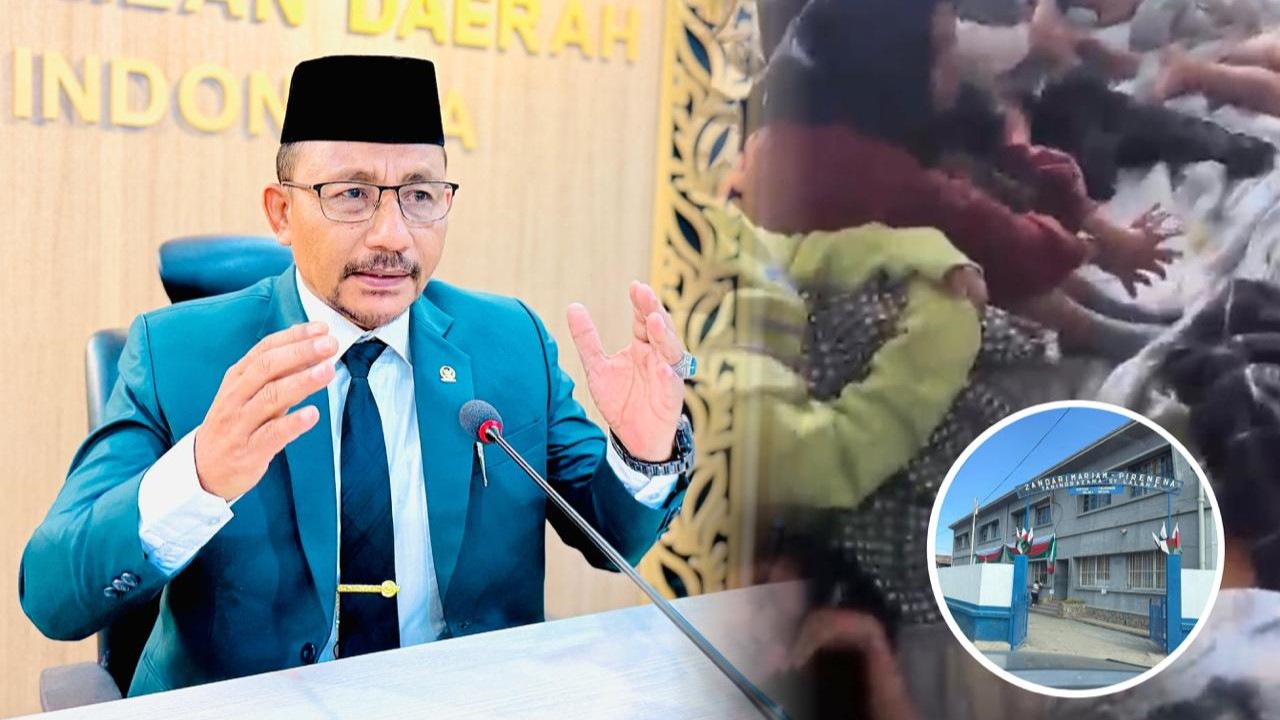
Meanwhile, DPD RI Member representing North Maluku Hasby Yusup, S.E., said the aspirations raised by the Ternate City DPRD need to be translated into concrete policies, particularly for communities in the islands.
He noted that residents of Hiri, Moti, and Batang Dua Islands face different challenges from those living in central Ternate. Therefore, stronger community health centers, adequate healthcare personnel, medicines, medical facilities, and referral transportation systems are needed.
“People living on the islands should not have to wait too long simply because referral transportation is unavailable. We need sea ambulances and, in certain circumstances, air evacuation support so that patient safety remains the priority,” Hasby Yusup said. Committee III Supports the Establishment of a Vertical Hospital
According to Hasby, Committee III DPD RI and the Ternate City DPRD also discussed options for strengthening hospitals with support from the central government.
One proposal that will be pursued is the construction or development of a Ministry of Health vertical hospital in North Maluku. This model is considered capable of addressing local governments’ fiscal limitations, as financing, specialist personnel, and medical equipment can be strengthened through central government support, while the regional government can provide land and supporting infrastructure.
Filep said the proposal needs to be discussed seriously with the Ministry of Health.
“If a region faces budget constraints, the central government can step in. A vertical hospital could be one solution to strengthen specialist healthcare services and reduce the community’s dependence on referrals outside the region,” he said.
He added that Committee III would follow up on several key points raised during the meeting, including: Meeting the need for specialist doctors and healthcare professionals; Strengthening regional hospitals and community health centers; Improving healthcare services in island communities; Providing sea ambulances and medical evacuation support; Strengthening leprosy prevention and treatment programs; Establishing or developing a vertical hospital; and Strengthening inter-island referral systems and revitalizing healthcare facilities through affirmative policies for North Maluku as an archipelagic and underdeveloped, frontier, and outermost (3T) province.
“We want the results of this meeting to lead to clear follow-up actions. The aspirations of the Ternate City DPRD will be brought to the relevant ministries, supported by strong data. The government must be present to ensure that the people of North Maluku receive their right to adequate, timely, quality, and equitable healthcare services,” Filep Wamafma concluded.
AGENDA KEGIATAN
DEWAN PERWAKILAN DAERAH REPUBLIK INDONESIA