Informasi Seputar Kegiatan di DPD RI
AGENDA KEGIATAN
DEWAN PERWAKILAN DAERAH REPUBLIK INDONESIA
03 September 2026 oleh admin
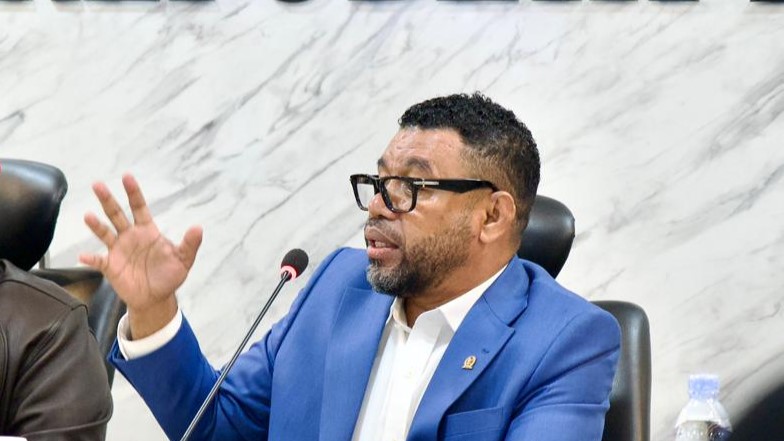
Jakarta, dpd.go.id - Chairperson of Committee III of the House of Regional Representatives of the Republic of Indonesia (DPD RI), Dr. Filep Wamafma, SH., M.Hum., is pushing for the Draft Law on the National Education System (RUU Sisdiknas) to address the disparities in education quality and access between regions. He believes that national education standards can be accompanied by affirmative policies tailored to regional characteristics. He believes that the integration of educational regulations is not only oriented towards harmonizing regulations, but also ensures that the national education system is able to respond to different regional conditions. "One National Education System does not mean the same service pattern for all regions. The standards may be national, but affirmative action policies must be responsive to regional characteristics," Filep said in Jakarta (2/9/2026). He highlighted the issue of teacher distribution, which remains a national challenge. According to data from the Directorate General of Teachers, Education Personnel, and Teacher Education, the ideal national need for teachers and principals is 3,249,356, while there is a shortage of 722,784 and a surplus of 172,796. This data demonstrates that the education problem is not just about the number of teachers, but also about their distribution and the alignment of needs across regions. In addition, Filep also assessed that the plan to implement 13 years of compulsory education must be accompanied by the government's readiness to provide teachers, facilities, funding, and equitable access to education. "We hope that this expansion of compulsory education will be accompanied by increased fiscal capacity and service readiness in the regions. Our constitutional mandate requires that every child receive a decent, quality education, wherever they are," he stressed. Regarding the budget, Filep emphasized that the minimum allocation of 20 percent of the education budget must truly benefit students, teachers, schools, and regions. This is even more crucial after Constitutional Court Decision No. 40/PUU-XXIV/2026 affirmed that the education budget must be used for core components and not be eroded by external programs. Furthermore, the National Education System Bill needs to strengthen the link between education and regional development needs and the world of work. He believes education must be able to produce human capital relevant to economic potential, workforce needs, and social and technological developments in each region. "DPD RI will ensure that regional perspectives are a key part of the deliberations on the National Education System Bill. National education must be built on the same standards, but with a fair policy approach that is tailored to regional needs," Filep concluded.
AGENDA KEGIATAN
DEWAN PERWAKILAN DAERAH REPUBLIK INDONESIA