Informasi Seputar Kegiatan di DPD RI
AGENDA KEGIATAN
DEWAN PERWAKILAN DAERAH REPUBLIK INDONESIA
07 May 2026 oleh admin
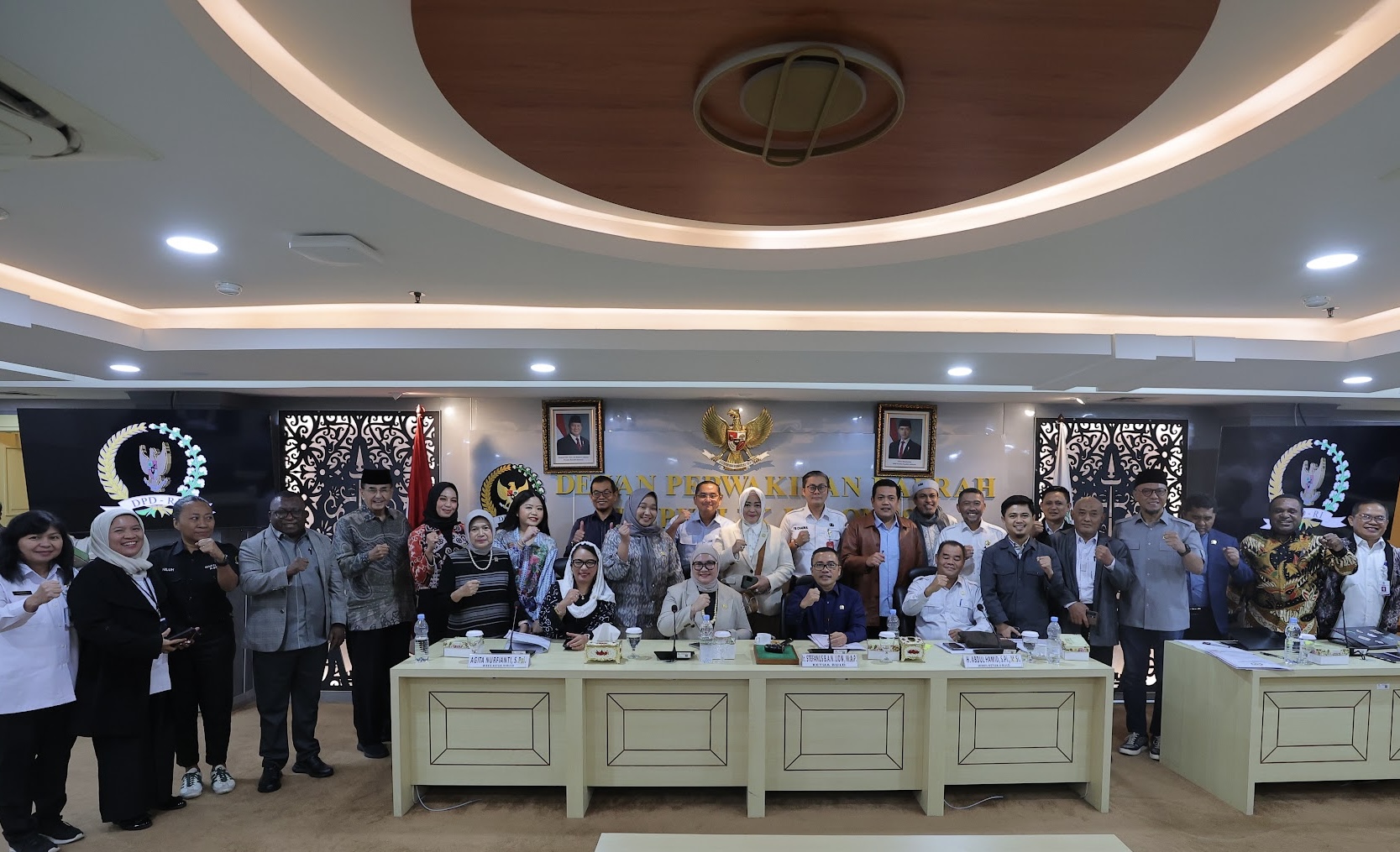
Jakarta, 5/5/2026 — The House of Regional Representatives of the Republic of Indonesia (DPD RI), through the Regional Legislation Committee (BULD), officially ratified the Decree of the Regional Representative Council of the Republic of Indonesia Number /DPD RI/IV/2025-2026 concerning the Results of Monitoring and Evaluation of Draft Regional Regulations and Regional Regulations Related to Cooperative Empowerment. This took place during the 9th Plenary Session of the IV Session Period for the 2025–2026 Sitting Year, held at the Nusantara V Building, Parliament Complex, Jakarta, on Thursday (23/4/2026). This step is part of the implementation of the DPD RI's oversight function as the representative of regional interests within the Indonesian constitutional system, specifically in ensuring the alignment of central and regional policies in the development of the people's economy.
The monitoring results emphasize that cooperatives maintain a strategic position as a pillar of the national economy, rooted in the constitutional principles of Article 33 of the 1945 Constitution of the Republic of Indonesia. Nevertheless, in practical implementation within the regions, cooperative empowerment still faces various structural and juridical challenges, particularly regarding regulatory inconsistencies and weak cross-sectoral policy integration. This is reflected in the DPD RI’s official monitoring documents, which indicate that cooperative issues are no longer merely technical-operational in nature but have evolved into systemic issues within regulatory governance.
In the context of national policy, the emergence of the 'Merah Putih' Village/Sub-district Cooperative program as an initiative to accelerate the people's economy has introduced new dynamics to the cooperative ecosystem. On one hand, this program is expected to stimulate the strengthening of village economies; on the other hand, it has raised significant legal concerns. The BULD DPD RI has noted potential disharmony between various regulations, ranging from Law Number 25 of 1992 concerning Cooperatives and Law Number 6 of 2023 concerning Job Creation to Government Regulation Number 7 of 2021, as well as various technical regulations such as those from the Ministry of Cooperatives, the Ministry of Villages, and the Ministry of Finance that govern the institutional, development, and funding aspects of cooperatives.
This disharmony does not only affect the normative level but also has direct implications for practices in the regions. Monitoring results indicate an overlap of authority between the central and regional governments regarding cooperative development, a lack of clarity in the relationship between cooperatives and Village-Owned Enterprises (BUMDes), and complexities in managing funding sources involving Village Funds and state fiscal instruments. In several cases, regions have faced difficulties in drafting adaptive Regional Regulations (Perda) because regulatory changes at the central level occur rapidly without being followed by adequate implementation guidelines.
Furthermore, the BULD DPD RI highlights the potential legal risks faced by local officials, particularly village heads, in the implementation of cooperative policies. The involvement of village heads in the formation and strengthening of cooperatives including the financial aspects places them in a legally vulnerable position. The ambiguity between administrative responsibility, cooperative institutional responsibility, and potential criminal law implications could lead to the over-criminalization of policies that are essentially administrative or based on developmental discretion.
Findings across various regions also indicate concerns that the 'Merah Putih' Cooperative program could cause policy fragmentation if not properly integrated with existing cooperatives. Additionally, there are indications that funding schemes involving state fiscal instruments actually increase the complexity of village financial management, which may ultimately hinder the effectiveness of the cooperative empowerment program itself.
The BULD DPD RI emphasizes that this situation requires a more integrative policy approach based on regulatory harmonization. Cooperative empowerment cannot be carried out partially; rather, it must be supported by vertical legal harmony between the center and the regions, as well as horizontal harmony across policy sectors. Without such harmonization, policies intended to strengthen the people's economy instead have the potential to create legal uncertainty and policy inefficiency at the implementation level.
As a follow-up, the BULD DPD RI submitted several strategic recommendations as follows:
The DPD RI reaffirms its commitment to continuously overseeing the harmonization process of central and regional regulations as part of its regional representation function within the constitutional system. Through a constructive approach based on regional needs, it is hoped that cooperatives can once again become the primary instrument in realizing an inclusive, equitable, and sustainable people's economy.
AGENDA KEGIATAN
DEWAN PERWAKILAN DAERAH REPUBLIK INDONESIA