Informasi Seputar Kegiatan di DPD RI
AGENDA KEGIATAN
DEWAN PERWAKILAN DAERAH REPUBLIK INDONESIA
03 June 2026 oleh admin
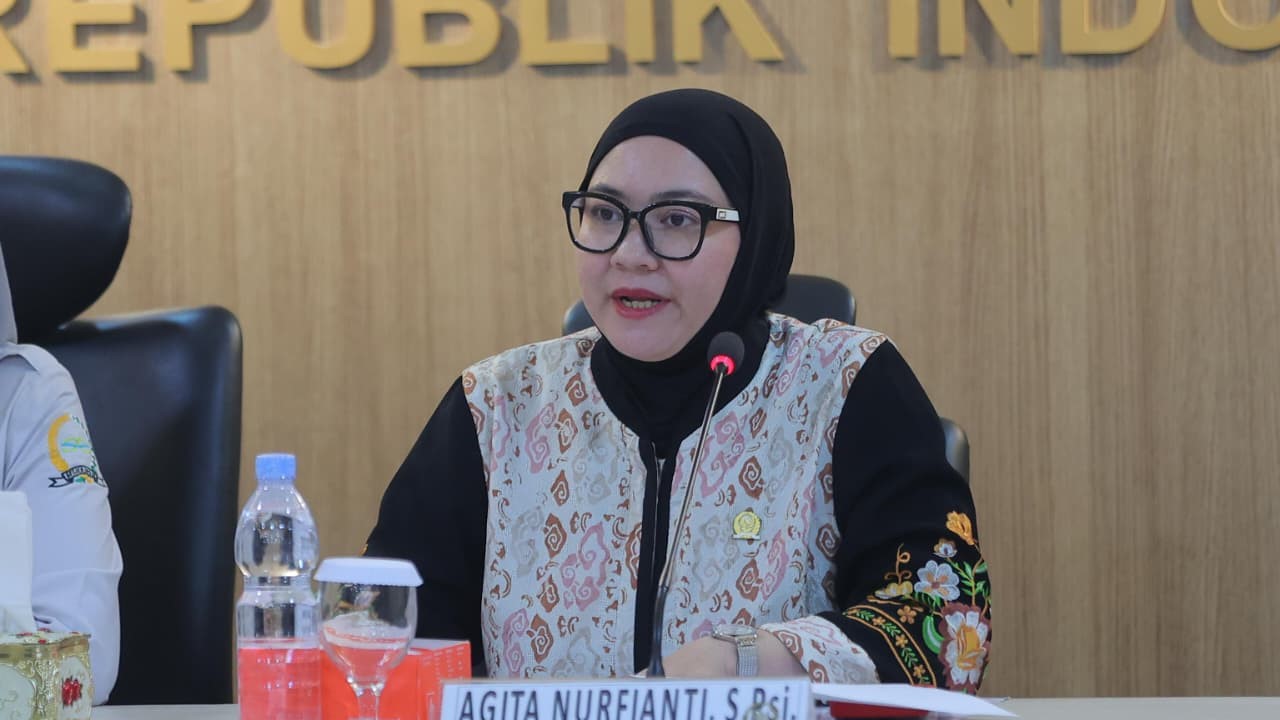
Jakarta, dpd.go.id – The Regional Legislation Committee (BULD) of the DPD RI has uncovered a number of fundamental issues in regional education management, ranging from regulatory disharmony and the uneven distribution of teachers to the suboptimal effectiveness of the education budget. These findings emerged during the 1st Plenary Meeting of BULD DPD RI for the V Sitting Period of the 2025–2026 Session Year, which discussed the monitoring and evaluation results of Draft Regional Regulations (Ranperda) and Regional Regulations (Perda) related to education.
The plenary meeting was a follow-up to the recess results of DPD RI Members, the collection of Public and Regional Aspirations (Asmasda), and public consultation forums across various regions. The monitoring results revealed several education governance issues that occur almost uniformly across various territories.
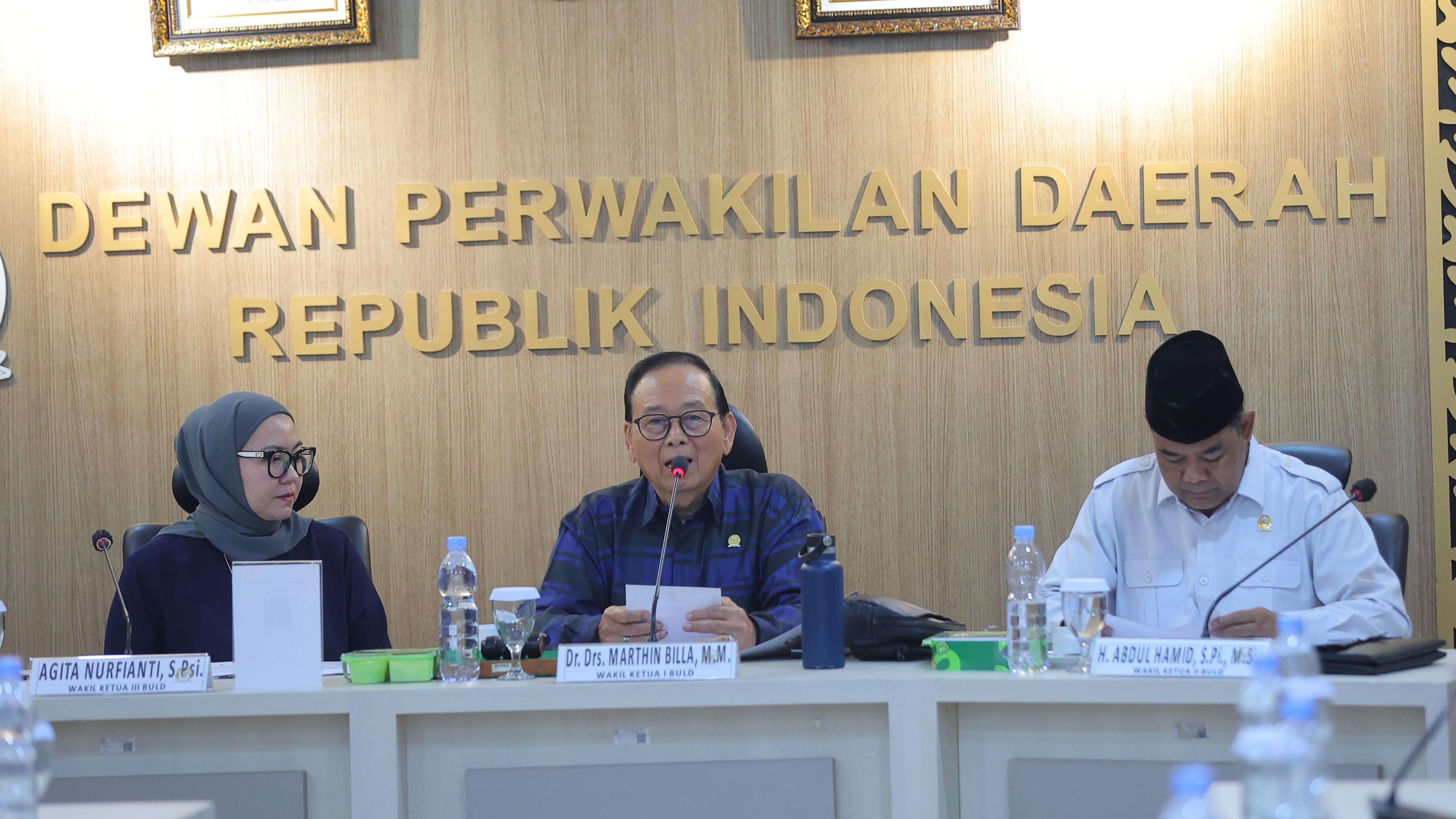
The First Vice Chairperson of BULD DPD RI, Marthin Billa, who chaired the meeting, stated that these findings would serve as the basis for drafting policy recommendations to strengthen the synchronization of central and regional regulations, as well as to improve the quality of education services.
"BULD DPD RI has found that structural issues still persist in education management, requiring serious attention from both the central and regional governments," Marthin stated during the 1st Plenary Meeting of BULD DPD RI at the DPD RI Building, Jakarta, on Wednesday (June 3, 2026).
The first finding to draw BULD's attention was the ongoing regulatory disharmony and lack of clarity regarding the division of authority among the central, provincial, and regency/city governments. Rapid policy changes at the central level are considered to frequently complicate regulatory adjustments in the regions.
"This condition has the potential to trigger overlapping authorities, create uncertainty in policy implementation, and reduce the effectiveness of education services. Therefore, it is necessary to strengthen regulatory harmonization and reaffirm the division of educational authority," he added.
In addition to regulations, BULD also highlighted the uneven distribution of teachers and the management of Government Employees with Work Agreements (PPPK). The monitoring results showed that educators are still concentrated in urban areas, while remote, border, island, and 3T (underdeveloped, frontier, and outermost) regions face teacher shortages.
"BULD also notes issues surrounding PPPK formations that do not yet fully align with school needs. In various regions, there is still a lack of clarity regarding career paths, limited mobility, and welfare disparities among civil servant (ASN) teachers, PPPK, and honorary teachers," Marthin explained.
Another finding pertains to the implementation of the 20 percent education budget allocation from the Regional Revenue and Expenditure Budget (APBD), which is deemed not yet fully effective in improving the quality of education. The majority of the budget is still absorbed by personnel expenses and routine expenditures, thereby limiting the fiscal space needed to enhance learning quality and educational facilities.
Beyond these three main findings, BULD also identified other issues, such as unequal access to education, high administrative burdens on teachers, suboptimal inclusive education, the digital divide, and sustainability challenges faced by private schools. "As a follow-up, BULD will submit policy recommendations to the central and regional governments to realize an education system that is fairer, more inclusive, and of higher quality," he concluded.
AGENDA KEGIATAN
DEWAN PERWAKILAN DAERAH REPUBLIK INDONESIA