Informasi Seputar Kegiatan di DPD RI
AGENDA KEGIATAN
DEWAN PERWAKILAN DAERAH REPUBLIK INDONESIA
24 May 2026 oleh admin
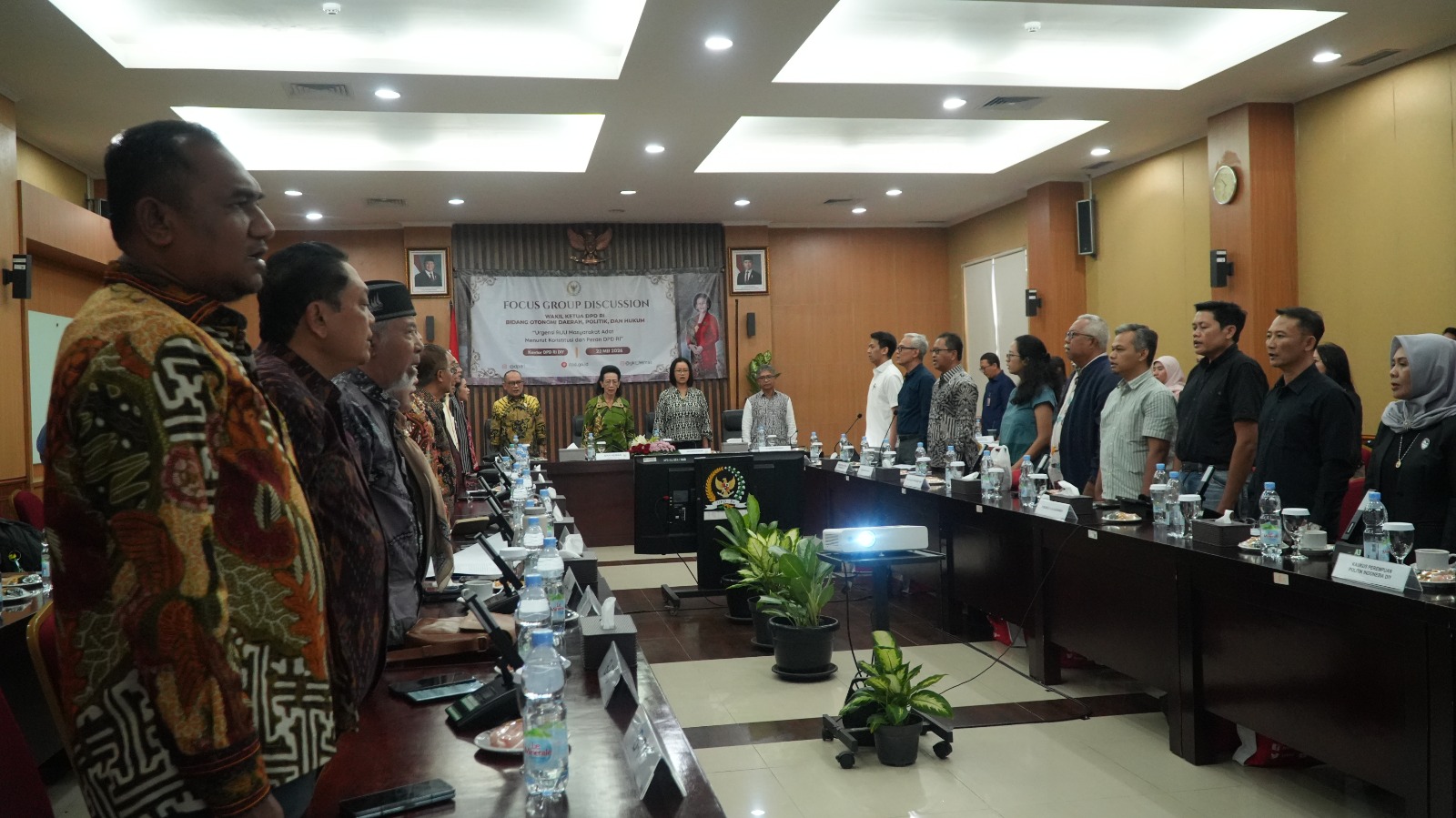
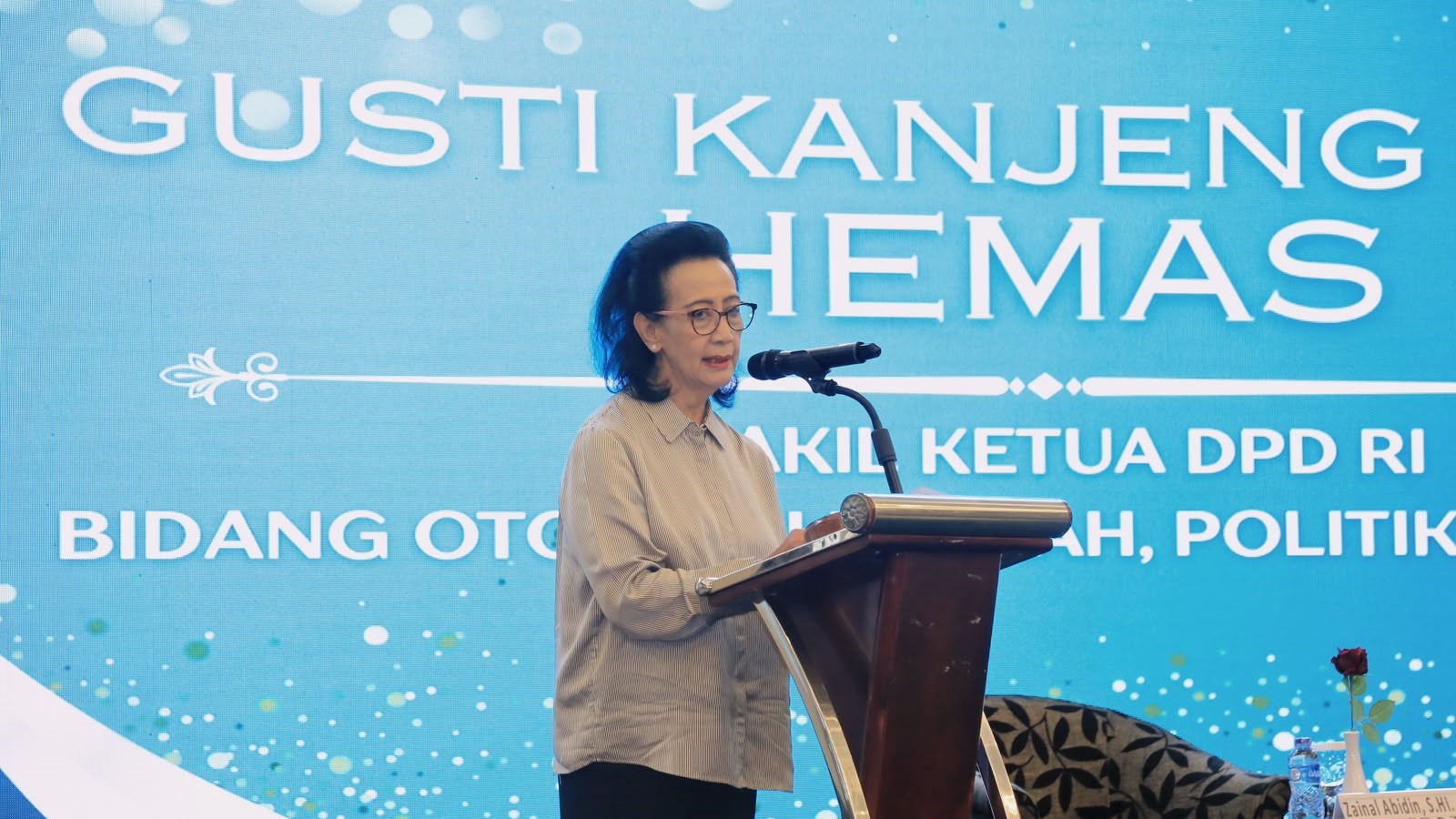
dpd.go.id Yogyakarta - The issue of indigenous peoples has now become a widely discussed topic in the public sphere. There has even been an incident where the screening of a film about indigenous peoples was banned, demonstrating that their existence and voices are not yet fully out in the open. This concern was expressed by the Vice Speaker of the DPD RI, Gusti Kanjeng Ratu Hemas, during a Focus Group Discussion (FGD) themed "The Urgency of the Indigenous Peoples Bill According to the Constitution and the Role of DPD RI," held at the DPD RI Special Region of Yogyakarta (DIY) Office on Saturday (23/5/2026).
In her opening remarks, GKR Hemas emphasized that indigenous peoples form the root of the Indonesian nation's identity, and their existence is guaranteed by the constitution. However, until now, this recognition is deemed to have not been fully materialized into policies that provide real protection. “The recognition of indigenous peoples is not a form of state charity, but rather a constitutional mandate that must be actualized in policies and statutory regulations,” GKR Hemas asserted.
She also highlighted the rising agrarian conflicts and criminalization targeting indigenous peoples. According to data from the Indigenous Peoples Alliance of the Archipelago (AMAN), throughout 2025, there were 135 cases of customary territory seizures affecting approximately 3.8 million hectares of customary lands and impacting 109 Indigenous Peoples. She added that the Indigenous Peoples Bill is an urgent necessity so that constitutional recognition can be transformed into concrete legal protection. “These data are not just mere numbers. They are a reflection that constitutional recognition is not yet fully present in reality,” stated GKR Hemas.
The Focus Group Discussion (FGD) featured several keynote speakers: Gusti Kanjeng Ratu Mangkubumi (Head of the Kawedanan Hageng Punakawan Parwabudaya), Ajiep Padindang (Vice Chairperson of the MPR Constitutional Review Commission), and Abdon Nababan (Secretary General of the Indigenous Peoples Alliance of the Archipelago/AMAN). The event was attended by members of the DPD RI, KPPI DIY, the DIY Education, Youth, and Sports Office, the Bulaksumur G-10 Forum, academics, and students. GKR Mangkubumi explained that indigenous peoples play a vital role as guardians of cultural identity, the environment, and local values passed down through generations. In her view, the existence of indigenous peoples must be positioned as subjects of development, rather than merely objects of state policy.
“Indigenous peoples are the guardians of cultural identity, the environment, and local values and wisdom,” stated GKR Mangkubumi. She also highlighted the importance of protecting the rights of indigenous peoples over their territories and ancestral lands. GKR Mangkubumi cited land issues as a major ongoing challenge, even in the Special Region of Yogyakarta despite its Law on Special Status.
The Secretary General of AMAN, Abdon Nababan, emphasized that indigenous peoples are inherently groups rich in resources, culture, and local knowledge. However, various concession-based development policies have caused these communities to lose their living spaces. “Indigenous peoples are a collection of wealthy people. Then, because concessions and projects move in, they instead become poor,” Abdon Nababan asserted.
He described this condition as a form of structural impoverishment resulting from state policies that fail to involve indigenous peoples in decision-making processes. Furthermore, Abdon highlighted the high rates of criminalization and human rights violations against indigenous peoples when defending their territories. According to Abdon, the enactment of the Indigenous Peoples Bill is a "debt of the republic" that has remained unresolved for decades, despite the recognition of indigenous peoples being enshrined in the 1945 Constitution. Abdon also stressed that the struggle to pass the Bill cannot be continuously delayed, as the substance of the discussion is considered sufficiently mature. In his view, the greatest challenge today is ensuring political oversight until the final enactment stage.
“Our founding fathers were highly visionary because the recognition of indigenous peoples has been present in the constitution since 1945. Yet, to this day, there is still no law that truly provides comprehensive protection. The struggle has lasted for 16 years, entering and exiting the National Legislation Program (Prolegnas). The substance has relatively finished being discussed; now it is just a matter of safeguarding it until the end of the deliberations so that it can be officially enacted,” he said.
Meanwhile, Ajiep Padindang highlighted the importance of broadening the perspective of the indigenous peoples' struggle not only regarding customary land rights (hak ulayat) and property, but also the protection of the intellectual rights of indigenous peoples, which is deemed to become a strategic issue in the future. He cited various cultural heritages such as gamelan, batik, and other local cultural assets that have the potential to be claimed by external parties if they are not immediately protected through robust regulations.
“While the emphasis so far has heavily favored customary land rights, in the future there is something even more valuable: the intellectual rights and local wisdom of indigenous peoples. Batik has already been recognized by UNESCO. However, we cannot avoid the possibility of external claims being made against our cultural intellectual property,” Ajiep Padindang stated.
Furthermore, Ajiep revealed that one of the obstacles in the deliberation of the Indigenous Peoples Bill is the issue of legal politics and the approach of the struggle, which is often perceived as too confrontational within the dynamics of national legislation. Ajiep even admitted to having concerns regarding the chances of the Bill's enactment if it does not receive strong political backing for regional autonomy and indigenous peoples. “A law is a product of legal politics. Therefore, the struggle to pass the Indigenous Peoples Bill requires a strategic and transformative approach to be accepted within the process of national law-making,” he explained. This forum is part of the DPD RI's efforts to gather public aspirations while strengthening the push to accelerate the deliberation and enactment of the Indigenous Peoples Bill in 2026.
AGENDA KEGIATAN
DEWAN PERWAKILAN DAERAH REPUBLIK INDONESIA