Informasi Seputar Kegiatan di DPD RI
AGENDA KEGIATAN
DEWAN PERWAKILAN DAERAH REPUBLIK INDONESIA
13 March 2026 oleh admin
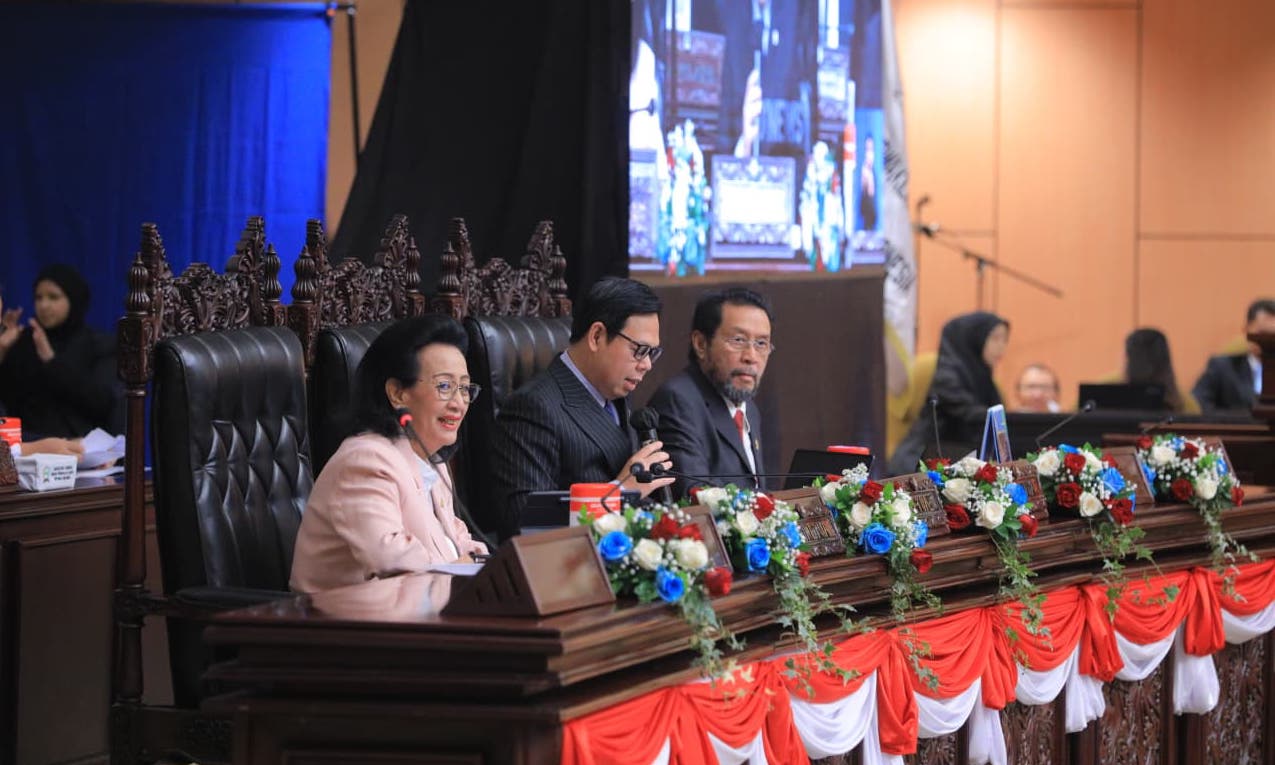
JAKARTA, dpd.go.id – The House of Regional Representatives of the Republic of Indonesia (DPD RI) highlighted the impact of the escalating conflict in the Middle East on domestic economic stability. At the 8th Plenary Session of the 2025-2026 Session Period, DPD RI Speaker Sultan Baktiar Najamudin emphasized that global geopolitical tensions pose a real threat to food availability and public purchasing power ahead of the 2026 Eid al-Fitr holiday.
"The Middle East turmoil is a wake-up call for all countries. The government must immediately mitigate the situation so that rising food prices don't burden the public ahead of Eid," said Sultan at the Nusantara V Building, Parliament Complex, Senayan, Jakarta, Friday (13/3/2026).
Sultan highlighted the annual inflation rate of 4.76 percent as of February 2026, a warning sign for the economic resilience of families and MSMEs in the regions. Coupled with the Rp135.7 trillion state budget deficit, the House of Regional Representative of the Republic of Indonesia (DPD RI) believes that extremely careful and tactical fiscal navigation is necessary.
"With inflation at 4.76%, the key is strengthening regional food production and stabilizing distribution. We must ensure the supply chain is not disrupted amid global uncertainty," stressed the Senator from Bengkulu.
Beyond economic issues, the House of Regional Representatives of the Republic of Indonesia (DPD RI) also pressured the government to ensure the readiness of transportation infrastructure and services. With public mobility predicted to surge sharply, cross-agency coordination is crucial to ensure the safety and comfort of travelers returning home.
"Our goal is one: to ensure that millions of travelers can return home safely and comfortably without being burdened by the surge in prices of basic necessities," added the Sultan.
The session continued with the presentation of Asmasda (Regional Leadership Council) from the four sub-regions. Committee I highlighted strengthening the civil service (ASN), equitable distribution of communications infrastructure, and regional development governance. Committee II addressed food security and maritime connectivity. Committee III emphasized equitable distribution of health services, youth skills development, job expansion, access to education, and strengthening religious institutions. Committee IV and BULD highlighted regional economic dynamics, legal uncertainty, and weak integrated management.
AGENDA KEGIATAN
DEWAN PERWAKILAN DAERAH REPUBLIK INDONESIA