Informasi Seputar Kegiatan di DPD RI
AGENDA KEGIATAN
DEWAN PERWAKILAN DAERAH REPUBLIK INDONESIA
29 June 2026 oleh admin
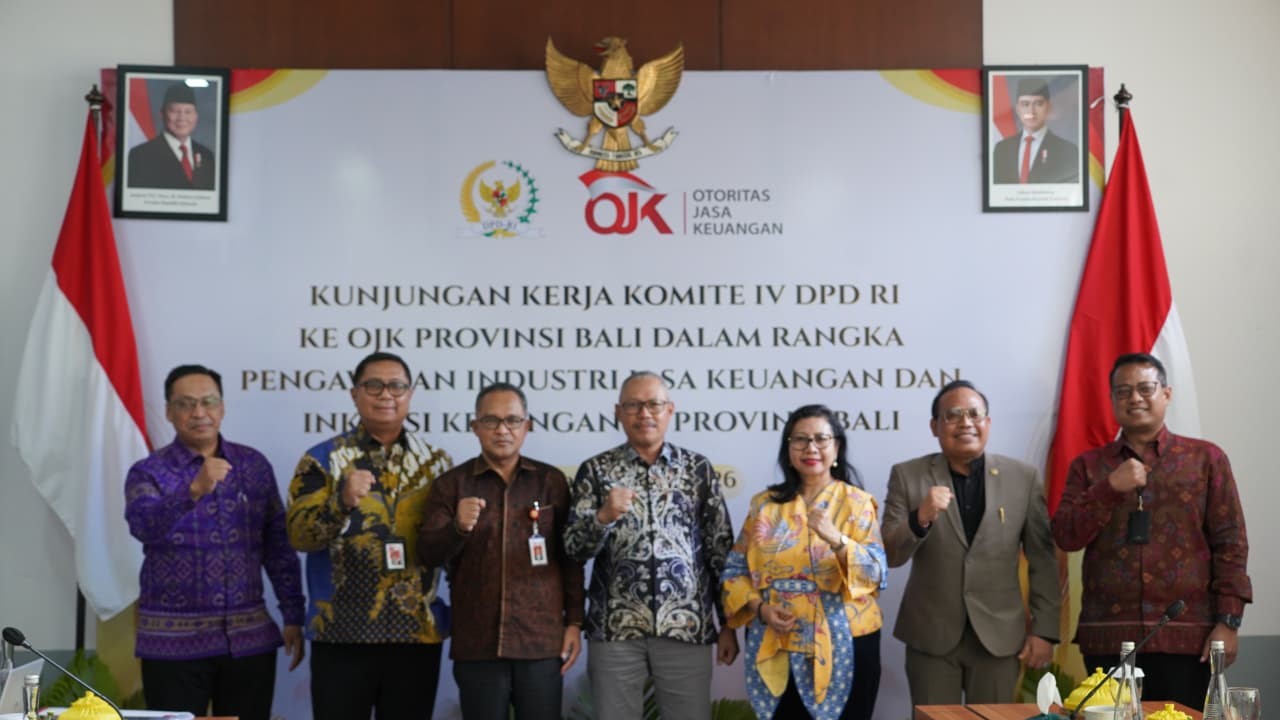
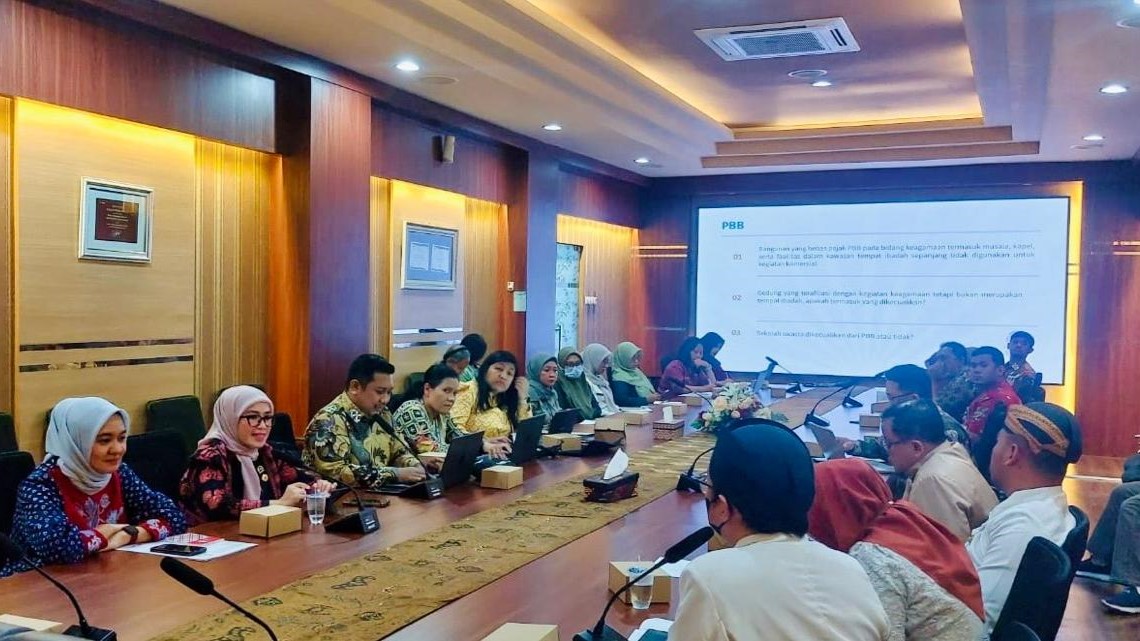
Denpasar, dpd.go.id - The Leadership of Committee IV of the Regional Representative Council of the Republic of Indonesia (DPD RI) conducted a working visit to the Financial Services Authority (OJK) office of Bali Province. The visit aimed to resolve regional issues related to the realization and challenges of financial services, as well as financial inclusion in Bali Province.
The working visit, led by the Chairman of Committee IV, H. Ahmad Nawardi, S.Ag. (representing East Java), accompanied by Vice Chairwoman of Committee IV, Novita
Anakotta, S.H., M.H. (representing Maluku), and Member of Committee IV, I Komang Merta Jiwa, S.E. (representing Bali), took place on Thursday, June 25, 2026, at the Bali Province OJK Office.
In his remarks, the Chairman of Committee IV of DPD RI, H. Ahmad Nawardi, S.Ag., expressed appreciation for the national economic fundamentals which remain solid, with economic growth in the first quarter of 2026 reaching 5.61%—the highest achievement since 2014. However, Nawardi emphasized that macroeconomic stability must be followed by tangible protection for the financial ecosystem at the regional level. "We must not become complacent with stability that only exists on paper. We must safeguard this national optimism with substantive oversight that has a real impact on the community," Nawardi stated.
Member of Committee IV of DPD RI representing Bali Province, who also served as the Working Visit Team Coordinator, I Komang Merta Jiwa, added that as a senator fighting for regional aspirations at the central level, this visit serves as an important momentum to comprehensively inventory financial service issues in Bali.
"So far, the relationship between DPD RI and the Bali Province OJK has been merely normative. We want to ensure that financial service programs, such as KUR (People's Business Credit), truly reach the people who need them without any harmful practices. I also hope that Himbara (the State-Owned Banks Association) can step up as a solution for the Balinese people, including through CSR programs tailored to local needs, such as repairing traditional gongs and balai banjar (community halls)," Komang Merta Jiwa asserted.
Several main focuses of this working visit include: First, evaluating the quality of banking intermediation. With Third-Party Funds (DPK) in Bali's banking sector reaching Rp206.21 trillion and the Loan to Deposit Ratio (LDR) still at 58.51%, Committee IV notes that there is still ample room for banks to be more aggressive in channeling productive financing to MSMEs, the local tourism sector, the creative economy, agriculture, and fisheries. Second, MSME financing and the KUR/KURDa programs. MSME credit in Bali has reached Rp75 trillion, or 51.25% of total banking credit. Committee IV emphasized the need to test the real impact on strengthening business capacity, improving financial governance, and helping debtors graduate to the next business level. Third, supervising fintech lending, BNPL (Buy Now Pay Later), and digital financing. Given the high volume of public complaints regarding unethical debt collection practices, Committee IV is pushing for substantive oversight to mitigate the risks of personal data misuse and the traps of consumptive loans. Fourth, eradicating illegal financial activities. Given Bali's high exposure to digital transactions and tourism, Committee IV highlighted the importance of strengthening education strategies, enforcement, and coordination within the PASTI Task Force (Task Force for Eradicating Illegal Financial Activities) to tackle illegal investments, illegal online loans, and digital fraud. Fifth, the resilience of regional financial institutions. Ensuring capital strengthening, governance, and risk management at BPD Bali (Bali Regional Development Bank), BPR/BPRS (Rural Banks), and microfinance institutions is crucial so they remain trusted engines for regional financing. Sixth, financial literacy and inclusion. Committee IV asserted that the success of these programs must be measured by their impact such as increased access to financing and productive savings rather than just the number of events held or participants attending.
On the side of the Bali Province OJK, the Head of the Office, Parjiman, along with his ranks, presented a comprehensive report on the condition of Bali's financial services sector in 2026. This included developments in banking, capital markets, finance companies, fintech lending, insurance, guarantees, pension funds, as well as consumer protection efforts and the handling of illegal financial activities.
OJK Bali also conveyed strategic policy recommendations to the Central OJK, the Central Government, Local Governments, and DPD RI to strengthen Bali's financial services sector. These recommendations include developing a technology-based market conduct supervisory system, synchronizing the national MSME database, integrating NIB (Business Identification Numbers), simplifying MSME taxes, and providing fiscal support for financial inclusion programs.
This working visit is expected to produce an accurate mapping of the issues within Bali's financial services sector, identify emerging risks, and provide sharp policy recommendations for the economic benefit of the Balinese community.
AGENDA KEGIATAN
DEWAN PERWAKILAN DAERAH REPUBLIK INDONESIA