Informasi Seputar Kegiatan di DPD RI
AGENDA KEGIATAN
DEWAN PERWAKILAN DAERAH REPUBLIK INDONESIA
15 June 2026 oleh admin
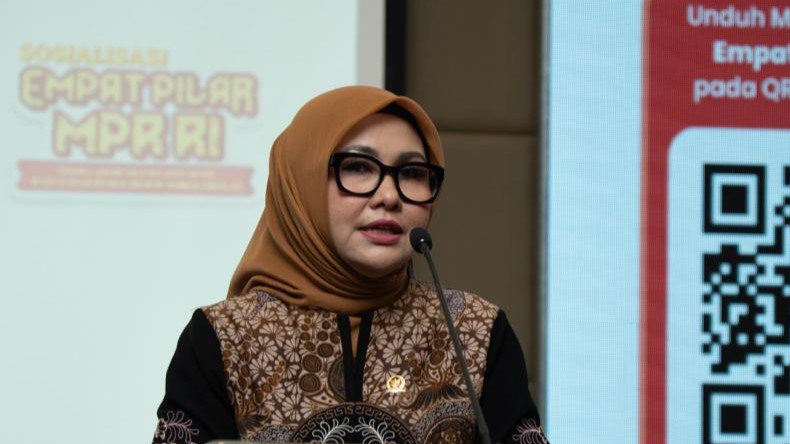
Mataram, dpd.go.id - Member of the House of Regional Representatives of the Republic of Indonesia (DPD RI) representing the West Nusa Tenggara electoral district, Hj. Evi Apita Maya, assesses that a crisis of national literacy is occurring among the younger generation, particularly Generation Z (Gen Z). The low level of understanding regarding Pancasila, the 1945 Constitution (UUD 1945), and the state structure is considered a serious issue that needs immediate attention.
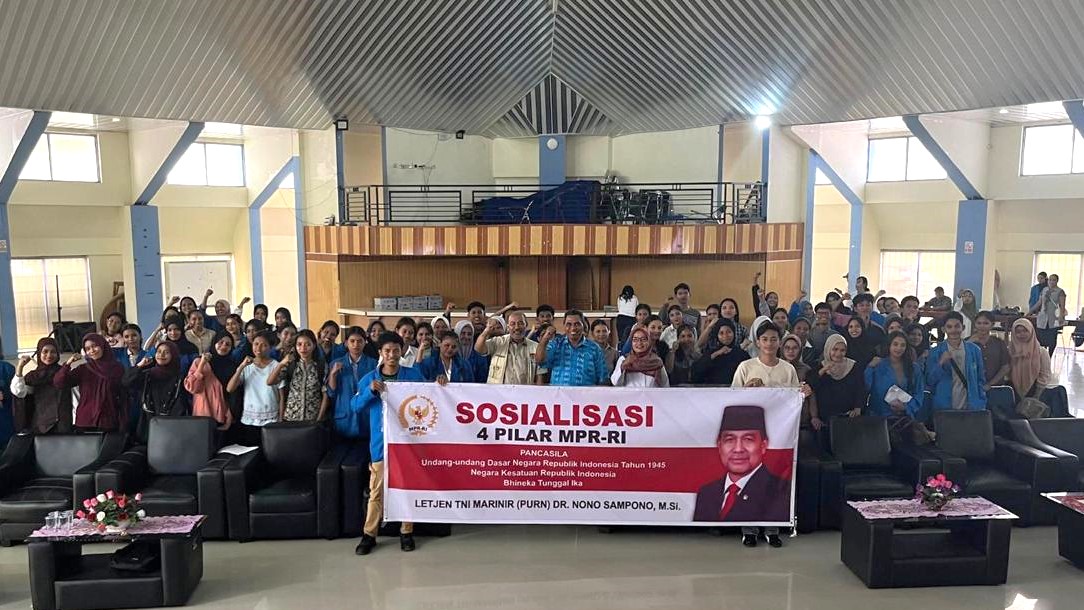
“We encounter this a lot in society, especially when we go to schools for socialization. We are deeply concerned because students' knowledge of Pancasila, the 1945 Constitution, and the Republic of Indonesia (NKRI) is minimal,” said Senator Evi Apita Maya after opening the Socialization of the Four Pillars of the People's Consultative Assembly of the Republic of Indonesia (MPR RI), held in collaboration between the MPR RI and the Nusantara Learning Teacher Community (KGBN) of West Nusa Tenggara in Mataram on Thursday, June 11, 2026.
According to her, this condition is alarming as it concerns the foundational basis of national life. Senator Evi Apita Maya stated that quite a few young people do not even understand Indonesia's form of state or system of government.
“How can this nation remain strong if the younger generation no longer cares about their own country, the system of government, the form of state, and the fundamental values of the nation,” she said.
Therefore, Senator Evi Apita Maya believes that teachers play a strategic role as the spearhead for instilling national values within the educational environment. In addition to schools, she encourages community organizations and youth groups to actively participate in strengthening the socialization of the four pillars of nationhood.
According to her, civic education in the past had a stronger presence through subjects such as Pancasila Moral Education (PMP) and the comprehension and implementation of Pancasila.
“It does exist now, but it hasn't been as maximized as it was before. In the past, we were habituated to understanding and internalizing Pancasila from an early age,” she stated.
Senator Evi Apita Maya also admitted that she often uses a simple approach during socialization events by encouraging students to memorize and understand the meaning behind Pancasila symbols. However, based on her experience, the majority of participants have been unable to explain the core philosophy contained within the state emblem.
“It is not just about memorization, but about understanding and internalizing. This is because every symbol formulated by the nation's founders carries values and philosophy,” she said.
She considers that re-strengthening character education and national literacy is crucial to undertake amidst the heavy influence of modernization, which also affects the behavior patterns and ethics of the younger generation.
AGENDA KEGIATAN
DEWAN PERWAKILAN DAERAH REPUBLIK INDONESIA