Informasi Seputar Kegiatan di DPD RI
AGENDA KEGIATAN
DEWAN PERWAKILAN DAERAH REPUBLIK INDONESIA
29 July 2026 oleh admin
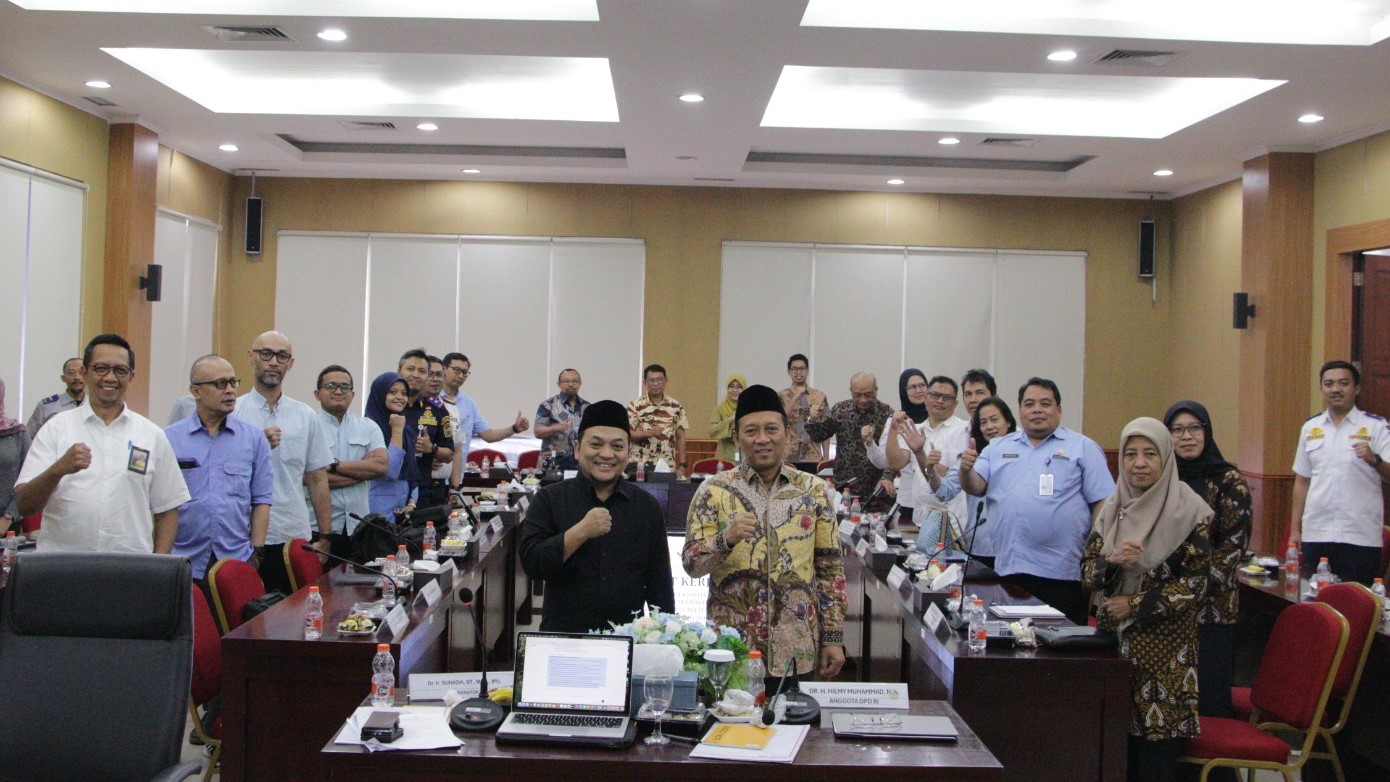
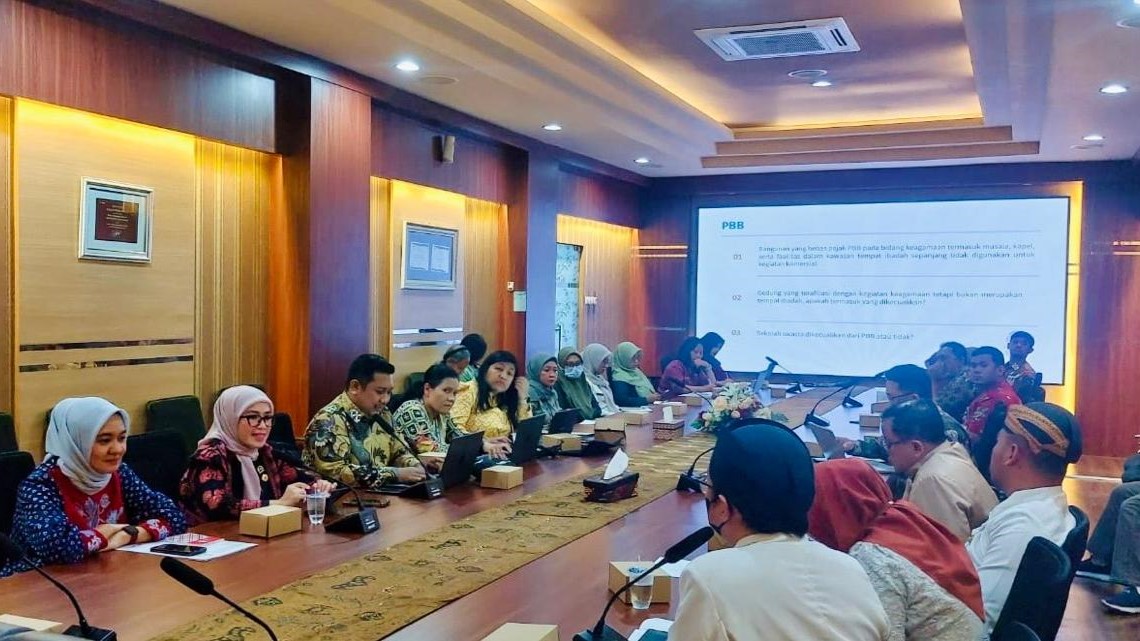
Yogyakarta, dpd.go.id – DPD RI Committee II gathered input from local government officials and transportation stakeholders in the Special Region of Yogyakarta (DIY) during a Working Meeting for the Inventory of Oversight Materials on the Implementation of Law Number 38 of 2004 concerning Roads and its Amendments, on Tuesday (28/7/26) at the DPD RI DIY Office. One of the main focal points of the forum was the threat posed by Over Dimension Overloading (ODOL) vehicles to the quality of roads built at significant expense.
On that occasion, a Member of Committee II DPD RI representing DIY, Dr. Hilmy Muhammad, M.A., commended various road infrastructure achievements in DIY ranging from the connection of the Southern Coastal Road (JJLS) and the construction of the Pandansimo and Kretek 2 Bridges to the progress of the Jogja-Solo Toll Road, which has now reached Purwomartani.
“These various developments serve as crucial achievements in enhancing inter-regional connectivity while supporting public economic growth. Good road connectivity is an absolute prerequisite to support regional economic growth, especially given that the Special Region of Yogyakarta is well-known as a tourist destination. Roads shouldn't just exist for tourists to pass through; we truly hope they become an engine of economic growth for the people. The economy must move, but infrastructure must not be sacrificed,” emphasized the man affectionately known as Gus Hilmy.
Nevertheless, the Katib Syuriya (Supreme Council Secretary) of the Central Board of Nahdlatul Ulama (PBNU) reminded everyone that successful infrastructure development must be balanced with efforts to preserve road quality. Gus Hilmy noted that the activity of ODOL vehicles those carrying excess load and dimensions remains a challenge requiring serious attention due to its potential to accelerate road damage.
"On one hand, our roads are in good condition, but on the other hand, the threat of ODOL is something we must all stay vigilant about and address together," he said.
During the discussion session, Regional Government Agencies (OPD) from both the Public Works and Transportation Departments at the provincial and regency/city levels across DIY noted that budget constraints remain the main challenge in road construction and maintenance. Local budgets (APBD) are deemed insufficient to keep up with the need to maintain road quality, while damage caused by overloaded vehicles continues to drive up maintenance costs. Consequently, regional agencies expressed hope for central government support so that the quality of road infrastructure can be sustained.
Among those sharing this view was Tri Murtoposidi, Head of the Highways Division at the DIY Public Works, Housing, and Energy and Mineral Resources Department, who stated that budget constraints remain an obstacle in preserving regional road infrastructure. “The stability of our provincial roads is still very low, at 69 percent. The hurdle is, of course, mostly related to budgeting,” he stated.
Beyond budget limitations, handling and taking action against oversized and overloaded vehicles was also a key focus of the forum. Discussions went beyond on-the-ground law enforcement to include prevention measures right from the start of the goods distribution process. A representative from PT Jasa Marga Jogja-Bawen, A. J. Dwi Winarsa, proposed that monitoring ODOL vehicles should begin as soon as they leave production sites. In his view, tackling ODOL also requires accountability from business owners and transport companies so that oversight does not rest solely on truck drivers.
“If I may suggest, addressing ODOL should start right where the vehicle begins moving from its production facility. Regulations should make it mandatory that vehicles leaving production sites are not already ODOL,” he suggested.
Meanwhile, the Chairman of the Regional Leadership Board (DPD) of the Land Transportation Organization (ORGANDA) in DIY, Adi Prasetyo, emphasized that enforcing rules against ODOL vehicles is a vital step toward ensuring road user safety. He suggested that the vehicle oversight system could be integrated with Pertamina's system so that vehicles proven to violate ODOL regulations would lose access to subsidized fuel as a form of enforcement.
“We as an association also agree that for community safety, transport safety, and public safety, ODOL vehicles must be regulated. If necessary, revoke their barcode. Make them purchase non-subsidized diesel so that it serves as a real deterrent,” he declared.
The various inputs gathered during this forum will serve as material for the DPD RI in executing its supervisory function regarding the implementation of Law Number 38 of 2004 concerning Roads and its Amendments. In closing the meeting, Gus Hilmy reiterated that synergy among all transportation stakeholders is the key to ensuring that road infrastructure development delivers sustainable benefits for the public.
“There needs to be an increase in the capacity of both local and central governments to support reliable public transportation,” concluded Gus Hilmy.*
AGENDA KEGIATAN
DEWAN PERWAKILAN DAERAH REPUBLIK INDONESIA