Informasi Seputar Kegiatan di DPD RI
AGENDA KEGIATAN
DEWAN PERWAKILAN DAERAH REPUBLIK INDONESIA
12 May 2026 oleh admin
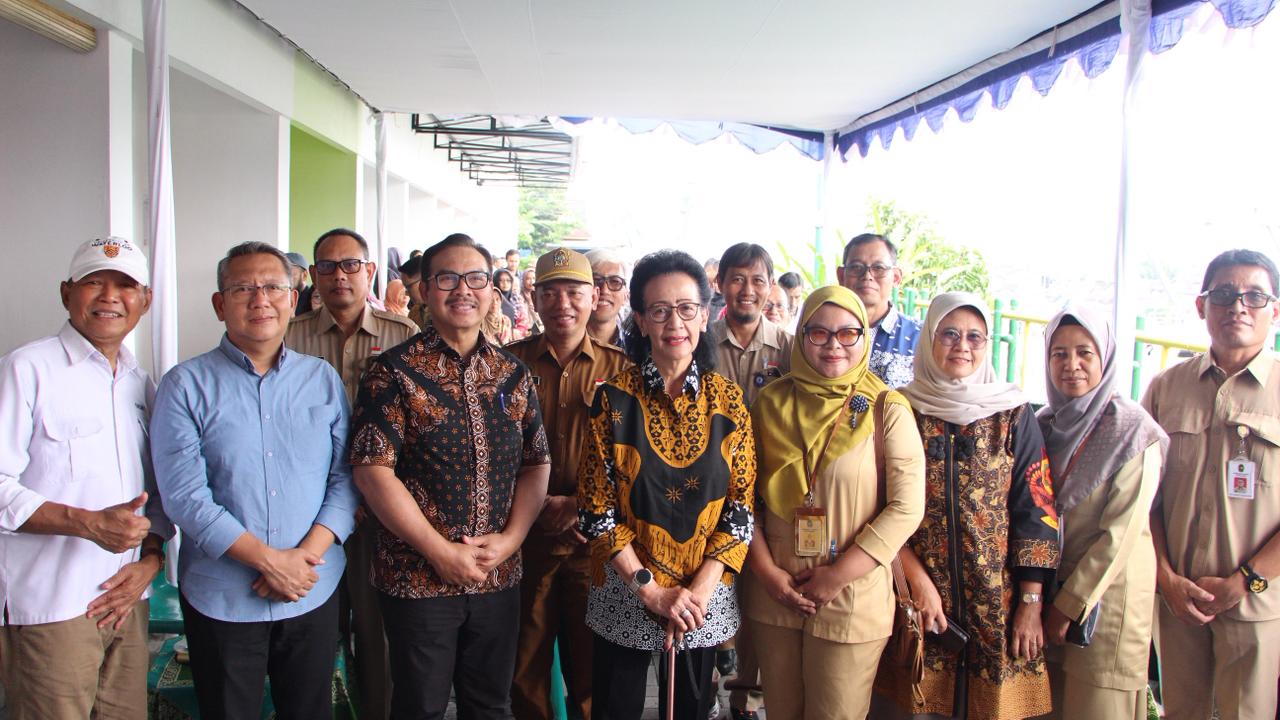
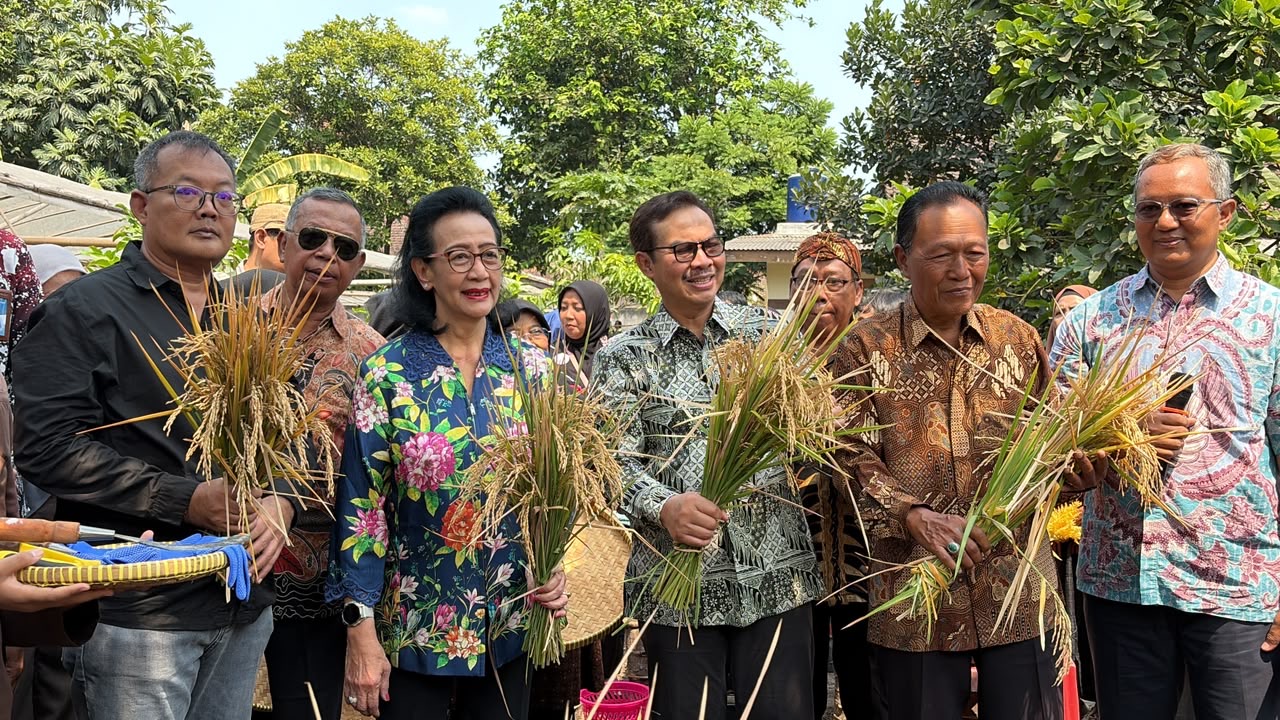
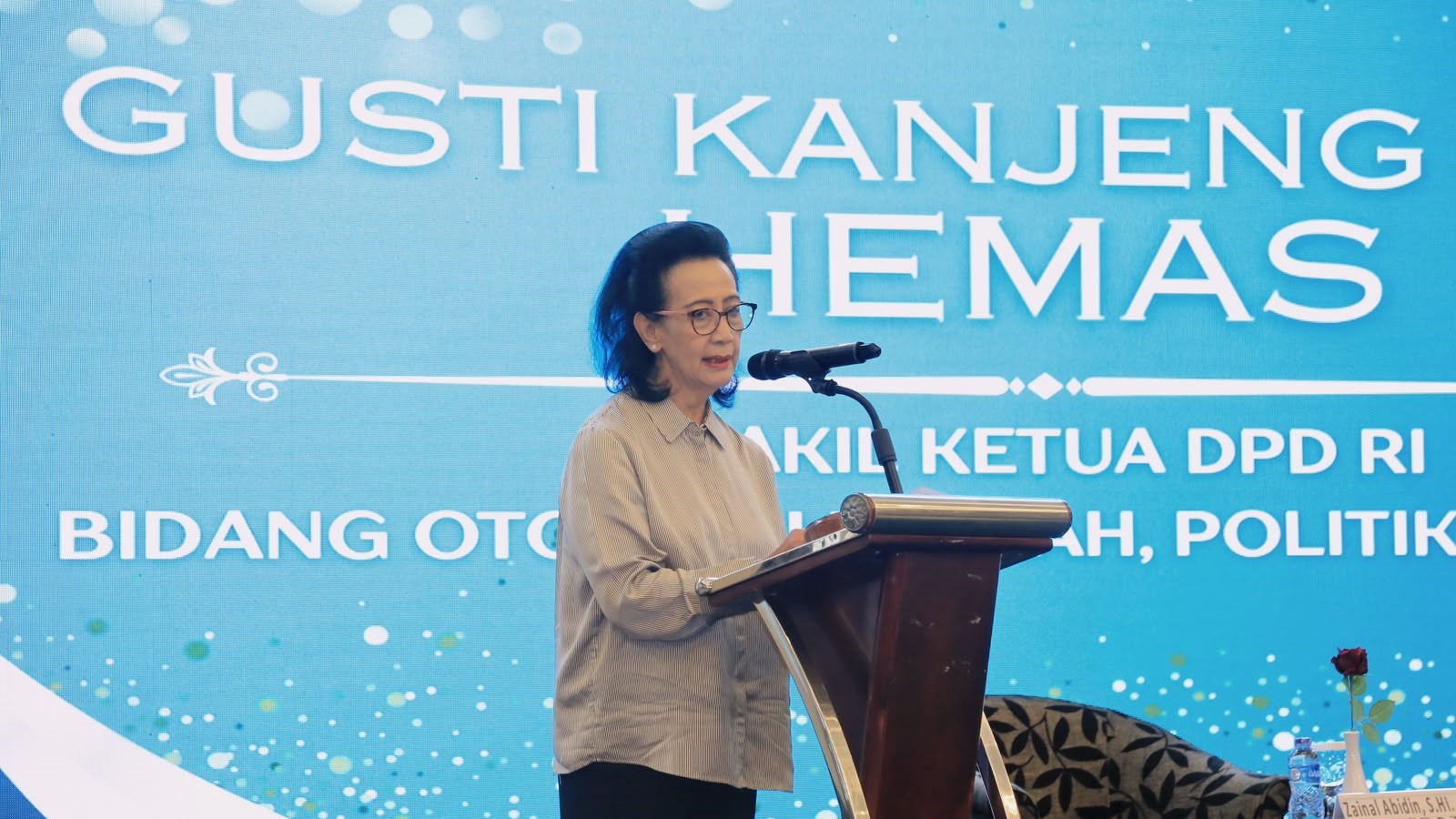
dpd.go.id Yogyakarta, May 11, 2026 – Vice Speaker of the House of Regional Representatives Council (DPD) of the Republic of Indonesia, GKR Hemas, emphasized the importance of a cultured and participatory approach that prioritizes local wisdom in implementing urban spatial planning. This statement was made during a working field visit to Kampung Madani Terban, Gondokusuman, Yogyakarta City, on Monday (11/5).
The working visit is part of the oversight agenda on the contextual implementation of Law Number 26 of 2007 concerning Spatial Planning in the Special Region of Yogyakarta. Present at the event were the Mayor of Yogyakarta, Hasto Wardoyo, along with heads of relevant agencies, namely the Head of the Yogyakarta City PUPKP Department (Public Works, Housing, and Public Spatial Planning), the Head of the Yogyakarta City Land and Spatial Planning Department (Dispertaru), the Head of the Environmental Department (DLH), and the Head of the Yogyakarta City Land Office. In addition to the bureaucracy, academics were also present, including the Rector of the Islamic University of Indonesia (UII) and representatives from the Architectural Engineering department of Gadjah Mada University (UGM), who were partnered with the Yogyakarta City Government to strengthen the technical and social studies for riverbank management.
In her remarks, GKR Hemas expressed appreciation for the Yogyakarta City Government's efforts to manage the riverbank areas through a humane approach. According to her, spatial planning in the Special Region of Yogyakarta must consider all aspects, and local wisdom must not be abandoned. Kampung Madani Terban, which was inaugurated in January 2026, serves as a model for government intervention in managing riverfront residential areas, focusing on providing Decent Housing (RLH). This area's management implements the 3M Model, which stands for Munggah (moving upward/multi-story), Mundur (moving back from the river's edge), and Madep Kali (facing the river).
"The spatial planning for this Madani area is already quite good. What matters is that the river is cleaned up first. Then, what I hope for is continuous communication with the residents. That is the most crucial part. Because we cannot use a system of evicting and displacing; rather, we must respect the fact that residents living on riverbanks require special handling through more humane methods," said GKR Hemas.
GKR Hemas also highlighted the importance of spatial planning as an integral part of Yogyakarta's identity as a city of tourism and education. According to her, spatial planning is not just about physical infrastructure, but also about building public awareness, including among newcomers and tourists, to maintain cleanliness and order in public spaces.
"As a city of tourism and education, spatial planning also involves the awareness of the public and visiting tourists to dispose of trash properly. So, we need to design spaces, not just for houses, but also spaces for waste disposal as optimal as possible," she asserted.
On the same occasion, the Mayor of Yogyakarta, Hasto Wardoyo, expressed his appreciation for the DPD RI's attention to urban management efforts. Hasto explained that the biggest challenge in managing the city of Yogyakarta is accommodating the diverse desires of the residents and changing public behavior to maintain cleanliness and order in public spaces.
"The biggest challenge is how we can organize things when residents have differing desires. Secondly, many residents utilize the river as a source of livelihood. Some raise fish, chickens, or even goats by the river. If we clean up the river, it means taking away a portion of their livelihood," Hasto explained.
Hasto emphasized that the toughest challenge is conducting social reconstruction, which means changing public behavior. According to him, physical arrangement becomes meaningless if it is not followed by a change in residents' behavior regarding environmental cleanliness. Regarding protection measures for the community, Hasto explained that the Yogyakarta City Government is carrying out land consolidation, particularly in riverbank areas such as the Code, Winongo, and Gajahwong Rivers, as well as along the railway tracks. Through land consolidation, residents who previously lacked legal status now receive kekancingan letters as official land-use permits from the Yogyakarta Sultanate.
"So, we are carrying out consolidation at each point, especially along the banks of the Code, Winongo, and Gajahwong rivers, as well as by the railway tracks. Those who previously did not have deeds now have clarity," he explained.
Hasto also conveyed the residents' satisfaction with the condition of their new housing. Compared to their previous conditions on the riverbanks, where sanitation was poor, the new housing in Kampung Madani Terban has orderly sanitation, clean rooms, as well as proper kitchen and bathroom facilities.
"It is more than enough. If you compare it to when they lived below, the sanitation was bad. Now, all sanitation is well-organized, the rooms are clean, the beds are clean, the kitchen is clean, and the bathroom is clean. That is what brings us relief," Hasto expressed. Nevertheless, Hasto also acknowledged that socio-economic challenges remain. Residents occupying the new housing still have the same jobs and incomes as before, but they must now pay utility bills for electricity and water, which they previously obtained for free from the river or wells.
"Our remaining homework is that their jobs are still the same, their incomes are still the same, but they have to pay more. For electricity, and previously their water came from the river or wells, but now they have to pay. That is a challenge we must resolve," he concluded. *
AGENDA KEGIATAN
DEWAN PERWAKILAN DAERAH REPUBLIK INDONESIA