Informasi Seputar Kegiatan di DPD RI
AGENDA KEGIATAN
DEWAN PERWAKILAN DAERAH REPUBLIK INDONESIA
22 May 2026 oleh admin
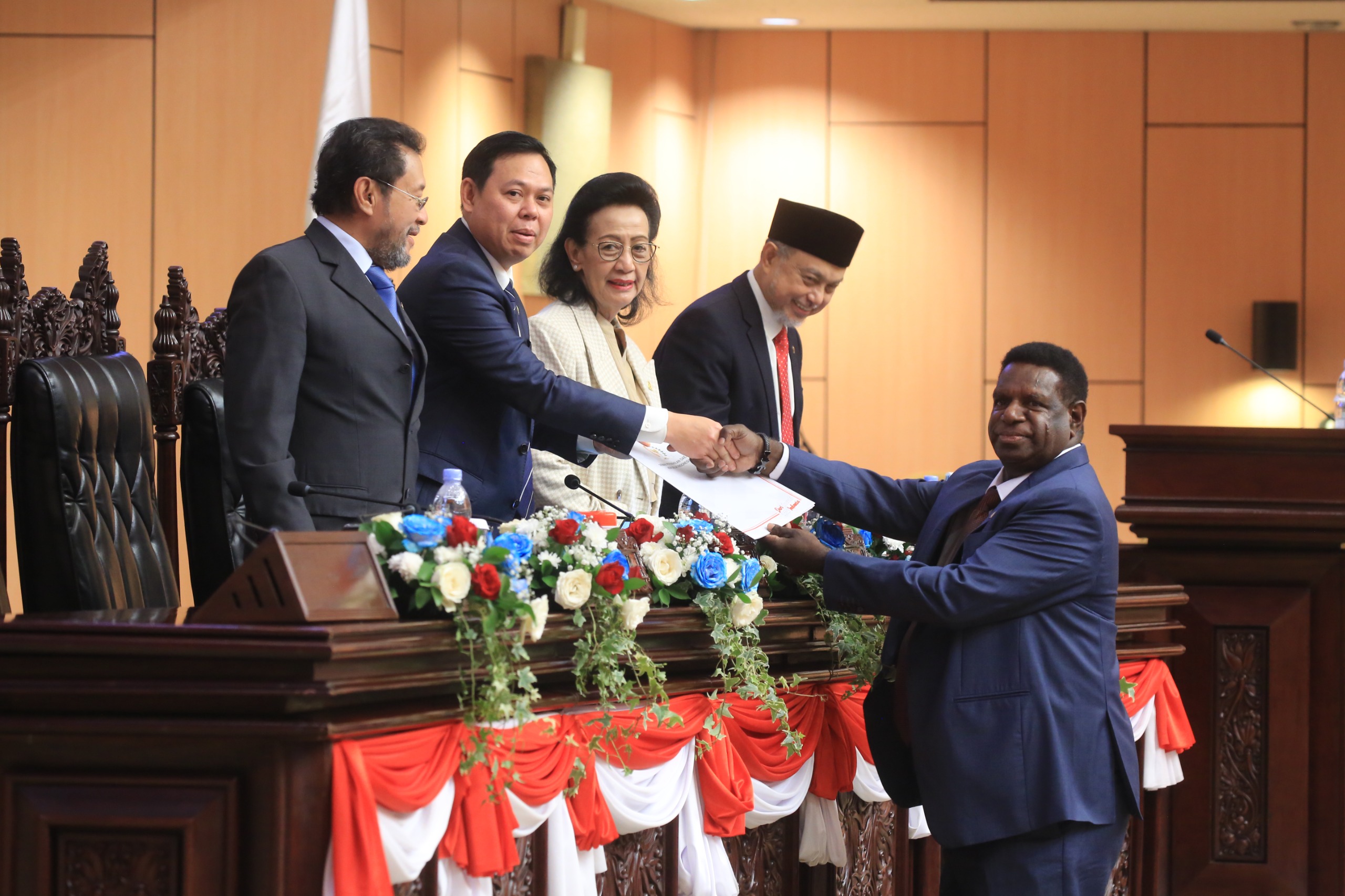
dpd.go.id Jakarta - The House of Regional Representatives of the Republic of Indonesia (DPD RI) presented the results of gathering Public and Regional Aspirations (Asmasda), collected from April 24 to May 13, 2026, during the 10th Plenary Session at the Nusantara V Building, Senayan Parliamentary Complex, on Friday (22/05/2026). Various strategic issues of public concern in several regions include village development, subsidized energy distribution, migrant worker protection, education, health in outermost, underdeveloped, and frontier (3T) regions, food security, as well as the security situation and humanitarian conflicts in Papua.
The presentation of aspirations for the Western Sub-Region I, represented by Muhammad Nuh and Almira Nabila Fauzi, highlighted challenges in village development, capacity building for village apparatus, legal certainty for non-civil servant (non-ASN) personnel, subsidized fuel distribution for fishermen, the protection of migrant workers, women, and children, as well as the effectiveness of the national budget (APBN) allocation and regional transfer funds. Furthermore, residents complained about disparities in educational facilities and the distribution of teaching staff. Consequently, DPD RI emphasized the importance of strengthening village governance, ensuring equal distribution of energy subsidies and educational services, and accelerating regional budget disbursements to make development more effective and equitable.
"Transparency in the use of the state budget needs to be continuously strengthened so that the public can feel the benefits of development more tangibly," stated Almira.
On the same occasion, the presentation of aspirations for the Western Sub-Region II was represented by Ida Bagus Rai Dharmawijaya Mantra and Fahira Idris. The public highlighted the urgency of revising the Election Law to provide legal certainty for the 2029 General Election. Additionally, residents underscored the supervision of 3-kg subsidized LPG distribution, the impact of El Niño on food security, the protection of Indonesian migrant workers, the impact of exchange rate fluctuations on the regional tourism sector, and the equitable distribution of teachers and educators. DPD RI proposed strengthening electoral regulations, supervising subsidy distribution, and enhancing the protection and competence of Indonesian workers.
In the Eastern Sub-Region I, aspirations were delivered by Muhammad Hidayattollah and Andhika Mayrizal Amir. Public aspirations highlighted the disharmony of forest zone regulations that hinder village development, limitations on regional authority, the low welfare of teachers in border areas, and the lack of healthcare services in 3T regions. In response, DPD RI recommended oversight regarding the implementation of the Village Law, Forestry Law, National Education System Law, Teachers and Lecturers Law, and Health Law. This oversight focuses on reformulating village fund management, harmonizing central-regional regulations, strengthening teacher welfare and child education protection, as well as ensuring the equitable distribution of healthcare workers, medical facilities, and access to BPJS health services for communities in border and island regions.
Meanwhile, in the Eastern Sub-Region II, aspirations were presented by Hasby Yusuf and Frits Tobo Wakasu. The public highlighted the rising threats to social security, child exploitation, drug abuse, illegal online loans, and cybercrimes, which require stronger digital literacy and social protection. Additionally, the marine and fisheries sector, the protection of women and children in customary communities and 3T regions, the enhancement of regional investment, and the synchronization of education regulations were also major concerns for the people in eastern Indonesia.
Regarding the national issue in Papua, the public evaluated that the security situation and violent conflicts still require more comprehensive resolution measures. The security approach currently applied has not fully succeeded in creating a sense of safety for civil society. Therefore, a thorough evaluation of security policies is needed through a humane, persuasive approach that upholds human rights, while strengthening synergy among the government, security forces, independent institutions, and civil society to achieve sustainable peace in Papua.
"Resolve the Papua issue in the shortest possible time; let there be no neglect of the Papuan people," concluded Frits.
AGENDA KEGIATAN
DEWAN PERWAKILAN DAERAH REPUBLIK INDONESIA