Informasi Seputar Kegiatan di DPD RI
AGENDA KEGIATAN
DEWAN PERWAKILAN DAERAH REPUBLIK INDONESIA
22 June 2026 oleh admin
dpd.go.id - Committee IV of the DPD RI held a series of Working Meetings with the Minister of Finance of the Republic of Indonesia, the Minister of National Development Planning/Head of Bappenas of the Republic of Indonesia, the Governor of Bank Indonesia, and the Head of the Central Statistics Agency (BPS) of the Republic of Indonesia in order to discuss the Macroeconomic Framework and Fiscal Policy Principles (KEM-PPKF) for 2027 as a basis for preparing the Draft State Budget for Fiscal Year 2027.
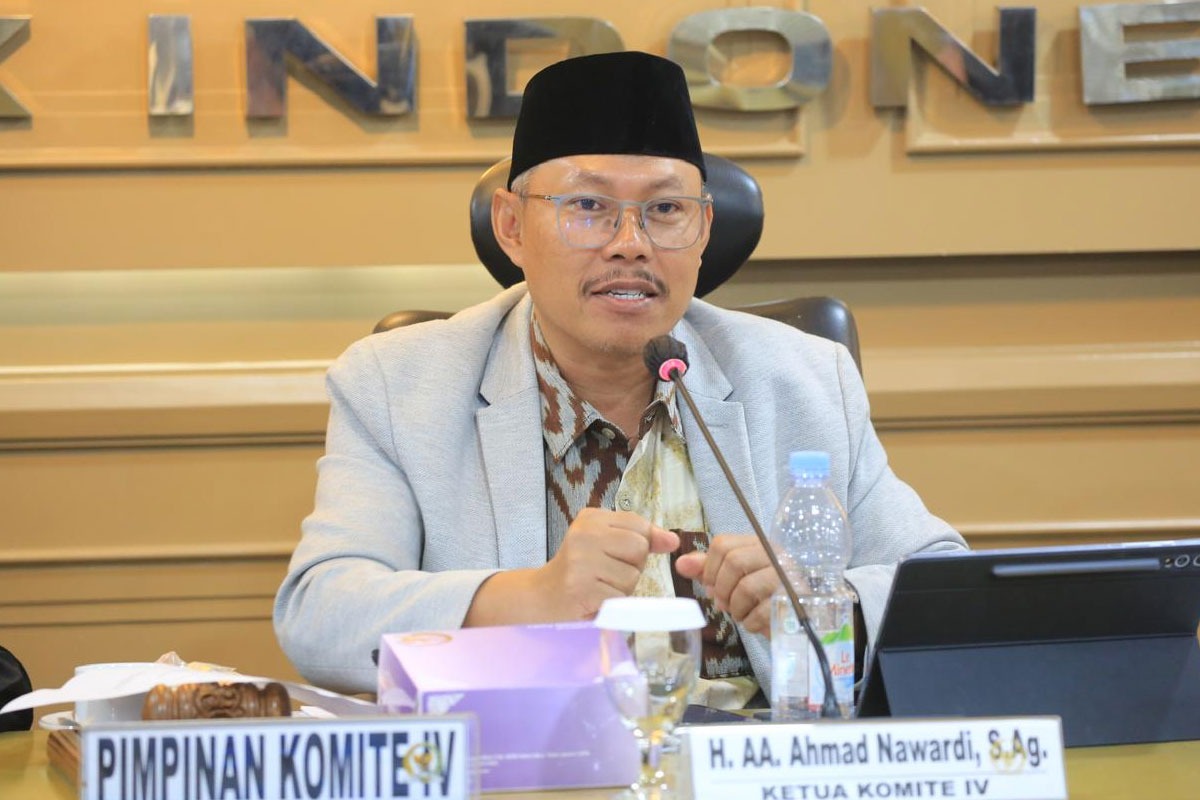
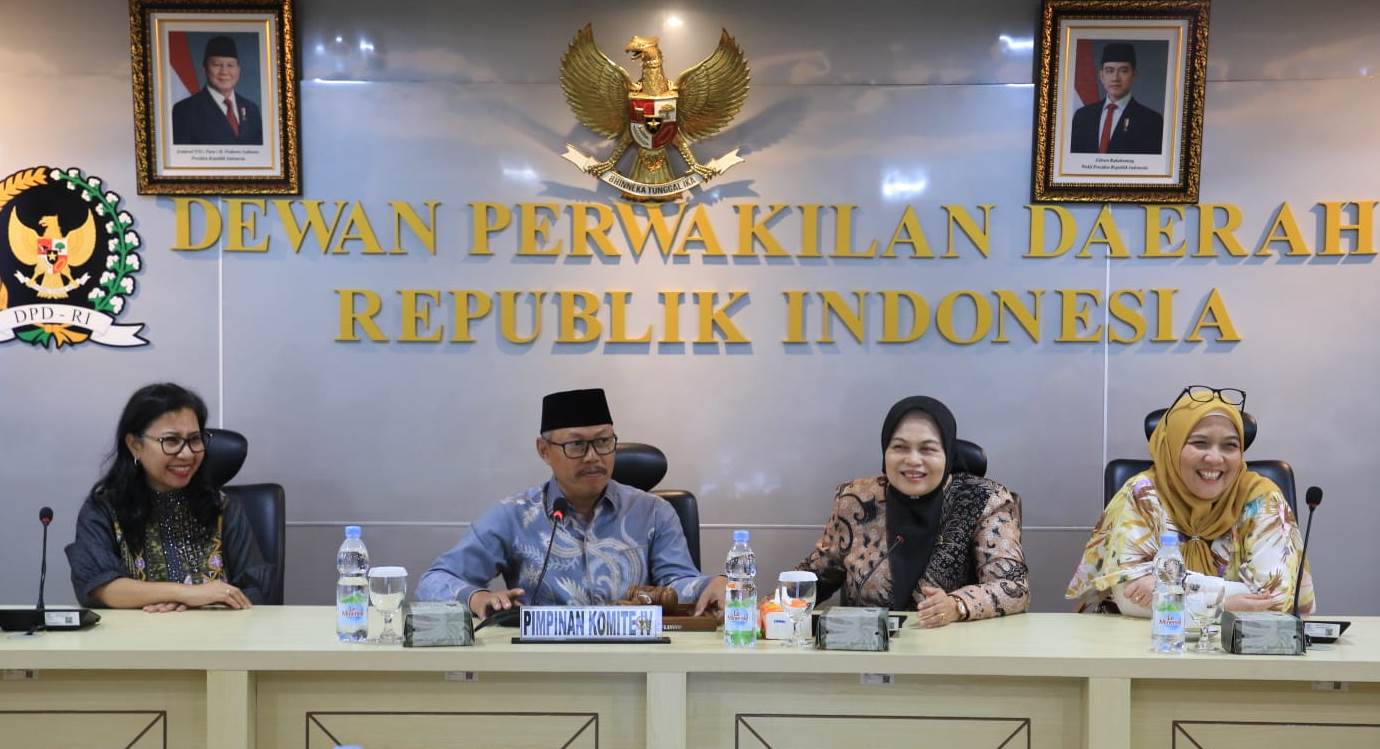
Chairperson of Committee IV of the DPD RI, Nawardi, emphasized that the discussion of the 2027 KEM-PPKF must be able to address global economic challenges while ensuring that the APBN becomes an instrument to improve people's welfare and reduce development disparities between regions.
"DPD RI views the State Budget (APBN) not merely as a fiscal instrument, but as a tool to protect the people, strengthen regional economies, and achieve equitable prosperity. Therefore, every economic and fiscal policy must be aligned with the interests of the people and regions," Nawardi said in the GBHN Room of the Senayan Parliament Complex on Monday (June 22).
Responding to the KEM-PPKF discussion, Indonesian Minister of Finance Purbaya Yudhi Sadewa, who was present at the forum, explained that Indonesia's economic growth was the highest in the ASEAN region.
"In the first quarter of 2026, Indonesia's economy grew by 5.61 percent annually, one of the highest in the ASEAN and G20 regions. Meanwhile, inflation in May 2026 was recorded at 3.08 percent, and the trade surplus has lasted for 72 consecutive months. This demonstrates that the national economy remains resilient amidst global turmoil," he explained.
Committee IV of the House of the Regional Representative of the Republic of Indonesia (DPD RI) assessed that the 2027 economic growth target of 5.8–6.5 percent must be accompanied by a clear strategy to ensure growth is not only high in aggregate but also high-quality, inclusive, and equitable. The state budget is also expected to increasingly favor sectors that support regional economies, such as agriculture, fisheries, MSMEs, and the village economy.
At the forum, the Minister of National Development Planning/Head of Bappenas, Rachmat Pambudy, who was also present, highlighted Indonesia's development through the 2027 Government Work Plan (RKP).
"We have formulated the 2027 RKP as a year of accelerated development. After a consolidation phase in 2025 and a strengthening of the foundation in 2026, 2027 will be the momentum to ensure that all development instruments, including the state budget, regional governments, state-owned enterprises, and the private sector, will operate in an integrated manner to produce tangible benefits for the community. The 2027 RKP is not just a budget document, but a national work map to ensure that the President's directives can be translated into development results that are felt by the people," Rachmat concluded.
Furthermore, Committee IV highlighted several challenges that the government needs to anticipate, ranging from global economic uncertainty, the weakening rupiah exchange rate, the potential for rising debt costs, and its impact on national and regional fiscal space. DPD RI urged the government to develop a transparent fiscal risk map to ensure the sustainability of national priority programs, regional transfers, and public services.
In discussions with the Statistics Indonesia (BPS), Committee IV of the DPD RI also emphasized the importance of accurate and credible statistical data as a basis for formulating economic and fiscal policies. Various aspirations from the regions indicate a persistent gap between statistical data and the actual conditions of society, particularly regarding poverty, unemployment, and public welfare.
"Statistical data is not just numbers. Data is the basis for national decision-making. Therefore, all macroeconomic assumptions and development targets must be supported by accurate data that accurately reflect the conditions of communities throughout Indonesia," Nawardi emphasized.
According to the Deputy Head of BPS RI, Sonny Harry Budiutomo Harmadi, BPS uses the principle that the results are relevant and reliable.
"BPS is committed to maintaining the independence and quality of Indonesia's official statistics by adhering to the mandate of the law, the principles of official United Nations statistics, and international statistical methodology. Therefore, the data produced by BPS is not only relevant to national development needs but also globally comparable and trusted by the international community," he said.
Sonny added that BPS is currently present at the district and city levels to meet data needs in Indonesia.
"Through 539 work units supported by more than 20,000 employees, and around 601,000 statistical partners assisting in the field data collection process, we continue to strengthen data quality through censuses, surveys, administrative data compilation, and the use of new technologies such as big data, artificial intelligence, and satellite imagery," he explained.
Committee IV of the DPD RI encourages the strengthening of a more transparent and adaptive national statistics system, including data integration between ministries, institutions, and regional governments, so that development policies are more targeted and able to reduce disparities between regions.
Deputy Chair of Committee IV Shinta Rosma Yenti questioned regional aspirations regarding the current revenue sharing fund (DBH) which is still being cut, which has an impact on regional infrastructure development.
"The DBH regulated in Law No. 1 of 2022 concerning Central and Regional Financial Relations is currently still being cut by up to 70 percent for East Kalimantan Province. Regarding the Transfer to the Regions (TKD) for East Kalimantan, which amounted to IDR 10 trillion, the cut was up to IDR 7 trillion. Meanwhile, the Minister also stated that there would be an increase in TKD at the beginning of the year of IDR 40 trillion to IDR 90 trillion. However, to date, East Kalimantan's TKD remains at IDR 2.9 trillion, down from IDR 10 trillion in 2026," she explained.
Responding to this, Finance Minister Purbaya explained that the cuts were based on the State Budget Law, but they depended on certain conditions.
"Regarding the reduction in TKD, it is based on the State Budget Law but depends on the state's financial condition. Currently, I have instructed the Director General to calculate the TKD payments in stages starting in 2023, and additional payments will be made in July 2026," explained Purbaya.
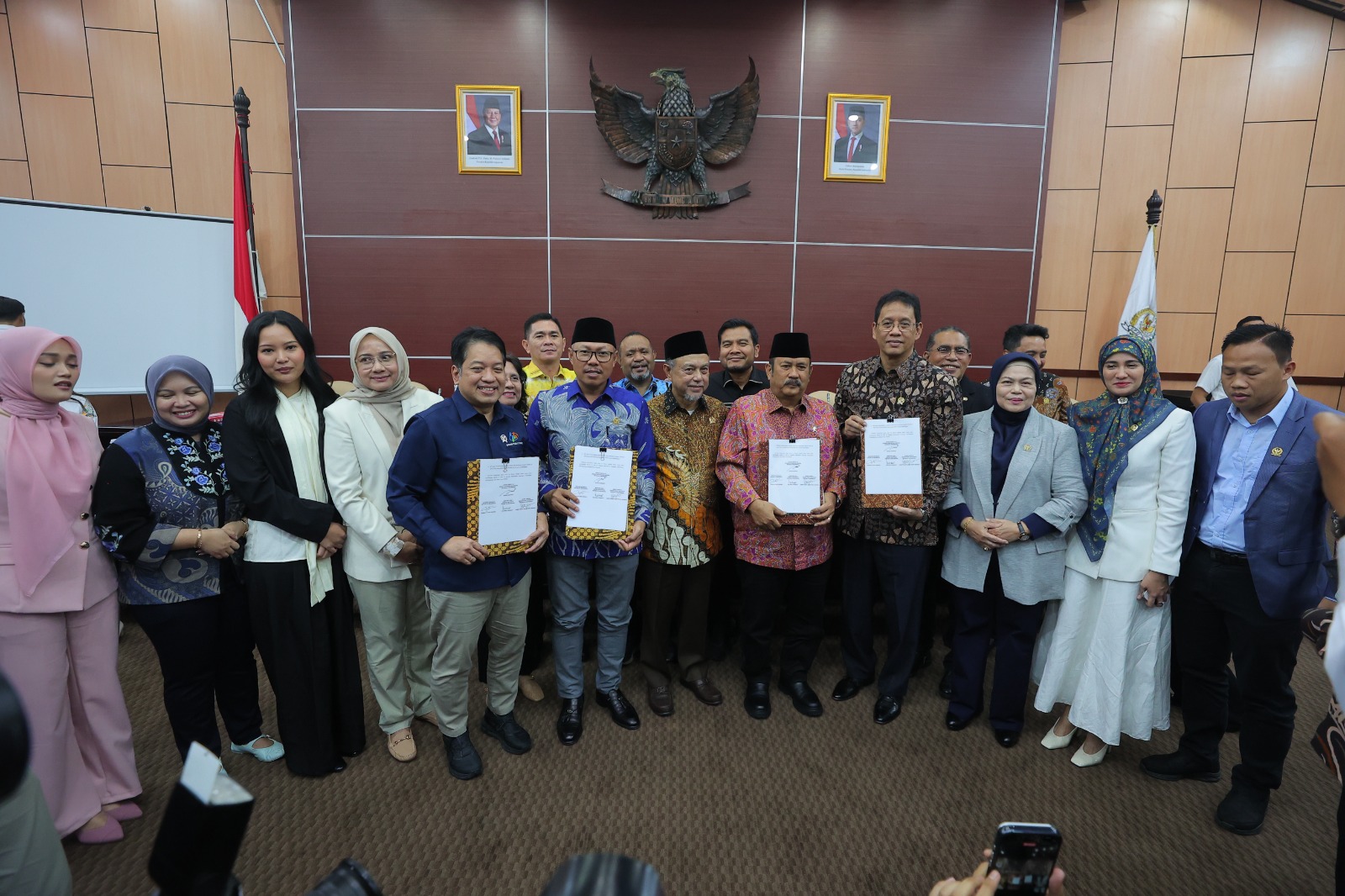
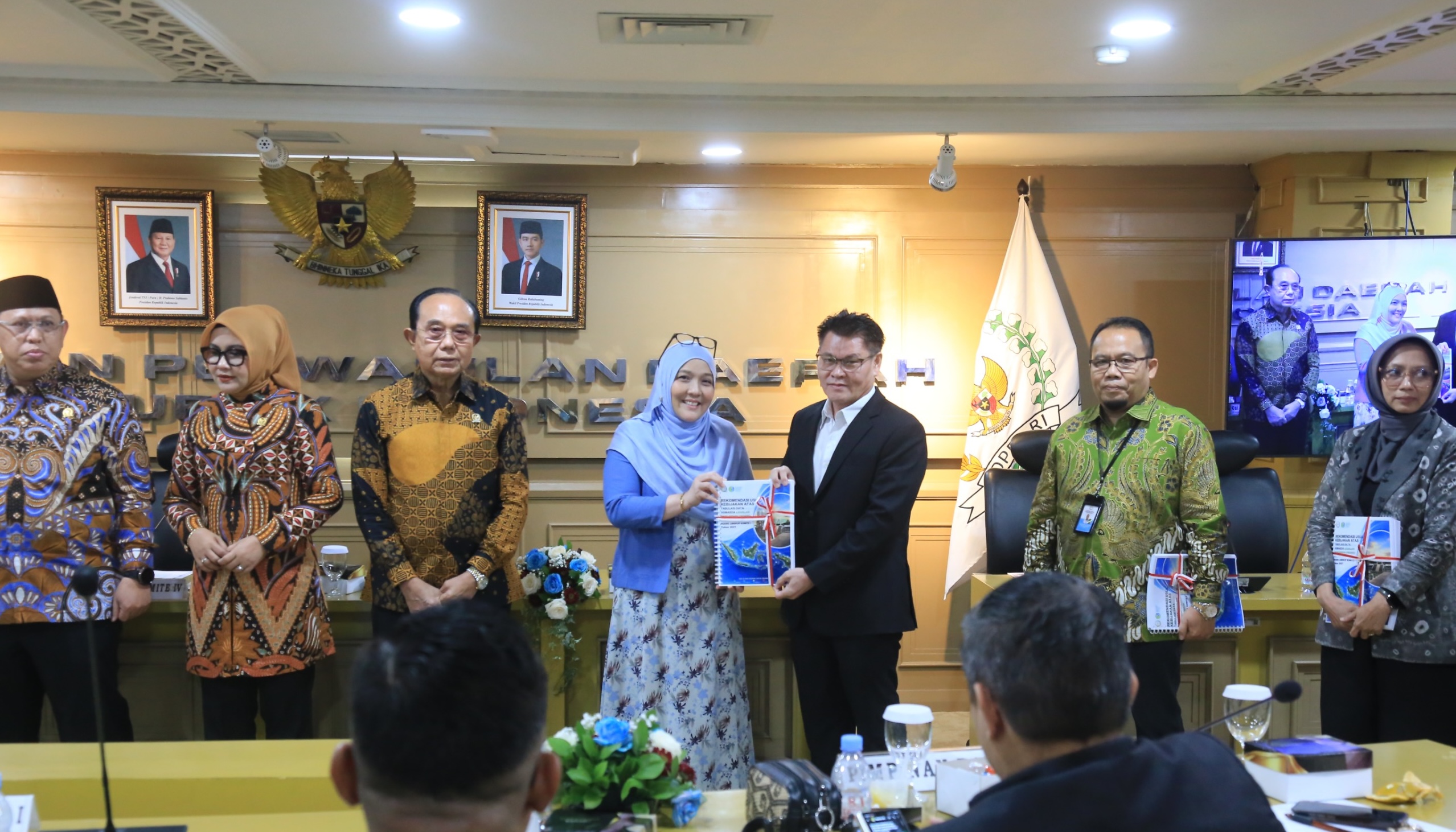
At the end of the meeting, Nawardi emphasized that the results of this working meeting would be important material for the DPD RI in compiling considerations regarding the KEM-PPKF and the 2027 RAPBN.
"We want to ensure that the 2027 Draft State Budget truly accommodates regional aspirations. Development must be more inclusive, inequality between regions reduced, and public welfare must be the primary goal of every economic and fiscal policy," he concluded. Committee IV of the DPD RI is committed to continuously overseeing the preparation of the KEM-PPKF and the 2027 Draft State Budget (RAPBN) so that national economic and fiscal policies become more adaptive to global challenges, based on credible data, pro-regional, and able to encourage equitable and sustainable economic growth.
AGENDA KEGIATAN
DEWAN PERWAKILAN DAERAH REPUBLIK INDONESIA