Informasi Seputar Kegiatan di DPD RI
AGENDA KEGIATAN
DEWAN PERWAKILAN DAERAH REPUBLIK INDONESIA
03 September 2026 oleh admin
JAKARTA, dpd.go.id – The Secretariat General of the House of Regional Representative of the Republic of Indonesia (DPD RI) continues to strengthen the role of public and regional aspirations as the foundation for formulating legislative proposals and recommendations. Through the analysis of Public and Regional Aspirations (Asmasda), DPD RI aims to translate the actual needs of regions into policies and regulations that respond directly to public interests.
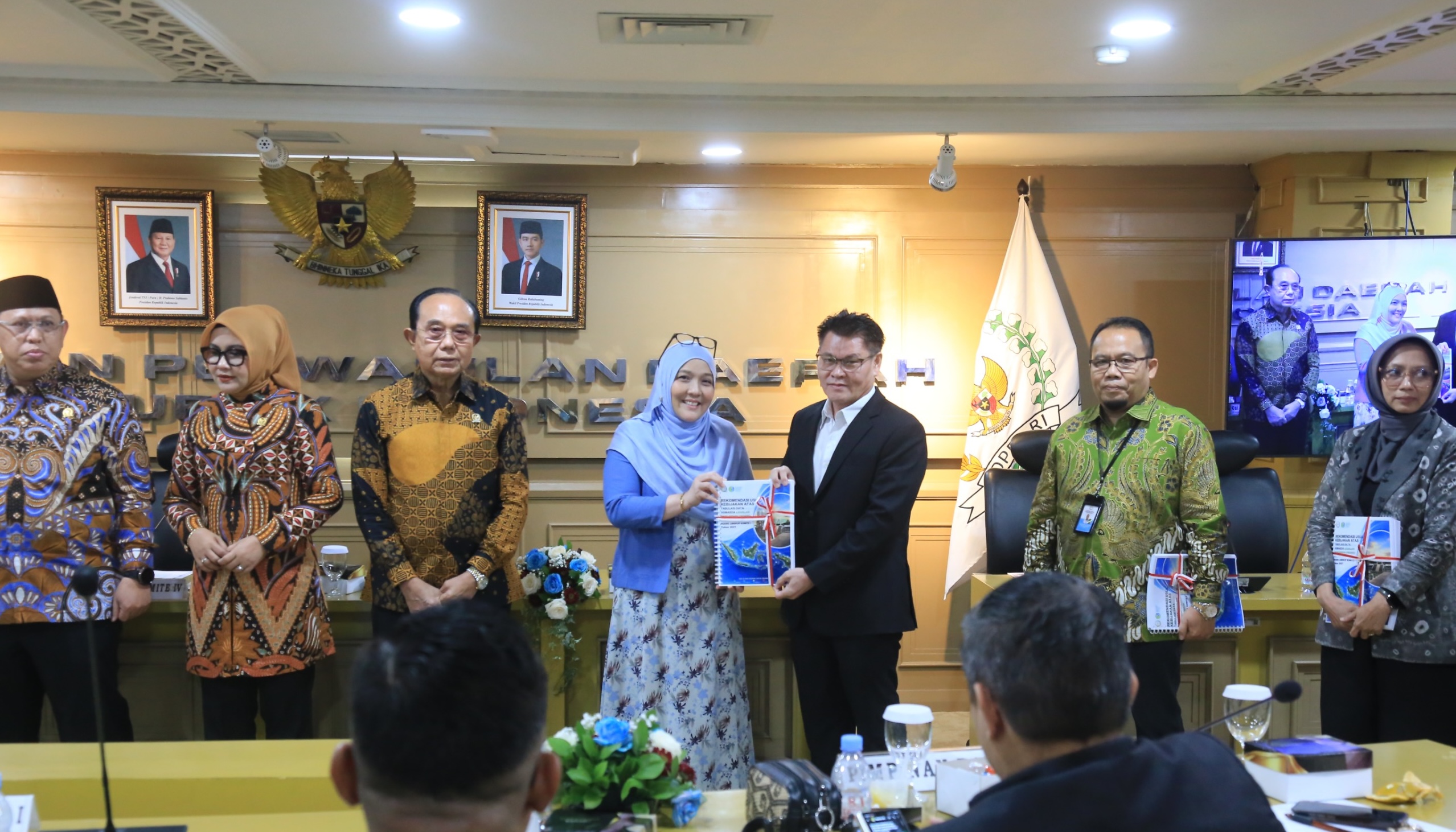
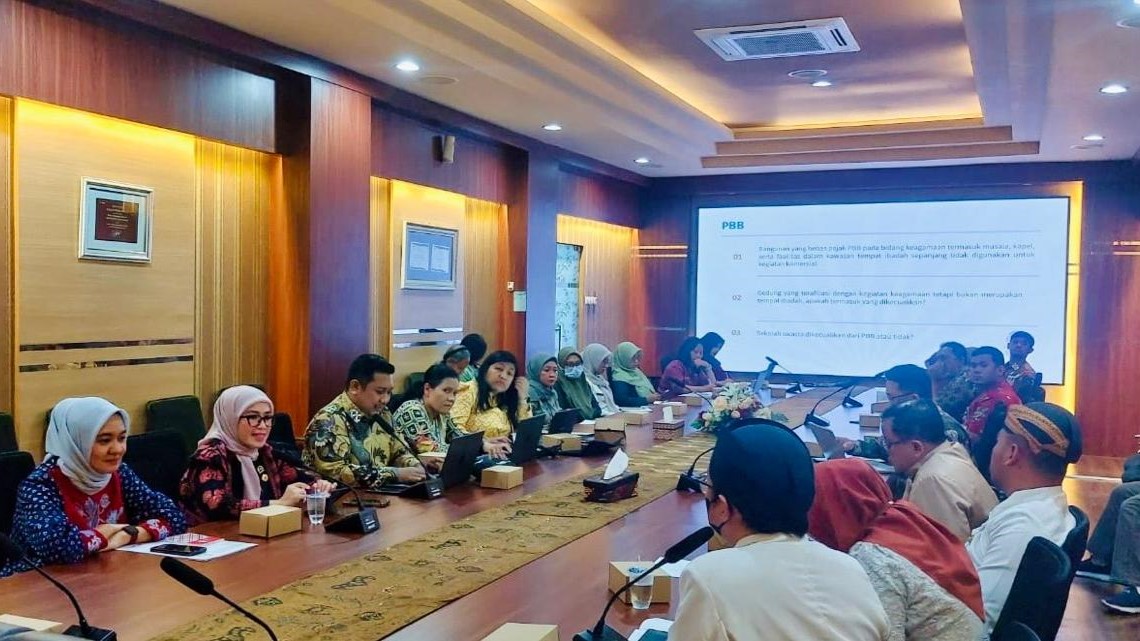
These efforts were discussed during the Stakeholder Engagement on Legislative Proposal Recommendations by Committees I, II, III, IV, and the Legislative Drafting Committee (PPUU) of DPD RI, based on the Analysis of Public and Regional Aspirations (Asmasda). The event was organized by the Center for Regional and Budget Studies (Puskadaran) under the Secretariat General of DPD RI at the Sriwijaya Meeting Room, Building B, DPD RI, Jakarta, on Thursday (September 3, 2026).
The event was opened by the Vice Chair of DPD RI Committee IV, Aji Mirni Mawarni, representing DPD RI Vice Speaker Tamsil Linrung, who delivered the keynote speech. She emphasized the importance of ensuring that public and regional aspirations do not end as mere data, but are processed into policy recommendations and legislative proposals supported by strong arguments.
"We must ensure that public and regional aspirations do not stop as raw data. These aspirations must be crafted into policy recommendations and legislative proposals backed by strong reasoning, allowing them to be actively fought for during the national law-making process," she said.
Echoing this sentiment, Deputy of Secretariat General of DPD RI for Meetings Oni Choirudin stressed the importance of strengthening Asmasda as the bedrock of an evidence-based legislative process. According to him, aspirations collected from various regions must be transformed into policy recommendations capable of resolving strategic regional issues while serving as material to reinforce national regulations.
"Strengthening Asmasda is a crucial step to ensure that DPD RI's legislative process relies truly on evidence and actual needs in the regions. The aspirational data gathered across areas must be processed as a base to identify strategic problems, enabling us to formulate targeted policy responses and regulatory improvements," he expressed.
Representing the executive branch, Deputy for Control, Evaluation, and Development Risk Management at Bappenas (Ministry of National Development Planning), Tri Dewi Virgiyanti, highlighted the critical link between legislative agendas and national development goals.
"Legislative recommendations rooted in regional aspirations become significantly stronger when aligned with national development priorities. Therefore, synchronization between regional needs and national development planning is essential so that the resulting regulations truly deliver an impact for the public," Tri Dewi said.
Meanwhile, the Ministry of Law, represented by Director of Legislation Aisyah Lailiyah, underscored the necessity of ensuring every regionally derived legislative recommendation remains aligned with the national law-making system.
According to Aisyah, engaging multi-stakeholders from formulation, planning, and problem identification down to drafting policy and regulatory instruments is vital to guaranteeing that legislative recommendations maintain substantive quality while integrating seamlessly into the national regulatory agenda.
"Legislative proposals originating from public and regional aspirations must be fortified through harmonization and synchronization processes, translating regional needs into clear, consistent legal norms that align with existing laws," Aisyah stated.
From the House of Representatives (DPR RI), Coordinator of the Expert Staff for DPR RI Commission XIII, Emmanuel Josafat Tular, assessed that synergy between DPD RI, DPR RI, and the government must be continually reinforced to provide regional aspirations an effective channel in national law-making.
"We need to build stronger communication mechanisms and institutional synergy. Public and regional aspirations must have a clear avenue to be converted into legislative agendas so that the law-making process truly answers public needs including evolving regional demands and provides legal certainty," Emmanuel said.
Furthermore, Head of the Center for Regional and Budget Studies (Puskadaran) at the Secretariat General of DPD RI, Sri Sundari, explained that the stakeholder engagement session aimed to gather input and strategic perspectives from the government and DPR RI regarding the formulated legislative recommendations.
This input will serve to refine DPD RI's legislative recommendations, ensuring they align closely with regional needs, national development policies, and regulatory agendas.
"Today, we received valuable feedback and insights on DPD RI's proposed legislative recommendations from representatives of both the government and DPR RI. Naturally, we will follow up on these points moving forward," Sri explained.
Sri added that the drafted legislative recommendations encompass several strategic areas: local governance, land affairs, public administration, livestock and animal health, protection for fishers and fish farmers, natural resource utilization, national entrepreneurship, family resilience, public health, gender equality, teachers and lecturers, libraries, boosting regional original revenue (PAD), and improving regulations on the legislative process itself.
Through stronger Asmasda analysis and broad stakeholder involvement, DPD RI reaffirms its commitment to ensuring that public and regional aspirations are not merely documented, but transformed into high-quality recommendations actively pursued within the national legislative agenda.
AGENDA KEGIATAN
DEWAN PERWAKILAN DAERAH REPUBLIK INDONESIA