Informasi Seputar Kegiatan di DPD RI
AGENDA KEGIATAN
DEWAN PERWAKILAN DAERAH REPUBLIK INDONESIA
28 September 2026 oleh admin
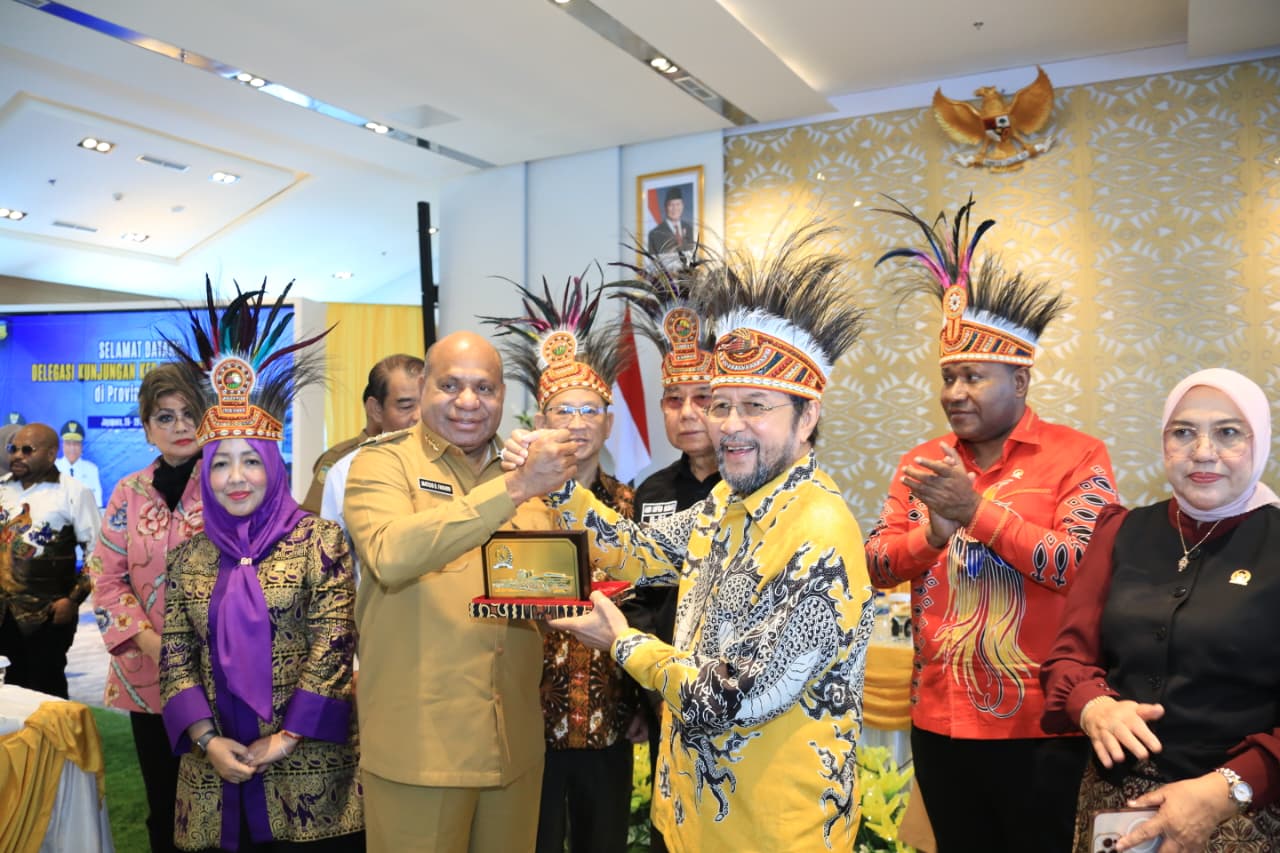
Jayapura, dpd.go.id – Committee I of the House of Regional Representatives of the Republic of Indonesia (DPD RI) conducted a working visit to Papua Province to deepen and enrich the content of the Bill (Rancangan Undang-Undang / RUU) on the Protection of Indigenous Peoples. The working visit, which took place at the Papua Provincial Governor's Office Auditorium on Monday (28/9/2026), served as a forum to explore local experiences, challenges, and regional needs regarding the recognition and protection of indigenous communities.
Constitutionally, the recognition and respect for customary law communities along with their traditional rights are explicitly stated in Article 18B paragraph (2) of the 1945 Constitution of the Republic of Indonesia (UUD NRI 1945). However, to date, regulations regarding indigenous peoples remain fragmented across various legislative acts and sectoral rules, highlighting the need for comprehensive regulation to provide legal certainty and protection.
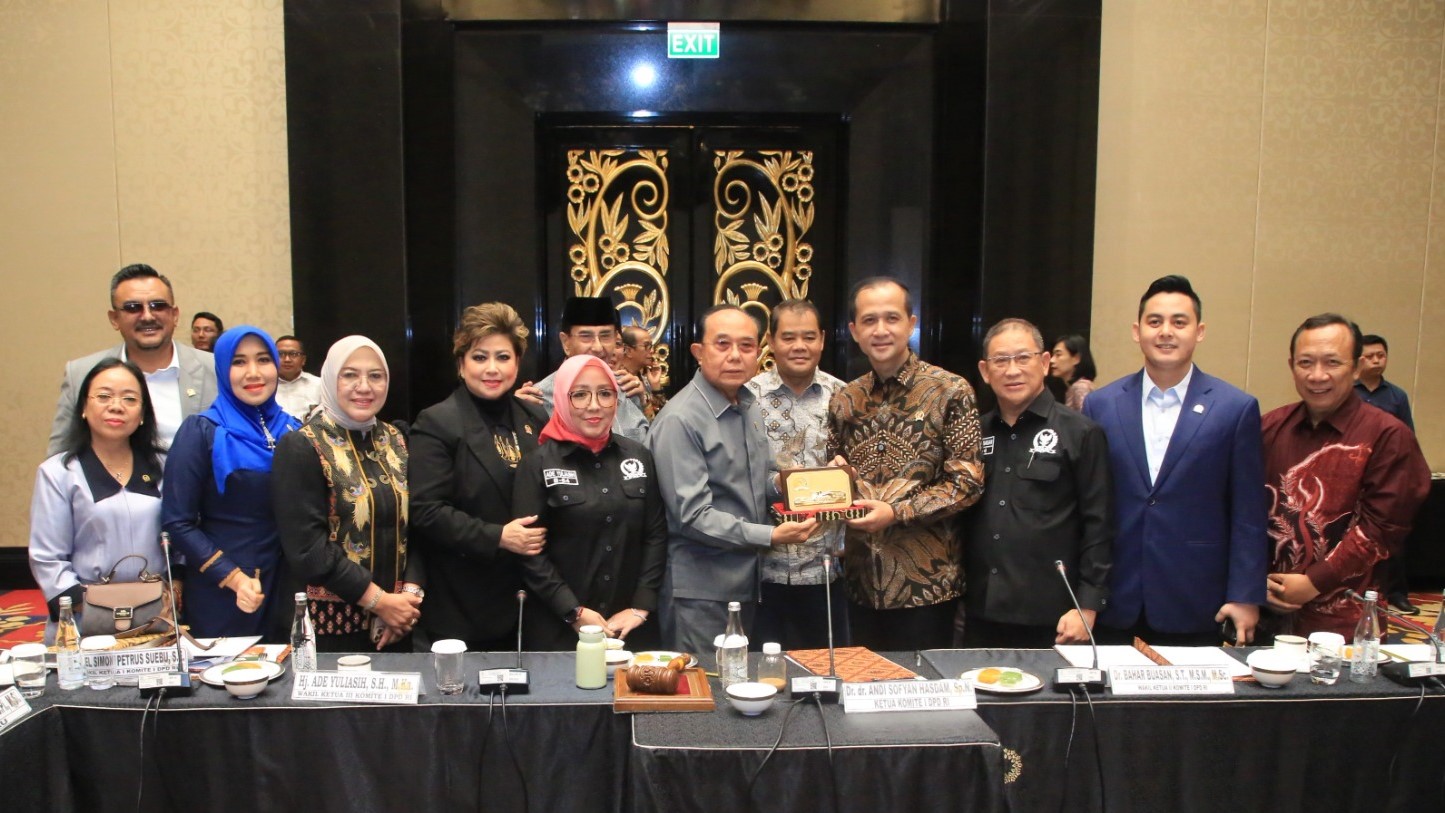
The DPD RI Committee I delegation was led by Deputy Speaker of the DPD RI Yorrys Raweyai. Also present were Chairperson of Committee I DPD RI Andi Sofyan Hasdam, alongside Committee I leadership Carel Simon Petrus Suebu, Bahar Buasan, and Ade Yuliasih.
Attending Committee I members included KH. Abdul Hakim, Denti Eka Widi Pratiwi, A. Ian Ali Baal Masdar, Rev. Penrad Siagian, Aanya Rina Casmayanti, Bisri As Shiddiq Latuconsina, H. Sudirman Haji Uma, H. Abdul Hamid, Ismeth Abdullah, Frits Tobo Wakasu, Ivanda Awalina Firdausi Sukandar, H. Mz. Amirul Tamim, H. Syarif Mbuinga, Prof. Dailami Firdaus, Maya Rumantir, Leni Haryati John Latief, Maria Goreti, H. Muhammad Rifki Farabi, and Muhammad Hidayattollah.
Representing Papua Province were Governor of Papua Matius D. Fakhiri, the Regional Secretary of Papua Province, local government officials, the Regional Leadership Coordination Forum (Forkopimda), as well as representatives from the Papua High Prosecutor's Office, Military Command XVII/Cenderawasih, Papua Komnas HAM (National Human Rights Commission), Cenderawasih University, and Papuan indigenous communities.
In his remarks, Papua Governor Matius D. Fakhiri expressed that the working visit of Committee I DPD RI was crucial as it provided Papua a platform to convey its experiences, dynamics, and various challenges in indigenous protection to serve as input for national policy drafting.
The Governor of Papua also outlined nine scopes of indigenous peoples' protection in the Land of Papua, underscoring the need for an integrative and comprehensive approach so that indigenous protection becomes a central component of every development process in Papua.
"The Papua Provincial Government views the protection of indigenous peoples not merely as drafting regulations, but beyond that, as a form of recognition for ancestral land and community dignity. Formulating policies on indigenous protection must involve indigenous peoples, including in spatial planning and land utilization. Consent should not be a mere formality; substantive consultation (musyawarah) must be conducted," Matius stated.
He expressed hope that Committee I DPD RI's visit would strengthen efforts to deliver legal certainty and protection while safeguarding the honor and dignity of Papua's indigenous communities.
Meanwhile, DPD RI member from Papua Province Carel Simon Petrus Suebu stated that Committee I's visit was part of efforts to enrich the drafting materials for the Indigenous Peoples Protection Bill.
According to him, input from local governments, academics, state institutions, and indigenous communities in Papua is vital, given Papua's distinct characteristics, experiences, and dynamics in recognized indigenous rights.
Chairman of Committee I DPD RI Andi Sofyan Hasdam emphasized that recognizing and protecting indigenous peoples is a constitutional mandate. Article 18B paragraph (2) of the 1945 Constitution affirms the recognition and respect for customary law communities and their traditional rights, while Article 28I paragraph (3) guarantees respect for cultural identity and traditional community rights.
This mandate is also interconnected with Article 32 regarding culture and Article 33 paragraph (3) regarding earth, water, and natural resources.
"In practice, however, regulations concerning indigenous peoples remain scattered across sectoral legislation. This fragmentation causes ongoing issues in protecting indigenous communities—whether regarding ancestral lands and territories, natural resources, customary institutions, dispute resolution, or basic services and regional development," Andi Sofyan said.
He added that indigenous affairs are also closely tied to the division of authority between the central government and regional governments. This aligns with Article 22D paragraph (1) of the 1945 Constitution, which empowers the DPD RI to introduce bills concerning regional autonomy, central-regional relations, and the management of natural and economic resources.
"On that basis, Committee I DPD RI deems it necessary to examine and gather extensive input regarding the Indigenous Peoples Protection Bill so its provisions can ensure legal certainty while addressing diverse regional conditions and needs," he said.
Andi Sofyan also praised the Papua Provincial Government, the Ministry of Human Rights, the Papua Representative Office of Komnas HAM, and all stakeholders for their positive response to Committee I DPD RI's working visit.
Through this meeting, Committee I aims to gain a comprehensive overview of how indigenous recognition and protection are implemented in Papua, identify regional achievements and bottlenecks, and gather substantive recommendations to refine the bill.
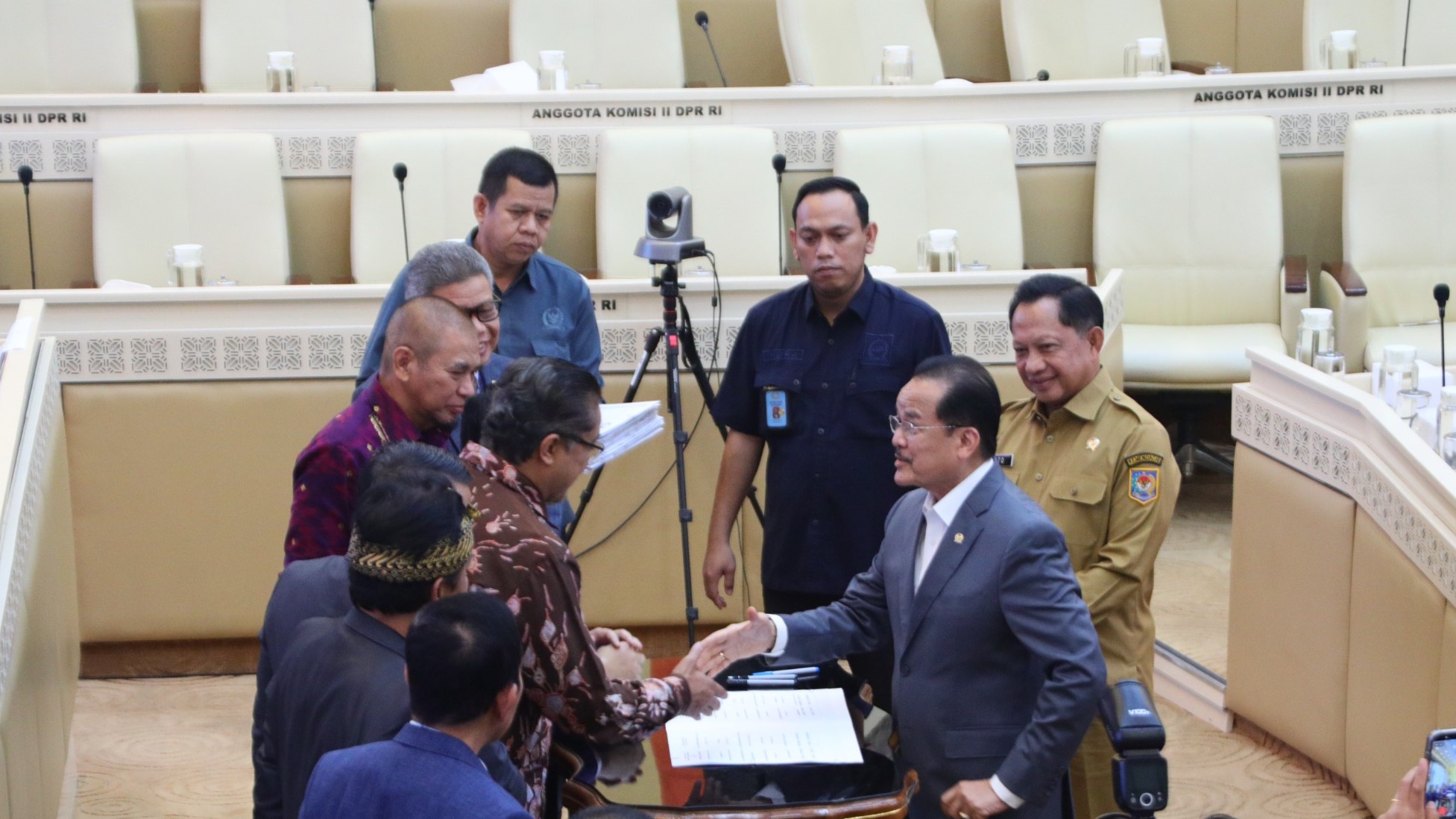
Following the opening speeches, the meeting proceeded to a dialogue between Committee I DPD RI members and local stakeholders. Contributions were delivered by representatives from Cenderawasih University, Papua Komnas HAM, the Papuan People's Council (MRP), the Papuan Regional House of Representatives (DPRP), the Papua Regional Office of the Ministry of Human Rights, the Regional Office of the National Land Agency (BPN), and customary community organizations.
In closing, Deputy Speaker of the DPD RI Yorrys Raweyai affirmed that DPD RI has been advocating for a dedicated law protecting indigenous peoples for several legislative periods.
However, Yorrys noted that this effort still requires support and synergy from the House of Representatives (DPR RI), the central government, local authorities, and indigenous communities, including those in Papua.
"The struggle to enact a law that specifically protects indigenous peoples has been carried out by DPD RI across several periods. Therefore, support from all parties is crucial so that this bill can be pushed forward to deliver legal certainty for indigenous communities," Yorrys stated.
He added that several key issues in Papua warrant deeper deliberation, including the drafting and approval process for Special Regional Regulations (Perdasus) and defining the nomenclature for Indigenous Papuans (Orang Asli Papua / OAP).
Regarding the Indigenous Peoples Protection Bill, Yorrys expressed hope that DPD RI's initiative would receive backing from the MRP and DPRP in line with their respective authorities, while being further reinforced through communication with the central government.
AGENDA KEGIATAN
DEWAN PERWAKILAN DAERAH REPUBLIK INDONESIA