Informasi Seputar Kegiatan di DPD RI
AGENDA KEGIATAN
DEWAN PERWAKILAN DAERAH REPUBLIK INDONESIA
05 October 2026 oleh admin
Jakarta (5/10), dpd.go.id – Committee I of the DPD RI supports the transformation of transmigration policy, which is no longer merely oriented towards population movement, but is directed towards becoming an instrument for regional development, strengthening the regional economy, and creating new growth centers.
Chairperson of Committee I of the DPD RI, Andi Sofyan Hasdam, assessed that this paradigm shift needs to be followed by strengthening regulations so that transmigration policies can address regional needs and characteristics while simultaneously resolving various problems that have so far occurred in transmigration areas.
"The paradigm of transmigration has changed. It's no longer just about moving people, but about developing regions that can grow economically and benefit the community. Therefore, we must adapt regulations to current regional developments and needs," said Andi Sofyan Hasdam.
According to Andi, the revised Transmigration Law must also provide greater space for regional government involvement. Land issues, conflicts with local communities and indigenous peoples, land rights security, and regional economic sustainability must be addressed in the regulatory refinement.
"The House of Regional Representatives (DPD) is committed to ensuring that the transmigration policy is not only successful as a central government program, but also truly impacts the regions. Local governments and communities must be placed at the forefront of its planning and implementation," he stressed.
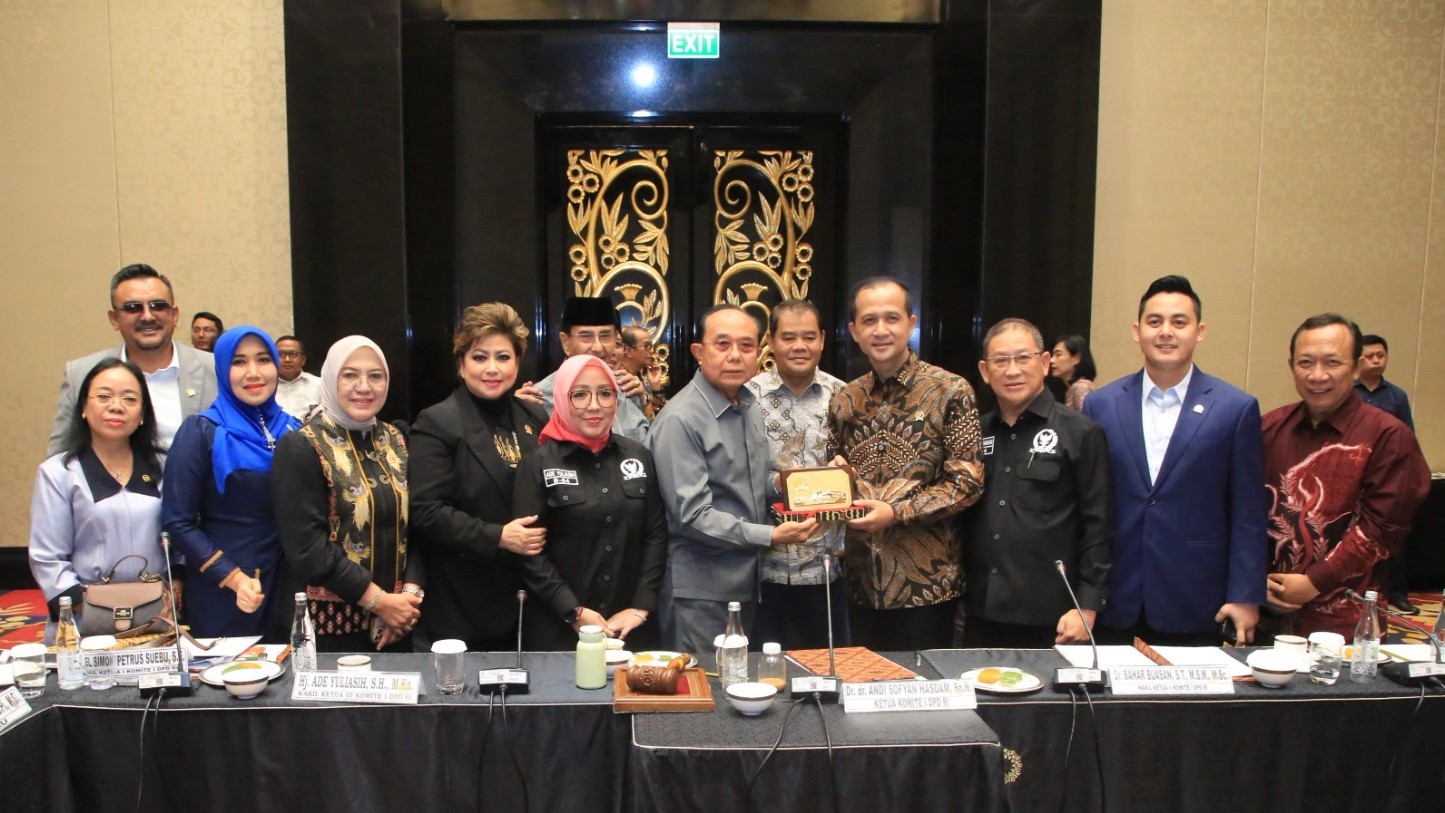
This issue emerged during a working meeting between Committee I of the DPD RI and the Minister of Transmigration on Monday, October 5, 2026, in Cibubur, Jakarta. The meeting was chaired by Committee I Chairman Andi Sofyan Hasdam.
In his presentation, Minister of Transmigration Muhammad Iftitah Sulaiman Suryanegara explained that the new transmigration concept is no longer simply moving people from one region to another to reduce density.
"Transmigration is now understood as an effort to relocate lives and build an integrated economic ecosystem, not simply to relocate people. Even residents who don't move geographically can be included in the transmigration context if their area is developed," said Muhammad Iftitah.
Furthermore, the Minister of Transmigration emphasized that the success of the transmigration program is no longer solely measured by the number of people relocated. "The success of transmigration is no longer measured by how many people are relocated, but rather by the region's ability to create inclusive economic growth, attract investment, and improve the welfare of local communities," he said.
The Minister of Transmigration also outlined a number of priority focuses, including resolving transmigration land issues, strengthening the local economy, and transforming transmigration areas into inclusive ones.
Responding to the presentation, Rev. Penrad Siagian, a member of Committee I of the DPD RI, highlighted the need to strengthen institutions handling transmigration affairs in the regions. He questioned whether the new transmigration paradigm requires the establishment of vertical institutions to strengthen its implementation in the regions.
Penrad also emphasized the importance of resolving land disputes arising from the opening of transmigration areas. He argued that changing the transmigration paradigm does not mean abandoning the good practices of previous transmigration policies. In the context of the collaboration between Committee I of the DPD RI and the Ministry of Transmigration, he also proposed the establishment of transmigration desks in all provinces.
Abdul Hamid, a member of Committee I of the DPD RI from Riau, highlighted the phenomenon of land buying and selling and transmigration businesses. He also revealed the issue of land conversion in areas already occupied by the Riau community.
The issue of overlapping land use and conversion was also raised by Hj. Leni Haryati John Latief, a member of Committee I of the DPD RI from Bengkulu. Meanwhile, Senator Maria Goreti from West Kalimantan warned that conflicts between transmigrants and landowners and indigenous communities persist, requiring immediate resolution. She also emphasized the importance of local government involvement, particularly in resolving social conflicts in transmigration areas.
KH. Abdul Hakim, a member of Committee I of the DPD RI from Lampung, requested that the Ministry of Transmigration explain the scenario for resolving land disputes and past conflicts in transmigration areas, particularly those in Lampung. He stated that the Ministry needs to conduct a comprehensive inventory and mapping of the issues as a basis for resolving these conflicts.
Ismeth Abdullah addressed the issue of transmigration in the Riau Islands Province, particularly regarding communities who have long settled and developed in an area but still face difficulties obtaining land certificates. He hopes the Ministry of Transmigration can coordinate with the ministries responsible for agrarian and land affairs to resolve this issue.
Lia Istifhama, a member of Committee I of DPD RI from East Java, emphasized the importance of transmigration policies aligning with environmental sustainability and sustainable economic development. She also highlighted the need for the Ministry of Transmigration to respond to regional interest and readiness to support the success of the transmigration program.
Maya Rumantir stated that several regions in North Sulawesi, such as South Minahasa, North Minahasa, and North Bolaang Mongondow, have been integrated transmigration areas, which have developed into new economic centers. The program is also considered to be able to foster harmony between transmigrant communities and residents.
Muhammad Hidayattollah, a member of Committee I of the DPD RI from South Kalimantan, also expressed his concern about the contribution of transmigration policies to regional growth.
Meanwhile, Bisri As Shiddiq Latuconsina, a member of Committee I of the DPD RI from Maluku, urged that transmigration matters be handled by regional bodies with a specific focus and not simply be lumped together with other government affairs. Bisri also praised the establishment of cooperatives in transmigration areas and requested the government's attention to developing a transmigration model that aligns with the characteristics of island regions.
A similar concern was raised by Bahar Buasan, Deputy Chairman of Committee I of the DPD RI, from Bangka Belitung. He believes now is the right time to re-establish transmigration as one of the government's flagship programs.
Ade Yuliasih, Deputy Chair of Committee I of the DPD RI, also expressed her appreciation for the paradigm shift and various new policies in the transmigration sector. In principle, Committee I supports the transformation of transmigration policies to be more inclusive, oriented toward regional development, and capable of creating new centers of economic growth while still addressing land issues, local community interests, and the characteristics of each region.
Committee I of the DPD RI views that the policy update needs to be strengthened through regulatory improvements, including a revision of the Transmigration Law, so that the new transmigration paradigm has a strong legal basis and is able to respond to regional developments and needs.
AGENDA KEGIATAN
DEWAN PERWAKILAN DAERAH REPUBLIK INDONESIA