Informasi Seputar Kegiatan di DPD RI
AGENDA KEGIATAN
DEWAN PERWAKILAN DAERAH REPUBLIK INDONESIA
10 August 2026 oleh admin
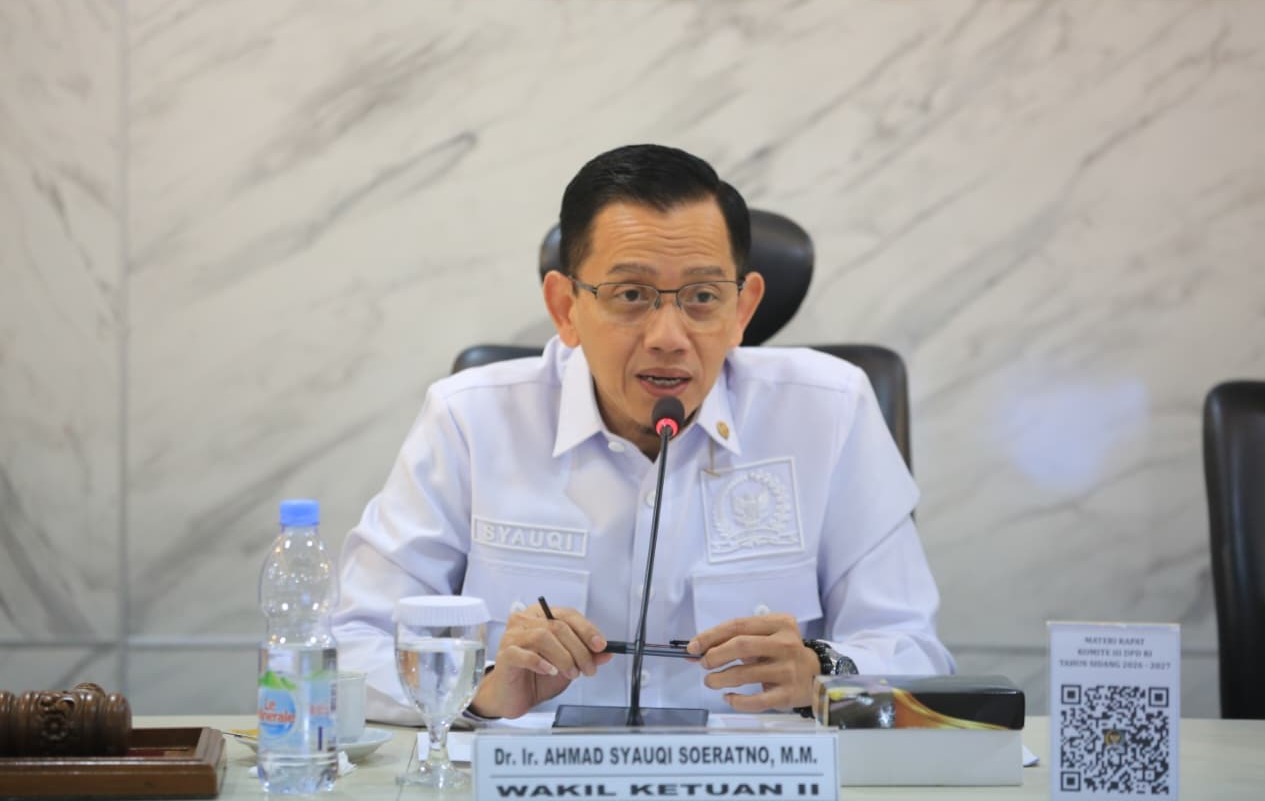
Jakarta, dpd.go.id – The Chairperson of Committee III of the DPD RI, Dr. Filep Wamafma, S.H., M.Hum., C.L.A., stated that poverty rates are closely correlated with school dropout rates. He emphasized that data from the Central Statistics Agency (BPS) showing high poverty rates in several provinces must be a serious concern for the government when formulating national education policies.
Based on BPS data, several provinces with the highest poverty rates in Indonesia are still dominated by the Papua region, namely Mountainous Papua, Central Papua, South Papua, Papua, and West Papua. This condition indicates that the challenge of human resource development in the Land of Papua remains immense and requires stronger affirmative policies.
According to Filep Wamafma, BPS data must not remain merely statistical reports; it should serve as the foundation for determining government policy directions, particularly in the distribution of the Smart Indonesia Program (PIP), the Smart Indonesia Card for Higher Education (KIP Kuliah), affirmative scholarships, educational infrastructure development, and other educational quality enhancement programs.
"Regions with the highest poverty rates must be priority targets in national education policy. The state must step in to provide equal opportunities for children from underprivileged families to receive a proper education. Because education is the primary instrument to break the cycle of poverty," Filep asserted.
He further noted that if education policies do not address the reality of poverty as portrayed by BPS, the goals of equitable development and human resource quality improvement will be difficult to achieve. According to him, children from poor families will become increasingly vulnerable to losing opportunities to continue their education, causing social and economic disparities to widen further.
The West Papua Senator also urged both the Central Government and Regional Governments to pay special attention to the high risk of university dropouts among students from low-income families, especially in provinces with high poverty rates.
"I ask the Central Government and Regional Governments to immediately take concrete steps to prevent rising dropout rates due to economic constraints. Data verification must be valid and accurate; students from poor families must be prioritized in the allocation of KIP Kuliah, various scholarships, living cost allowances, and other affirmative programs. Poverty must not be the reason our nation's youth lose their future," Filep said.
He then stressed that if this issue is not addressed immediately, Indonesia will face serious long-term impacts. These include increasing dropout rates, declining human resource quality, rising unemployment, and growing difficulty in breaking the intergenerational cycle of poverty, particularly in areas still struggling with high poverty levels.
"We must not allow Indonesian youth to lose the opportunity to pursue higher education simply due to economic factors. The best investment to reduce poverty is education. Therefore, BPS findings must serve as the basis for formulating policies that favor the poor, so that no more future generations are threatened with a lost future due to financial constraints," concluded Dr. Filep Wamafma, who also serves as the Secretary of the MPR for Papua.
AGENDA KEGIATAN
DEWAN PERWAKILAN DAERAH REPUBLIK INDONESIA