Informasi Seputar Kegiatan di DPD RI
AGENDA KEGIATAN
DEWAN PERWAKILAN DAERAH REPUBLIK INDONESIA
29 September 2026 oleh admin
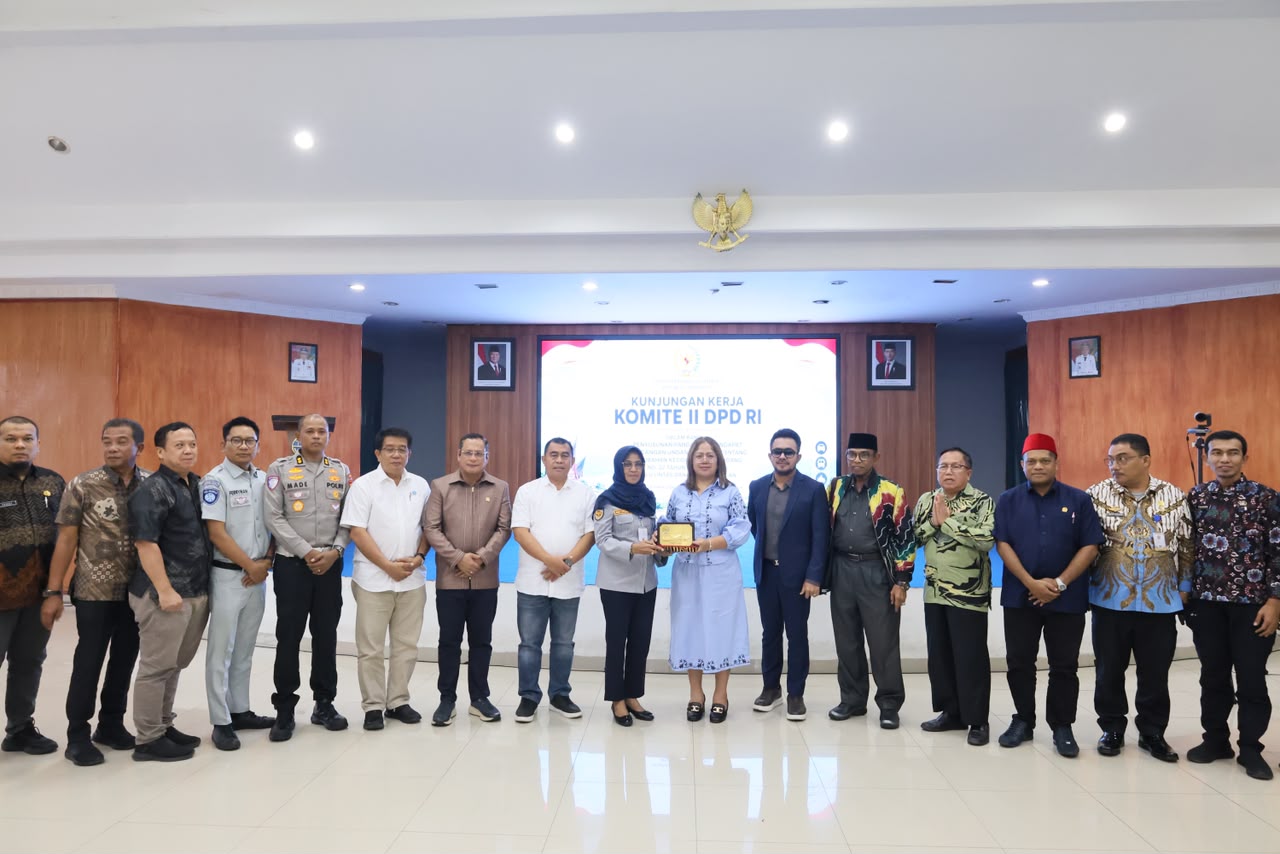
Jayapura, dpd.go.id – Committee II of the House of Regional Representative of the Republic of Indonesia (DPD RI) held a discussion forum with the Jayapura Regency Government and a number of stakeholders at the Jayapura Regent's Office, Jayapura Regency, Papua Province in order to coordinate with strategic partners of Committee II DPD RI regarding the development of connectivity in Papua in order to create an integrated and comprehensive transportation system from west to east Indonesia, especially the development of the transportation system in Papua which tends to be left behind compared to the western region of Indonesia. The discussion forum was led by the Chairperson of Committee II DPD RI Badikenita Br. Sitepu and attended by Vice Chairperson of Committee II DPD RI Abdul Waris Halid, Member of Committee II DPD RI representative for Papua Henock Puraro, and members of Committee II DPD RI (28/09/2026).
The meeting began with an introductory remark by Henock Puraro, a member of Committee II representing Papua, who highlighted Jayapura Regency's strategic role in the transportation sector. "We chose Jayapura Regency (as the destination for the working visit) because it is an integrated transportation hub in Papua Province," Henock explained.
"The discussion at this meeting focused on the integrated transportation system," he added. Following Henock's remarks, Jayapura Deputy Regent Haris Richard Yocku emphasized that transportation is one of the foundations for developing Papua. "Jayapura Regency is one of the strategic areas in Papua Province in the transportation sector because it is a hub for the movement of people and goods," Haris said.
In her remarks, the Chairperson of Committee II of the DPD RI, Badikenita Br. Sitepu, stated that Committee II of the DPD RI will draft a Draft Law (RUU) on Connectivity to support the creation of an integrated and comprehensive national transportation system. "This Connectivity Bill will discuss transportation facilities and infrastructure as well as inter-regional connectivity. Later, it will be regulated so that there is no monopoly on airline ticket prices on certain flight routes," explained Badikenita. The drafting of this Connectivity Bill cannot be separated from the fact that transportation has become a basic human need in the modern era. "Not only moving people, transportation also plays a role in the distribution of goods to ensure that basic necessities and logistics reach the community," she added.
The Director General of Civil Aviation (Dirjen Hubud) of the Ministry of Transportation (Kemenhub) explained that transportation is an enabler of development in the regions. "Transportation provides connectivity for economic activities such as industry, trade, agriculture, tourism, and other sectors," he explained. To improve connectivity in Indonesia, which is an archipelagic country, the Ministry of Transportation has developed a strategy to develop the Indonesian transportation sector. "There are three major strategies to improve the connectivity of the Indonesian archipelago, namely strengthening national and global inter-island connectivity, increasing the efficiency of multimodal connectivity between nodes and hinterlands within islands, and developing sustainable urban mass transportation," he said. In line with the Director General of Civil Aviation, from a logistics perspective, the Expert Staff for Logistics of the Ministry of Transportation explained that the development of logistics connectivity must be evenly distributed across all transportation sectors. "Ports need to be built to improve logistics connectivity. Land and sea transportation continue to develop, not only air transportation," he said.
In terms of road construction in Papua, the Head of the Papua-Papua Mountains National Road Implementation Center (BBPJN) Deni explained that the Ministry of Public Works (PU), through the BBPJN Papua-Papua Mountains, is handling a number of priority road corridors in the Papua and Papua Mountains regions, including the Trans Papua Segment VII Jayapura-Memberamo-Elelim-Wamena and roads in Jayapura Regency. "In addition to the APBN, you are also using the PPP scheme to complete part of the Trans Papua Segment VII Jayapura (Yetti)-Memberamo-Elelim-Wamena. However, there are still 20 semi-permanent bridges in this segment," explained Deni. As a road construction contractor, the Head of the PT. Waskita Karya Branch in Papua, Arif Wibowo, emphasized that Waskita Karya is ready to support all government activities organized by the Ministry of Public Works, the Ministry of Transportation, and related partners in developing road infrastructure, especially in the Papua region. "We have contributed to the development of connectivity in Papua for a long time. We have carried out road construction in the Papua border area," said Arif.
Certainty of land ownership also impacts transportation infrastructure development, particularly in improving connectivity in Papua. "Regarding the development of Sentani Airport, by 2026, the total land area certified is 144 hectares. The newly certified Depapre Port area is 14.5 hectares," explained a representative from the Papua Representative Office of the Ministry of Agrarian Affairs and Spatial Planning (ATR)/National Land Agency (BPN).
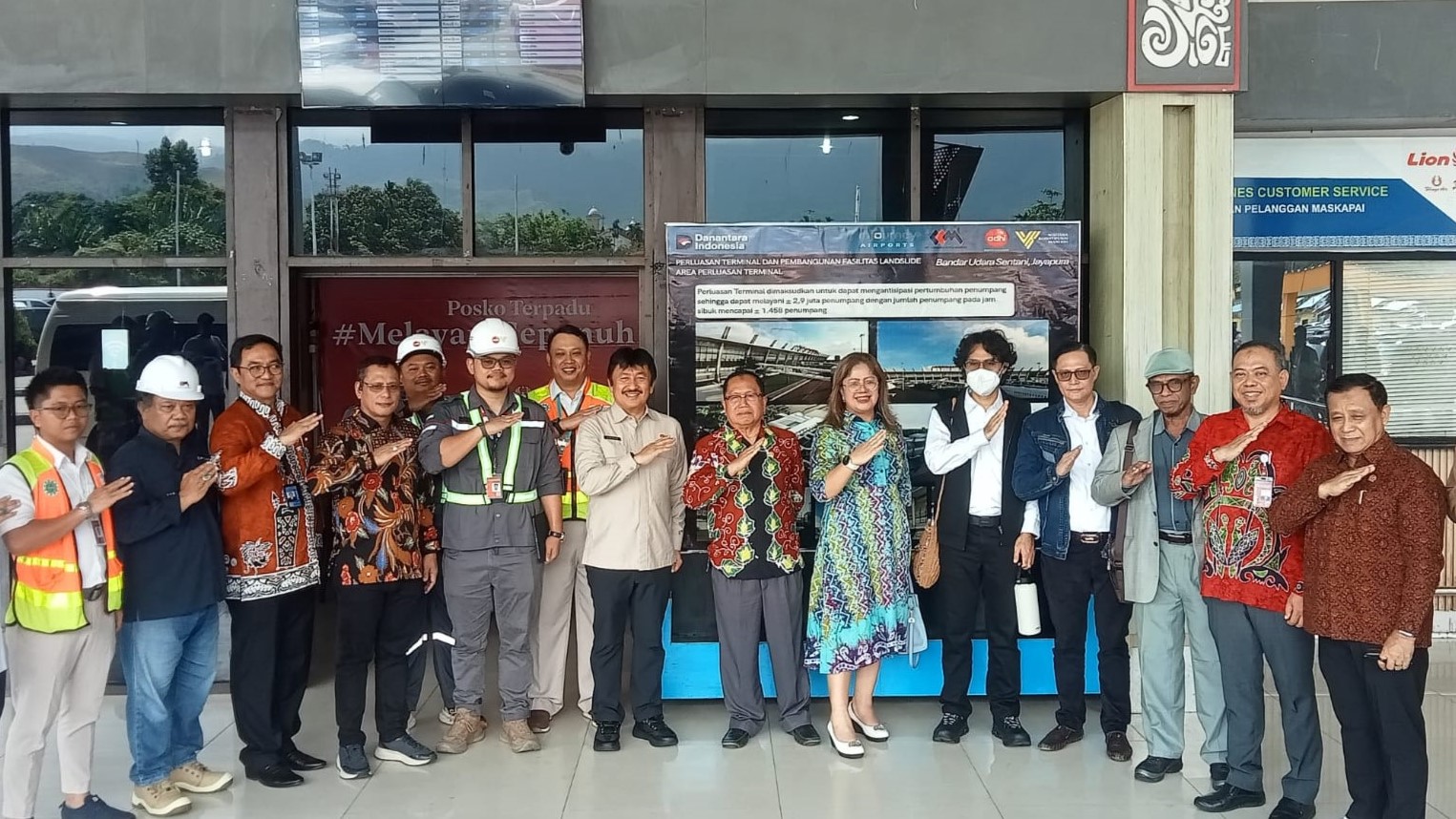
Regarding Sentani Airport, which is the main aviation hub in the Papua region, a representative from InJourney Airports explained that the management of Sentani Airport is carried out through a cooperation in managing airport assets with the Ministry of Transportation. "The management of Sentani Airport assets by the Ministry of Transportation is carried out together with InJourney Airports for airport development," he said. He also revealed that Sentani Airport also serves pioneer flights to several areas in Papua. "There are 18 districts that Sentani Airport serves for pioneer flights," he added. In managing the airport, InJourney Airports encourages airlines to open new flight routes through incentives. "We provide incentives (to airlines) to open new flight routes and increase flight frequencies. We provide incentives of 50% discounts on aircraft landings, six months of Aero incentives that can be extended once, and 30 days of promotional incentives with one extension," he concluded.
In terms of maritime transportation, Abdul, a representative of PT. Pelabuhan Indonesia (Pelindo), stated that Pelindo continues to improve and enhance services at every port it manages, including in Papua. "Pelindo has taken the initiative to digitalize end-to-end. We are making improvements to provide sterilization and security in the Pelindo port area," Abdul explained. However, Pelindo also faces several challenges in investing in ports in the Papua region, especially Jayapura. "There are several challenges in investing in ports in Jayapura, namely creating an effectively connected maritime transportation ecosystem, challenges in port and dock development, funding and investment strategies, and Pelindo's main principle of building port infrastructure in a targeted manner," he concluded. As a maritime transportation operator, a representative of PT. Pelayaran Indonesia (Pelni) explained that Pelni has an extensive ship transportation network that connects to the Papua region. "Pelni ship transportation in the Papua region is connected from Jakarta, Surabaya, Makassar, to Jayapura. There are eight regular passenger ships that stop in the Papua region," he explained. However, in carrying out its functions, Pelni requires various supports from the central government, especially in optimizing sea toll vessels.
From a security perspective, a representative of the Indonesian National Armed Forces (TNI) from the Jayapura Military District Commander (Dandim) stated that developing connectivity in Papua is crucial to opening up access to the interior. "From our experience, there is not a single land access point in Papua for TNI service activities that can be accessed by land. Meeting basic needs in the interior of Papua is hampered by limited connectivity," he explained. This could certainly hamper TNI security efforts in the interior of Papua, which tends to be unstable from a security perspective.
The meeting revealed that the implementation of transportation-related laws and regulations remains ineffective in providing a legal basis for transportation operations to develop connectivity in Indonesia, particularly in the Papua region. The results of this meeting will be used as consideration by Committee II of the House of Regional Representative of the Republic of Indonesia (DPD RI) in carrying out its oversight function regarding the implementation of transportation-related laws and regulations and in drafting a DPD-initiated bill on Connectivity to emphasize and align efforts to develop integrated and comprehensive connectivity in Indonesia.
This working visit to Jayapura, Papua, demonstrates the DPD RI's commitment to overseeing efforts to realize integrated and comprehensive connectivity in Indonesia, particularly the development of connectivity in eastern Indonesia, such as Papua. The development of connectivity throughout Indonesia aligns with the mandate of Article 33 paragraph (2) of the 1945 Constitution of the Republic of Indonesia, which states that transportation is a sector that affects the lives of many people. (*)
AGENDA KEGIATAN
DEWAN PERWAKILAN DAERAH REPUBLIK INDONESIA