Informasi Seputar Kegiatan di DPD RI
AGENDA KEGIATAN
DEWAN PERWAKILAN DAERAH REPUBLIK INDONESIA
14 August 2026 oleh admin
Jakarta, dpd.go.id – Speaker of the House of Regional Representatives of the Republic of Indonesia (DPD RI), Sultan B Najamudin, emphasized that Indonesia's strength and sovereignty are inextricably linked to the ability of regions to grow, develop, and manage their potential. Therefore, national development must ensure that regions are not merely recipients of central government policies but are a vital part of Indonesia's economic, social, and sovereign strength.
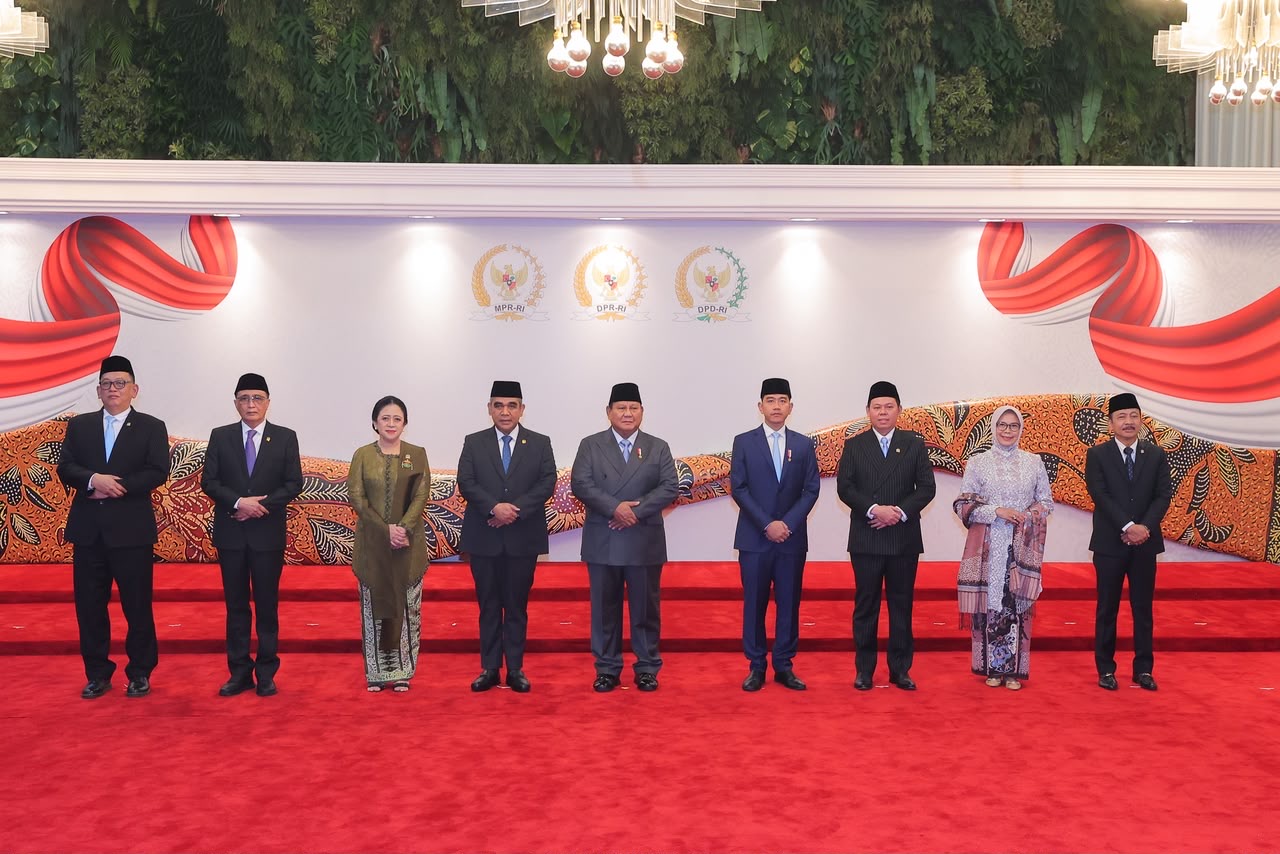
Sultan delivered this message at the 2026 Joint Session of the Indonesian House of Representatives (DPR RI) and the House of Regional Representative of the Republic of Indonesia (DPD RI) at the Nusantara Building, Parliament Complex, Jakarta, on Friday (14/8/2026). Under the theme "Strong Regions, Sovereign Indonesia," Sultan positioned regional strengthening as an integral part of efforts to realize a just, prosperous, and sovereign Indonesia.
According to Sultan, since the republic's inception, Indonesia has been built on diverse regions united under one unitary state. Therefore, the relationship between the central and regional governments should not be one of confrontation, but rather as a unified whole in carrying out national development responsibilities.
"The central and regional governments are not a dichotomy, let alone one that blames each other. They are one body, one breath, and one heartbeat of the republic," he explained.
Within this framework, Sultan emphasized DPD RI's position as a representative of regional communities at the central level. With 152 members representing 38 provinces, the DPD RI has a constitutional responsibility to bridge the aspirations of regional communities with the central government and to ensure the implementation of national programs in the regions.
He believes that the ultimate measure of national development success must be seen in its impact at the regional level. Every development agenda must reach all provinces, be felt in districts and cities, and impact sub-districts and villages, including communities on small islands, outermost regions, underdeveloped areas, and border areas.
"Every national development agenda must be implemented across all provinces, felt in districts and cities, impacted in sub-districts and villages, reaching small islands, outermost regions, and disadvantaged areas, and present in border areas," said Sultan, who is also a Senator from Bengkulu Province.
Sultan stated that regional strengthening must also go hand in hand with national economic transformation. According to him, the House of Regional Representative (DPD) appreciates government policies aimed at strengthening economic independence, increasing the added value of natural resources, encouraging downstream processing, and strengthening the food and energy sectors. However, the benefits of this transformation must be ensured to the communities and regions as owners of potential resources.
In his speech, Sultan also assessed that strengthening regions requires fiscal policies capable of supporting the provision of basic services. Sultan emphasized that Regional Transfer Funds should be viewed not simply as budget allocations, but as an instrument to encourage economic growth and equitable development, particularly for regions with fiscal constraints.
"Regional Transfer Funds are not just a budget allocation, but rather an instrument for economic growth and equitable development," he said.
According to Sultan, Indonesia's development challenges are inextricably linked to the need to maintain a balance between economic growth, social sustainability, and the environment. Through the Green Democracy initiative, the House of Regional Representative (DPD) is promoting development that not only pursues progress today but also ensures that future generations do not bear the ecological burden of current development.
In this context, Sultan emphasized that the DPD RI will continue to strengthen its legislative, oversight, advisory, and representational roles, with a regional perspective. Various legislative agendas championed by the DPD, including the Archipelagic Regions Bill, the Climate Change Management Bill, the Indigenous Peoples Bill, and several other bills, are positioned as part of efforts to create policies that are more responsive to regional diversity.
For DPD RI, Sultan continued, strengthening the regions does not mean weakening the central government. On the contrary, regions with stronger economic capacity, public services, fiscal capacity, and governance will lay the foundation for a more resilient Indonesia in facing various challenges. "Strong regions, sovereign Indonesia," he concluded.
AGENDA KEGIATAN
DEWAN PERWAKILAN DAERAH REPUBLIK INDONESIA