Informasi Seputar Kegiatan di DPD RI
AGENDA KEGIATAN
DEWAN PERWAKILAN DAERAH REPUBLIK INDONESIA
10 May 2026 oleh admin
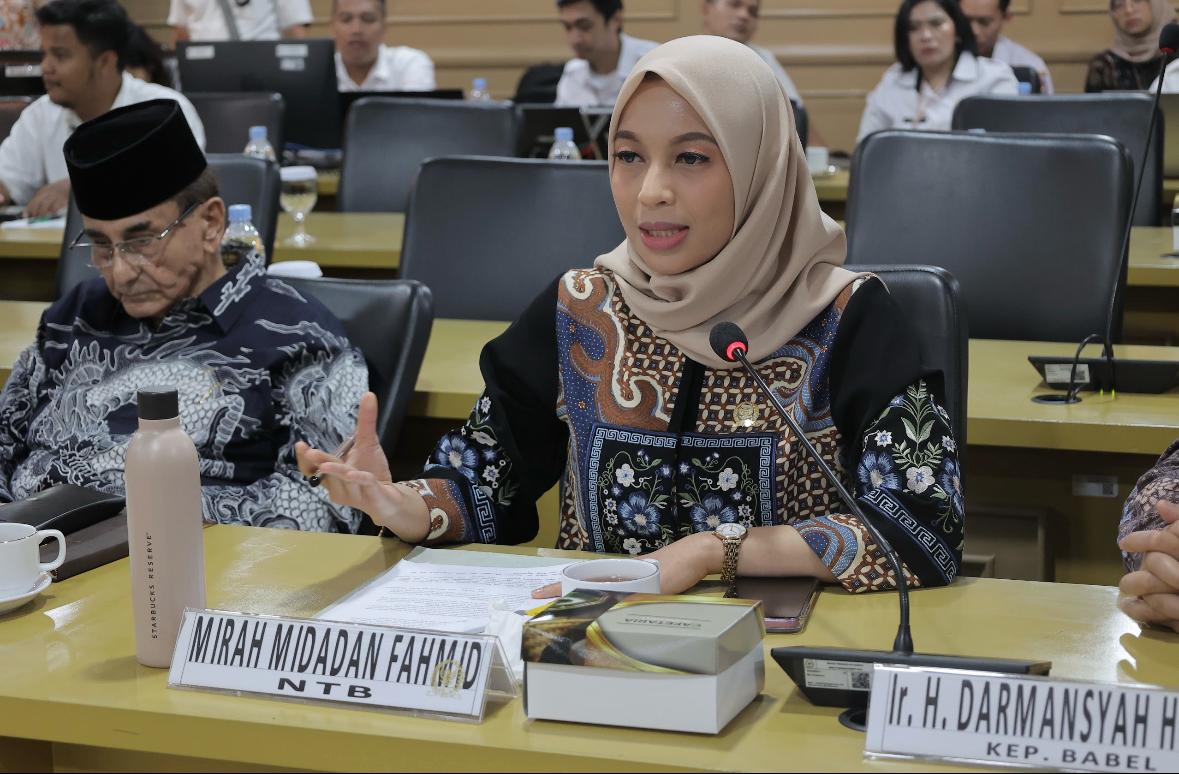
dpd.go.id West Sumbawa May,10 - Senator Mirah Midadan Fahmid has expressed support for the West Sumbawa Regency Government’s decision to prioritize the 2026 KSB Maju Housing Program for communities classified as extremely poor, particularly those in decile 1.
“I welcome and support this policy while also offering constructive input to ensure the program delivers meaningful and sustainable benefits for the most vulnerable communities,” Senator Mirah stated.
According to her, the government’s decision to focus housing assistance on low-income households reflects a strong commitment to fulfilling the constitutional mandate of social welfare and ensuring citizens’ access to adequate housing.
Under the 2026 regional budget, the West Sumbawa Government has allocated 150 housing units, consisting of 50 new homes and 100 units for the rehabilitation of uninhabitable houses (RTLH). Senator Mirah emphasized that with such a limited allocation, accurate targeting is essential to ensure the assistance reaches families who need it the most.
“Prioritizing decile 1 households demonstrates the government’s concern for the most vulnerable groups. However, the success of this program depends not only on good intentions, but also on effective implementation in the field,” she stressed.
Senator Mirah highlighted the importance of reliable beneficiary data in determining the program’s success. She noted that the use of the National Integrated Socioeconomic Data (DTSEN) must be supported by rigorous verification and validation processes involving village administrations and local communities.
Although the verification process is reportedly nearing 90 percent completion, she urged the local government to ensure the final validation process remains transparent, accurate, and accountable in order to prevent mistargeting, duplicate beneficiaries, and regional disparities.
“We must not allow a program intended for the extremely poor to miss its target because of weak or outdated data. Transparency and accountability must remain top priorities,” she said.
Senator Mirah also addressed one of the main challenges identified by the West Sumbawa Public Works and Housing Agenc is the limited self-help capacity of decile 1 communities. In this regard, she argued that while mutual cooperation (gotong royong) remains an important national value, it cannot be relied upon as the sole solution.
“Mutual cooperation is part of our national identity, but local governments must also provide sufficient technical assistance, material support, and intensive mentoring so that communities are not overburdened,” she explained.
She further pointed to the evaluation of the 2025 housing program, which revealed that community participation through mutual cooperation had not yet reached optimal levels. Senator Mirah, therefore, called for innovative strategies to strengthen public participation through education, social incentives, and collaboration with stakeholders, including the private sector, social institutions, and civil society organizations.
“A broader collaborative approach is essential. This program cannot succeed without strong cross-sector synergy,” she added. Moreover, Senator Mirah underscored the need for a holistic approach to tackling extreme poverty. She emphasized that housing programs should be integrated with broader initiatives such as economic empowerment, education, healthcare, sanitation, and social protection.
She noted that West Sumbawa’s poverty rate, projected to remain around 10.98 percent in 2025, demonstrates that housing interventions should form part of a wider welfare-improvement strategy rather than merely a physical infrastructure program. “Providing decent housing is only the first step. What matters most is ensuring that people are able to sustain and improve their quality of life in the long term,” she said.
In closing, Senator Mirah expressed hope that the 2026 KSB Maju Housing Program would serve as a model for inclusive, well-targeted, and impact-oriented policymaking. She also reaffirmed her commitment to overseeing the program to ensure it is implemented in line with its original objectives.
“We all share the responsibility to ensure that no one is left behind. This program must become tangible proof that the state is truly present for those who need it most,” she concluded.
AGENDA KEGIATAN
DEWAN PERWAKILAN DAERAH REPUBLIK INDONESIA