Informasi Seputar Kegiatan di DPD RI
AGENDA KEGIATAN
DEWAN PERWAKILAN DAERAH REPUBLIK INDONESIA
05 May 2026 oleh admin
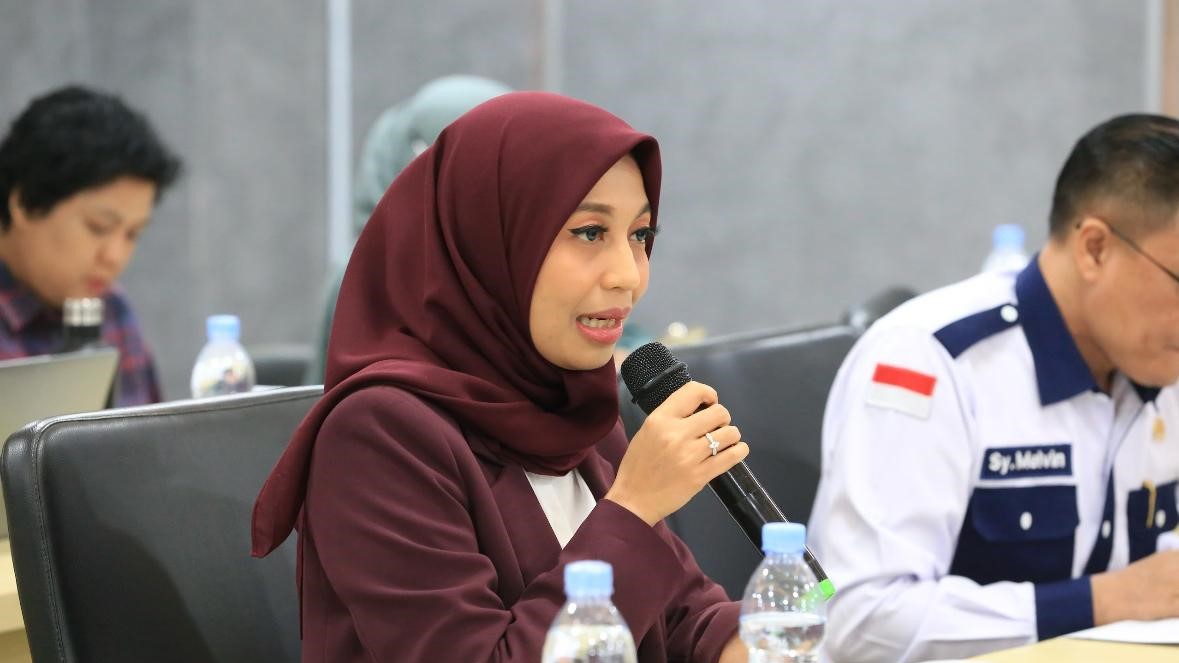
Bima, dpd.go.id — Senator Mirah Midadan Fahmid expressed her concern and serious attention to the condition of the agricultural sector in West Nusa Tenggara (NTB) on May 5, 2026, which is projected to require hundreds of water pumps to face the 2026 dry season, which has the potential to be drier and longer than normal conditions.
According to her, anticipatory measures need to be taken early because Nusa Tenggara is among the regions predicted to enter the dry season earlier. This situation requires serious attention, given that agriculture remains a key economic pillar for the people of NTB, especially in food-producing centers.
Although NTB is still in the yellow zone, Senator Mirah believes that anticipatory measures must be strengthened immediately to prevent a significant decline in agricultural productivity, as is already being experienced in several other regions that have entered the red zone.
"The need for water pumps is not just a technical issue, but rather part of a broader regional food security strategy that must be addressed in an integrated manner," said Senator Mirah. She emphasized that water pump interventions should be positioned as a rapid measure to maintain production continuity, especially on agricultural land with access to water sources. Without adequate emergency irrigation support, drought can directly affect the planting season, food production, and farmers' incomes.
She emphasized that the central and regional governments need to ensure that the distribution of pump assistance is carried out appropriately based on mapping real needs in the field.
"A data-driven approach is key to preventing distribution inequality, so that all farmers, especially those in drought-prone areas, can benefit equally," said Senator Mirah.
According to her, mapping pump needs must take into account the condition of water sources, the extent of affected land, the planting calendar, and the region's vulnerability to drought. This way, aid is distributed not merely based on administrative proposals but truly addresses production needs at the farmer level.
Furthermore, Senator Mirah appreciated the steps taken by the NTB Agriculture and Food Security Service, which has begun conducting regional surveys and encouraging farmers to adapt to climate change, such as El Niño and La Niña.
She believes educating farmers not to force rice cultivation in areas with limited water is the right policy. She believes changing farmers' mindsets is crucial in facing the challenges of an increasingly unpredictable climate.
"In a water-limited situation, commodity choices must be tailored to agro-climatic conditions. Farmers should not be left to bear the risk alone when weather patterns change. The government needs to be present through climate information, extension assistance, and support for appropriate production facilities," she said.
In this context, Senator Mirah also emphasized the importance of accelerating the transformation of agriculture towards a more adaptive and sustainable system.
"I encourage the adoption of modern agricultural technologies such as Climate Smart Agriculture (CSA) as a long-term solution. This technology is considered capable of increasing productivity while maintaining environmental balance, including in the face of threats from drought, pest attacks, and extreme weather patterns," she added.
Furthermore, Senator Mirah highlighted the importance of crop diversification as a risk mitigation strategy. She supported calls for farmers to switch to more drought-resistant commodities such as corn, chilies, and tobacco.
"Diversification not only helps maintain land productivity but also opens up new economic opportunities for farmers if managed well and supported by adequate market access," said Senator Mirah.
However, she cautioned that crop diversification is not enough with just recommendations. The government needs to ensure seed availability, access to financing, technical assistance, and market certainty to ensure farmers don't suffer losses when switching from rice to other commodities.
However, Senator Mirah reminded that these efforts cannot run optimally without cross-sector support.
She called for synergy between local governments, relevant ministries, research institutions, and the Meteorology, Climatology, and Geophysics Agency (BMKG) to provide accurate and up-to-date weather data. This information is crucial for farmers in the field as a basis for decision-making.
She believes climate data needs to be translated into easily understandable operational recommendations for farmers, such as planting schedules, commodity choices, water requirements, and priority areas for pump intervention. This way, weather information becomes more than just a warning, but also a basis for agricultural decision-making.
"I'm pushing for adequate budget allocation for the procurement of water pumps and strengthening agricultural infrastructure in NTB, so that problems like this can be anticipated more systematically in the future," she said.
She also urged that the procurement of water pumps should be accompanied by a maintenance mechanism, distribution monitoring, and evaluation of utilization in the field. This is crucial to ensure that the pumps are properly functioning, not piled up in certain locations, and are utilized by the farmer groups most in need.
She hopes that strategic steps taken early on can minimize the impact of the dry season, thereby maintaining regional food security and improving farmer welfare.
"Drought shouldn't be responded to only after its impacts have already occurred. NTB needs more anticipatory, data-driven, and farmer-friendly agricultural policies. Water pumps are an important intervention, but they must be part of a broader strategy to strengthen regional food security and climate adaptation," Senator Mirah concluded.
AGENDA KEGIATAN
DEWAN PERWAKILAN DAERAH REPUBLIK INDONESIA