Informasi Seputar Kegiatan di DPD RI
AGENDA KEGIATAN
DEWAN PERWAKILAN DAERAH REPUBLIK INDONESIA
11 September 2026 oleh admin
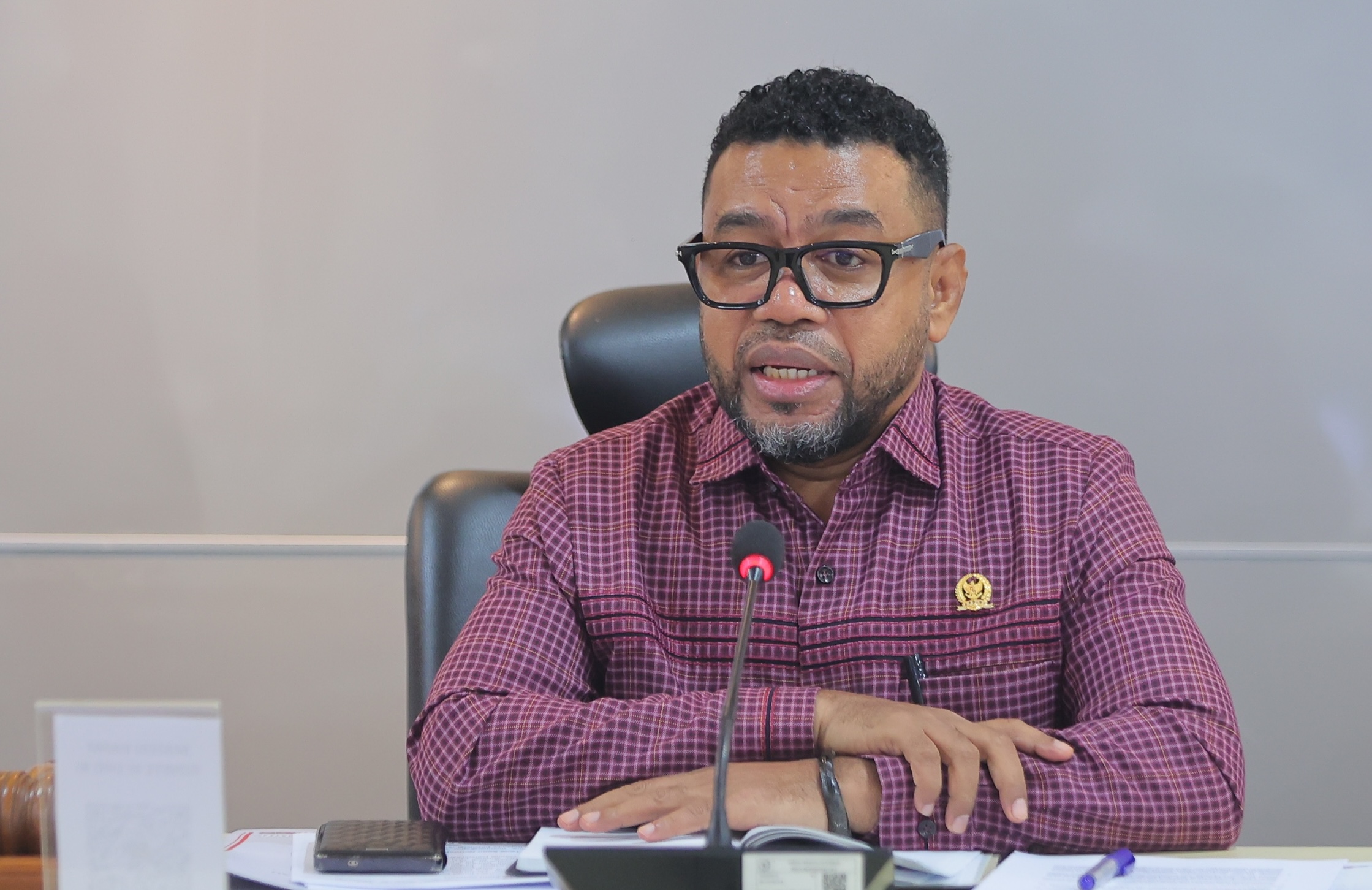
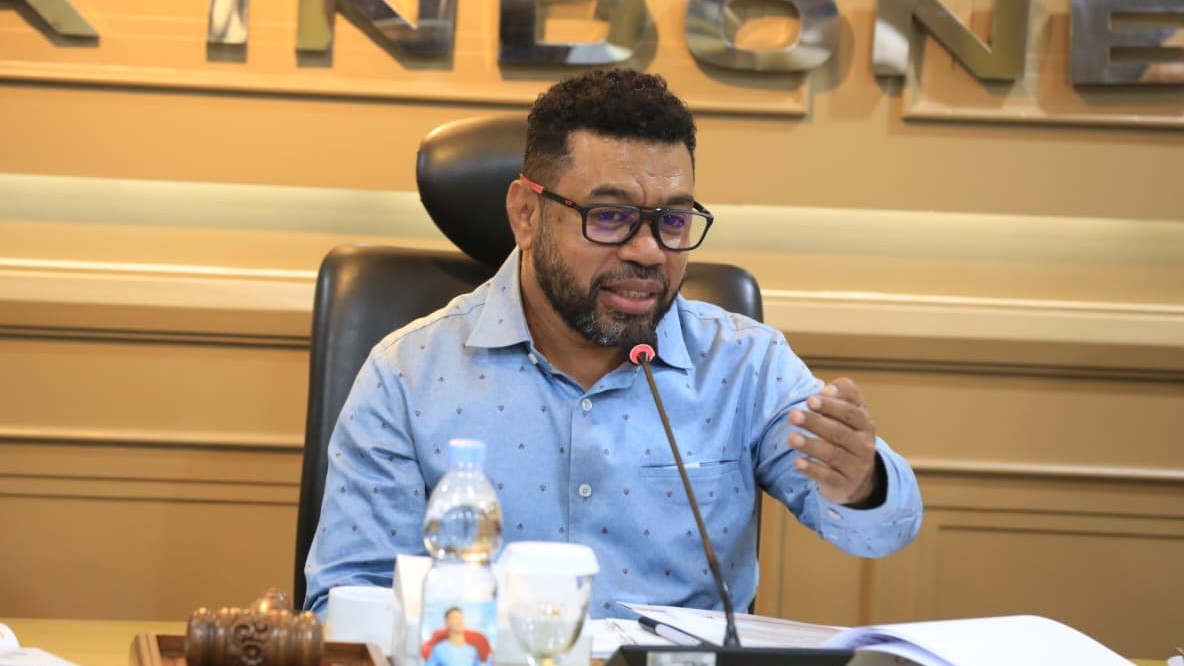
Jakarta, dpd.go.id — West Papua Senator Dr. Filep Wamafma emphasized that the discussion of the Bill on Agrarian Reform Regulations can be an instrument for correcting the inequality of land ownership, structural agrarian conflicts and state policies that have the potential to ignore the rights of indigenous peoples.
According to Filep, this is increasingly important for Papua because the Papua Special Autonomy Law provides a specific mandate to recognize, respect, protect, empower, and develop the rights of indigenous communities, including customary rights and individual rights of indigenous communities. The Special Autonomy Law also requires deliberation and agreement among indigenous communities in the provision of customary land for various purposes.
"In my opinion, the Agrarian Reform Bill should explicitly strengthen, not diminish, the protection standards provided by the Papua Special Autonomy Law. For example, by including a special chapter on agrarian reform in the Papuan special autonomy region," he said on Thursday (10/9/2026).
"In detail, the implementation of Agrarian Reform in Papua Province must pay attention to, respect, protect, and strengthen the rights of indigenous communities and the special rights guaranteed in the laws and regulations concerning Special Autonomy for Papua," he continued.
Furthermore, he emphasized that customary rights must be recognized as an inherent right, not simply an object of agrarian reform. This means the bill must clearly distinguish between land subject to state redistribution and customary territories already controlled based on the ancestral rights of indigenous communities.
"Customary territories should not be automatically included as Land Objects of Agrarian Reform (TORA) simply because they lack individual certificates. The absence of a certificate cannot be considered a lack of rights. This needs to be taken into account," he said.
Furthermore, the bill should stipulate that before the government issues rights, permits, concessions, or establishes projects impacting customary territories, a series of steps must first be completed, including identification, verification, recognition of indigenous communities, mapping of customary territories, establishing rights, consultation, and approval. This is crucial to avoid conflicts that have arisen due to permits and concessions being issued before the status of customary territories has been resolved.
PSN Must Pay Attention to Customary Rights
Regarding national strategic projects, Filep urged that the Agrarian Reform Bill incorporate the principle of Free, Prior, and Informed Consent (FPIC) operationally. For example, indigenous peoples' consent must be free from coercion, given before decisions or projects are implemented, documented, and provide the community with the opportunity to reject or request changes to plans with serious impacts.
"More deeply, the bill must order the government to develop an integrated National Agrarian and Customary Territory Information System that must at least include information on customary law communities, customary territory boundaries, customary rights, individual customary land, customary forests, permits/concessions, HGU/HPL, forest areas, mining areas, National Strategic Projects (PSN), and agrarian conflicts. For example, a plot of land must have a clear legal status and there must be no overlapping ownership. This is because the issue of overlapping authority and concessions is currently one of the issues highlighted in the bill's discussions," he said.
There needs to be a mechanism for customary land restitution and clarity regarding the scope of BRAN's authority
The law doctor, an alumnus of Unhas Makassar, added that the bill must provide indigenous communities with the right to request the return of land, restoration of rights, compensation, and restoration of livelihoods if their customary territories are proven to have been controlled or transferred through policies, permits, or actions that violate the law.
In addition, he highlighted the working procedures of the National Agrarian Reform Agency (BRAN), which must be able to accommodate the interests and rights of indigenous communities.
This is because the current bill designs BRAN to be directly responsible to the President and handle the planning, implementation, monitoring and evaluation of agrarian reform.
"Therefore, there must be strict limitations. BRAN is obliged to respect Papua's special authority and cannot determine or change the status of customary rights without the mechanisms specified in the Special Autonomy Law and its implementing regulations," he said.
Filep continued, explaining that a comprehensive conflict resolution mechanism is needed, including identifying the root causes of the conflict, verifying the history of land ownership, mapping, reviewing permits/concessions, reviewing indigenous peoples' agreements, and deciding on restoration, restitution/compensation, and restoring livelihoods. He believes this is crucial because structural agrarian conflicts often stem from overlapping permits, large-scale concessions, and the unrecognized territory of indigenous peoples.
Recommendation Points in the Agrarian Reform Bill
Filep then conveyed a number of important points that need to be included in the discussion of the Agrarian Reform Bill, including:
First, there needs to be a special chapter on agrarian reform in the Papua Special Autonomy Region.
Second, there needs to be a non-regression clause: none of the provisions of the bill should reduce the protection of indigenous peoples' rights as guaranteed by the Papua Special Autonomy Law.
Third, there needs to be an affirmation of customary rights as the original rights of customary law communities, not merely as an object of land redistribution.
Fourth, recognition and mapping of customary areas need to be a prerequisite before granting permits, concessions or implementing strategic projects in customary areas.
Fifth, it is necessary to establish FPIC as a mandatory principle in the use of customary areas that have a significant impact on indigenous communities.
Sixth, there needs to be a special mechanism for restitution and restoration of indigenous peoples' rights to land lost due to state policies, permits, concessions or development.
Seventh, indigenous women and vulnerable groups need to be considered as recipients of affirmative protection in every agrarian reform process.
Eighth, there needs to be an evaluation of all permits and concessions that are above or overlap with customary areas.
"Agrarian reform must be a reform, not just a matter of land administration. For Papua, agrarian reform must be an instrument to strengthen special autonomy, recognize the ancestral rights of indigenous peoples, protect customary land rights, resolve past conflicts, and ensure that development does not eliminate the living space of indigenous peoples," said Filep.
"Therefore, before this bill is passed, the House of Representatives (DPR) and the government must ensure that all norms relating to Papuan indigenous communities are tested against the Special Autonomy Law. Any norms that could potentially reduce the protection of indigenous peoples' rights must be revised. Remember, Papuan customary land is not empty land; it has owners, history, laws, identities, and generations that must be protected by the state," he concluded.
AGENDA KEGIATAN
DEWAN PERWAKILAN DAERAH REPUBLIK INDONESIA