Informasi Seputar Kegiatan di DPD RI
AGENDA KEGIATAN
DEWAN PERWAKILAN DAERAH REPUBLIK INDONESIA
13 September 2026 oleh admin
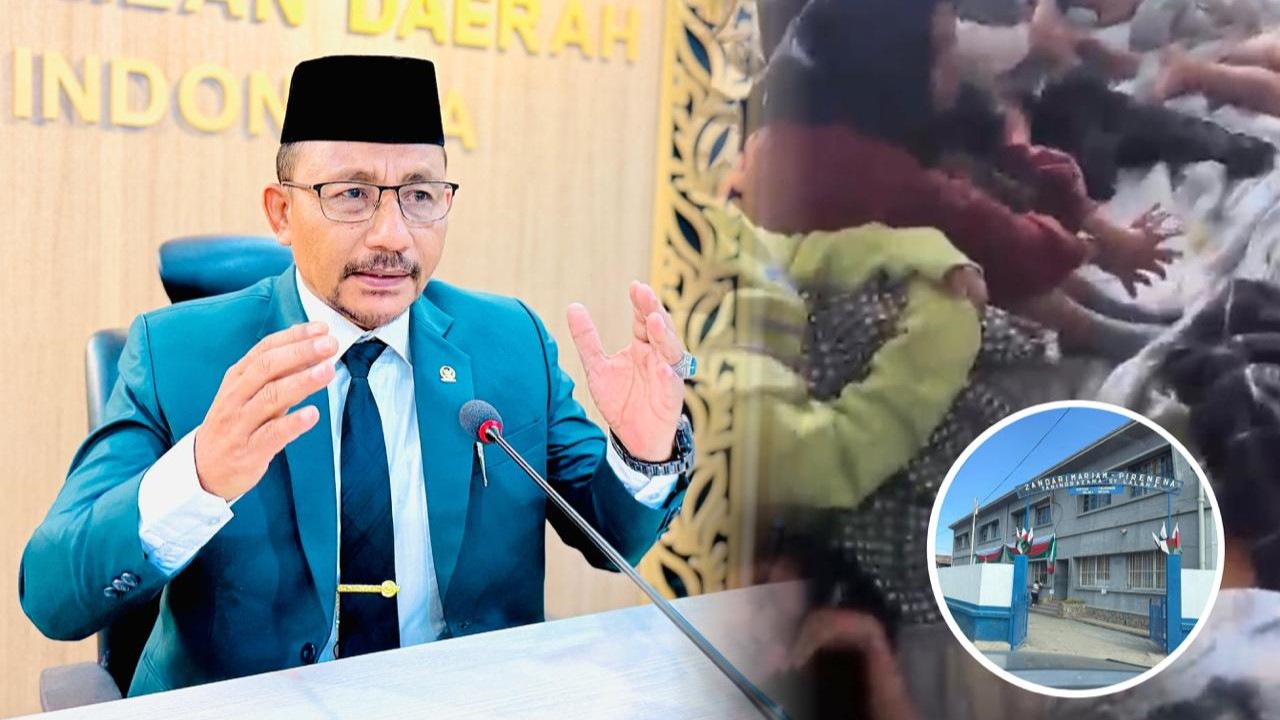
Jakarta, dpd.go.id — Chairperson of Committee III of the House of Regional Representatives of the Republic of Indonesia (DPD RI), Dr. Filep Wamafma, said Presidential Regulation No. 37 of 2026 on the 2026–2045 Creative Economy Master Plan (Rindekraf) could serve as a key momentum for regional development and the strengthening of local economies. According to Filep, the Rindekraf must aim to increase household incomes, create jobs, expand micro, small, and medium enterprises (MSMEs), protect intellectual property, strengthen local products, and generate new sources of economic growth for regions.
“Indonesia has diverse creative economy potential across its regions. Regions must be the subjects that determine their own potential, flagship products, business models, and markets in accordance with their respective characteristics,” Filep said on Saturday (September 12, 2026).
As is known, the 2026–2045 Rindekraf is intended to serve as a guideline for creative economy development and strengthen an intellectual property-based ecosystem through collaboration among the central government, regional governments, academia, businesses, financial institutions, communities, and the media.
Regional Potential Must Focus on Creating Added Value According to Filep, the problem faced by many regions is not a lack of potential. Nearly every region has natural resources, cultural assets, creativity, MSMEs, tourism potential, and human resources.
The challenge, he said, is that the added value generated from these resources does not yet fully remain and circulate within the regions.
“For years, many regions have continued to sell raw materials, ship semi-finished products, serve primarily as consumer markets, and depend heavily on government spending. In fact, local resources can be transformed into high-value products through design, technology, branding, intellectual property, digitalization, and market access,” he stressed.
Filep pointed to Papua as an important example of a region endowed with abundant natural resources and local potential. As of September 2025, the poverty rate in Papua stood at 17.82 percent, while Papua Pegunungan reached 27.21 percent and Central Papua 29.45 percent.
“These figures show that abundant natural resources and cultural potential do not automatically translate into greater public welfare. Therefore, the Rindekraf must address the real economic challenges faced by communities, including those in villages and remote areas,” he said.
At the same time, Filep added, Aceh demonstrates that regions with strong cultural, historical, tourism, agricultural, and community-based economic assets continue to face structural challenges.
Statistics Indonesia (BPS) recorded Aceh’s poverty rate at 12.22 percent in September 2025, equivalent to approximately 703,000 people. Rural poverty stood at 14.51 percent, significantly higher than the urban rate of 8.15 percent. By March 2026, Aceh’s poverty rate had risen again to 12.34 percent, or approximately 713,780 people.
“This is an important lesson. Development funds and programs must be capable of creating sustainable productive economic activities. Regions that continue to receive fiscal interventions, including Special Autonomy (Otsus) funding, should not remain structurally unchanged,” Filep said.
In 2025, Aceh’s economy remained heavily supported by the agriculture, trade, and transportation sectors, while 63.80 percent of its workforce was still employed in the informal sector.
According to Filep, although Aceh and Papua have different characteristics, both illustrate the same fundamental challenge: local potential must be connected to processing, creativity, financing, and markets in order to generate greater added value for communities.
Furthermore, Filep stressed the need for an objective evaluation of previous administrations. Various development programs, infrastructure projects, MSME empowerment initiatives, tourism programs, and affirmative policies have been implemented.
However, poverty figures, the high proportion of informal employment, and the continued dependence of several regions on primary sectors indicate that development has not yet fully succeeded in transforming the economic structure of local communities.
“Development programs must produce transformation, not merely activities. The Rindekraf can serve as one of the instruments to reconnect the value chain between regional potential, production, financing, markets, and public welfare,” Filep explained.
Five Concrete Recommendations for Regional Governments The Chair of Committee III of the DPD RI called on the central and regional governments to immediately translate the Rindekraf into concrete policies.
First, the Rindekraf must be integrated into the Regional Long-Term Development Plan (RPJPD), Regional Medium-Term Development Plan (RPJMD), Regional Government Work Plan (RKPD), Strategic Plans of Regional Government Agencies (Renstra OPD), and Regional Budgets (APBD), ensuring clear programs, funding allocations, and performance indicators.
Second, every region should establish a creative economy database covering the district/city level and, where possible, extending to villages, including information on creative economy actors, products, turnover, employment, financing needs, legal status, intellectual property, and markets.
Third, each region should identify and establish flagship products based on its local characteristics, rather than attempting to develop all creative economy subsectors simultaneously.
Fourth, the government must establish an integrated ecosystem covering potential identification, production, financing, technology, legal compliance, intellectual property, promotion and marketing, market access, and investment.
Fifth, success indicators must shift from measuring the number of activities to measuring their economic impact, including job creation, the number of MSMEs that successfully scale up, increased turnover, intellectual property ownership, incoming investment, export growth, and rising household incomes.
In addition, the MPR RI Secretary for Papua Affairs said Papua and Aceh could serve as pilot regions for Rindekraf implementation, with approaches tailored to their respective characteristics.
According to Filep, Papua has significant strengths in indigenous cultural heritage, crafts, arts, local food, marine products, nature-based tourism, and the digital economy. Aceh, meanwhile, has strengths in culinary products, fashion, handicrafts, Islamic culture, history, tourism, coffee, agricultural products, and community-based creative industries.
“Committee III of the DPD RI will push for the implementation of the Rindekraf to be genuinely felt by regions. Regional governments need assistance, financing, market access, technology, and stronger human resources. At the same time, regions must also be willing to move away from old patterns that are overly dependent on government spending,” he said.
AGENDA KEGIATAN
DEWAN PERWAKILAN DAERAH REPUBLIK INDONESIA