Informasi Seputar Kegiatan di DPD RI
AGENDA KEGIATAN
DEWAN PERWAKILAN DAERAH REPUBLIK INDONESIA
07 October 2026 oleh admin
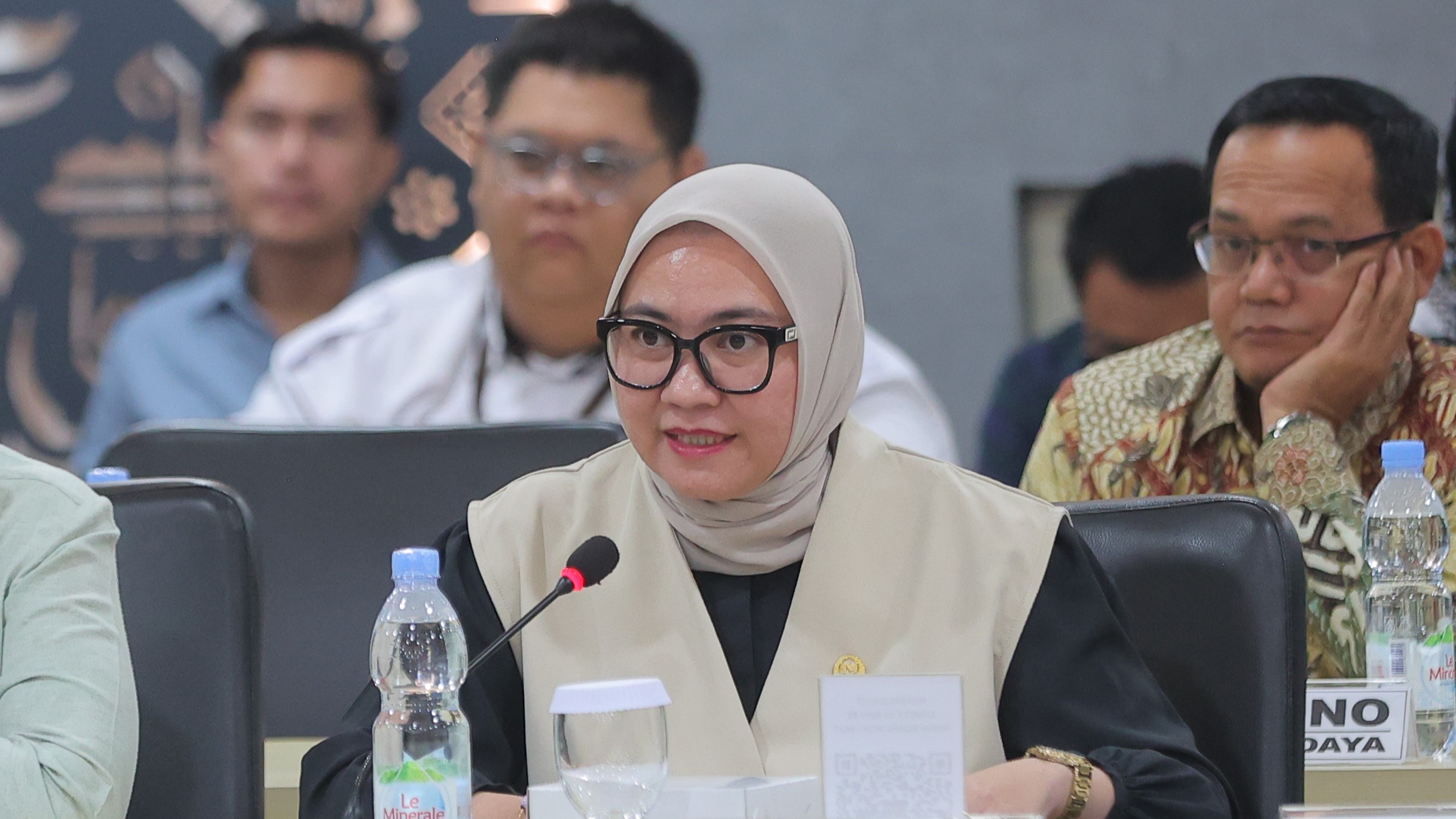
Jakarta, dpd.go.id – Agita Nurfianti, a member of Committee III of the House of Regional Representatives of the Republic of Indonesia (DPD RI) representing West Java, has raised concerns over difficulties faced by prospective recipients of the Indonesia Smart College Card (Kartu Indonesia Pintar Kuliah/KIP Kuliah) due to discrepancies in the National Single Socioeconomic Data (Data Tunggal Sosial Ekonomi Nasional/DTSEN).
She raised the issue during a working meeting between Committee III of DPD RI, the Ministry of Primary and Secondary Education, the Ministry of Higher Education, Science, and Technology, and Statistics Indonesia (Badan Pusat Statistik/BPS), held on Tuesday (October 6) at the DPD RI Office in Senayan, Central Jakarta.
Agita said her office had received reports concerning university students in West Java who had previously received assistance under the Indonesia Smart Program (Program Indonesia Pintar/PIP) while in senior high school and had subsequently been proposed as recipients of KIP Kuliah. However, when their universities attempted to process their applications through the system, they encountered difficulties because their DTSEN records were deemed inconsistent.
“It was explained earlier that KIP Kuliah recipients generally fall within socioeconomic deciles 1 to 4, while those in decile 4 and above may also be eligible if they previously received PIP assistance during senior high school. This is a case we have encountered in West Java, and these students can indeed be submitted and proposed by us,” Agita said.
She explained that the problem arose when universities attempted to enter the nominated students into the KIP Kuliah system. The process could not proceed because the system displayed an error message indicating a discrepancy in the DTSEN data.
“The problem is that the students we have proposed cannot be approved by their universities. When the university clicks on the website or application, an error appears stating that the DTSEN data do not match. What is the solution? These students previously received PIP assistance while in senior high school,” Agita said.
Agita stressed that the issue required an immediate solution to ensure that changes to or inconsistencies in DTSEN records would not automatically prevent students who had previously received educational assistance from accessing further support.
She argued that a verification or clarification mechanism should be established for prospective recipients with a documented history of receiving PIP assistance but whose socioeconomic decile classification in DTSEN had changed by the time they applied for KIP Kuliah.
“We must ensure that students who previously received PIP assistance are not prevented from accessing support when entering higher education simply because their socioeconomic decile classification has changed or does not match the data in the system,” Agita said.
In response, Minister of Higher Education, Science, and Technology Prof. Brian Yuliarto explained that KIP Kuliah applications and administration are handled through the ministry's information system. Students applying for KIP Kuliah enter their information into the KIP Kuliah Management Information System. However, the ministry does not operate a separate system or dedicated link for DTSEN data, as those data originate from BPS.
“There are applicants for KIP Kuliah whose data do not match, even though they previously received PIP assistance. This may happen because their socioeconomic decile classification in BPS data has suddenly increased,” he explained.
The meeting also clarified that access to DTSEN data is provided through a system managed by BPS, while the Ministry of Higher Education, Science, and Technology uses the data as one of the reference points in determining eligibility for KIP Kuliah.
In response to the explanation, Agita called for stronger coordination among the Ministry of Higher Education, Science, and Technology, BPS, and universities to resolve data discrepancies promptly and prevent students from being disadvantaged.
She also called for a dedicated resolution mechanism for exceptional cases, particularly those involving students who can demonstrate that they previously received PIP assistance but are now facing difficulties because of changes to their DTSEN records.
“We expect a solution to be found. Data synchronization issues must not cause students who should be receiving assistance to lose the opportunity to obtain KIP Kuliah,” Agita concluded.
Meanwhile, the conclusions and agreements reached during the working meeting, as read out by Committee III of DPD RI Chair Filep Wamafma, stated that, regarding the distribution of educational assistance under both KIP and PIP, Committee III DPD RI urged the Ministry of Primary and Secondary Education and the Ministry of Higher Education, Science, and Technology to implement a transition period or gradual tapering of no more than six months for prospective beneficiaries. This would allow assistance to continue while re-verification and updates to data reflecting actual economic conditions are carried out.
“Committee III of DPD RI, the Ministry of Primary and Secondary Education, the Ministry of Higher Education, Science, and Technology, and BPS agree to strengthen the use of DTSEN as a data foundation for formulating and determining educational assistance policies and programs. This must be accompanied by regular data updates, verification, and validation to ensure that assistance reaches the intended beneficiaries more accurately,” Filep added.
AGENDA KEGIATAN
DEWAN PERWAKILAN DAERAH REPUBLIK INDONESIA