Informasi Seputar Kegiatan di DPD RI
AGENDA KEGIATAN
DEWAN PERWAKILAN DAERAH REPUBLIK INDONESIA
17 September 2026 oleh admin
Timika, dpd.go.id — The Papua Special Committee (Pansus Papua) of the DPD RI emphasized that resolving the conflict and humanitarian issues in Papua requires a comprehensive approach placing the protection of civilians, the rehabilitation of displaced persons, law enforcement, basic services, and respect for indigenous communities at the core of state policy.
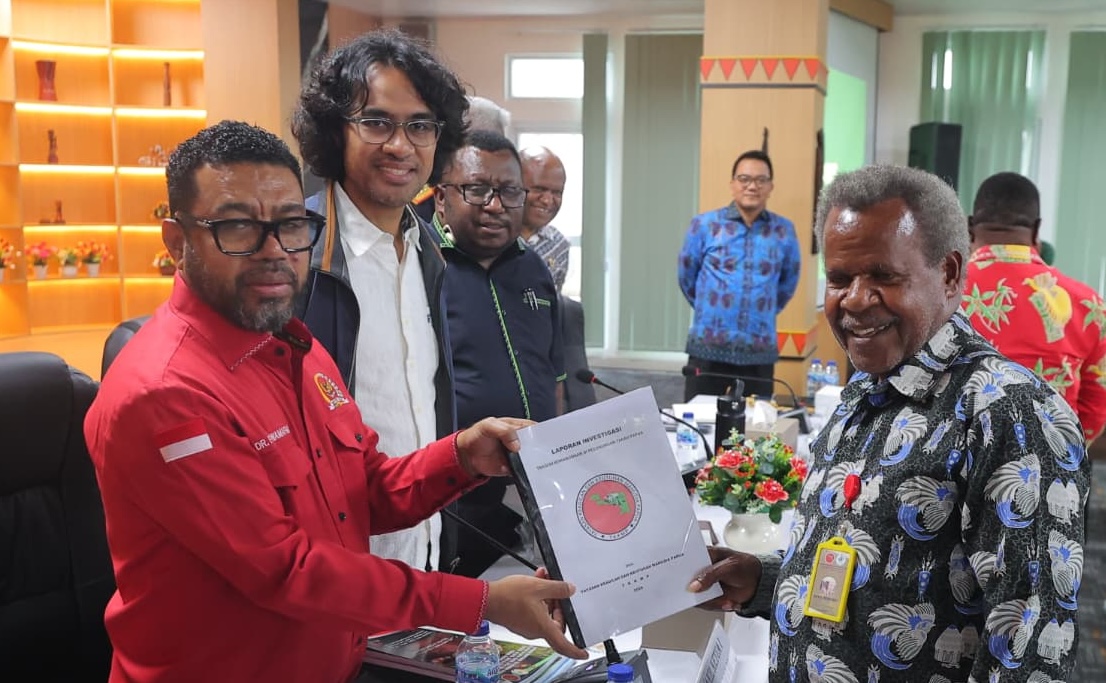
This message emerged during a meeting held by the DPD RI Papua Special Committee at the Mimika Regent's Office, Central Papua Province, on Thursday (17/9/2026), as part of a series of working visits to gather facts, documents, and aspirations from communities in conflict-affected areas.
The meeting invited various stakeholders, including the Regent of Mimika, representatives of the TNI (Indonesian National Armed Forces), Komnas HAM (National Commission on Human Rights), community leaders, displaced residents who were victims in Puncak Jaya Regency, and the Majelis Rakyat Papua (Papuan People's Council) of Central Papua, to follow up on internal Papua conflict issues that have resulted in displacement, security disruptions, and the need for humanitarian response.
The Special Committee conducted an in-depth examination into the conditions of internally displaced persons (IDPs), victims of violence, disruptions to education and healthcare, security conditions, and community recovery needs.
Data from Komnas HAM revealed a serious situation. In the first half of 2026, Komnas HAM recorded 42 incidents of violence and armed conflict in Papua, resulting in 59 deaths and 50 injuries. Of the 59 fatalities, 43 were civilians, eight were TNI/Polri personnel, and eight were members of armed civilian groups.
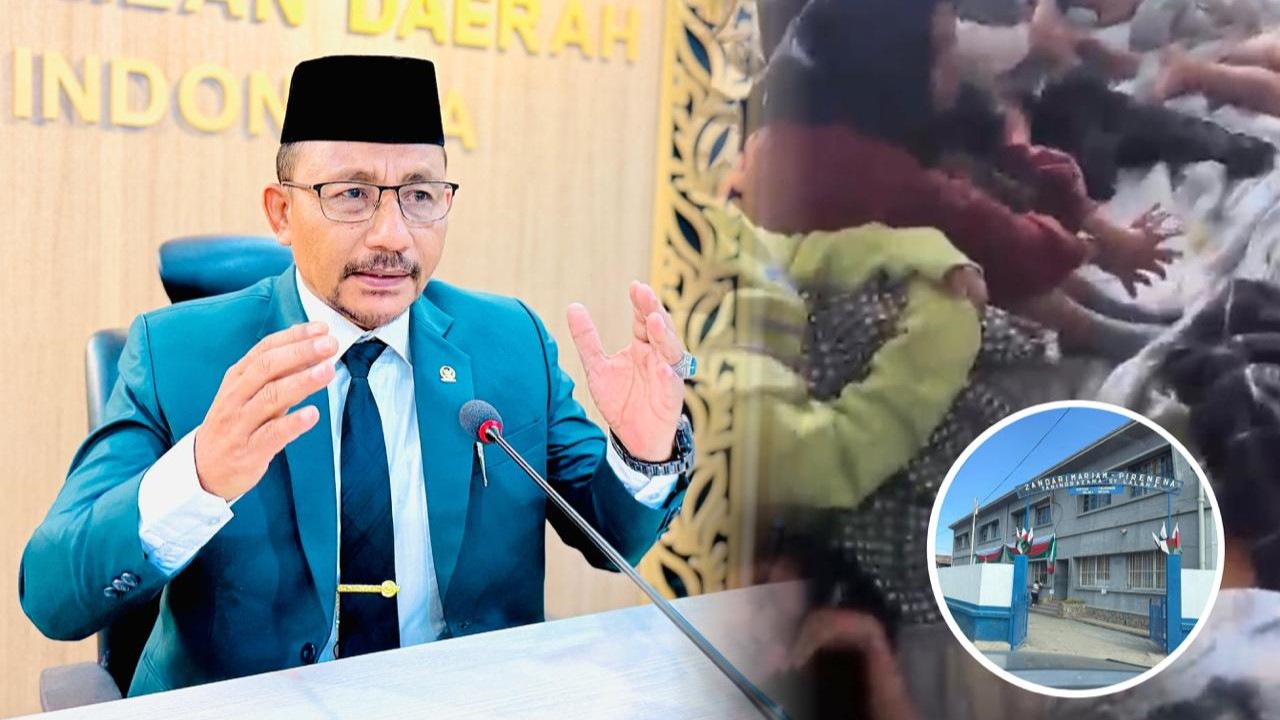
"We must look at these figures not merely as conflict statistics. Behind every number is a human being, a family, children, loss of homes, and the disruption of education, health, and livelihoods," said the Vice Chairperson of the Papua Special Committee.
According to Filep, these conditions highlight the need for a comprehensive evaluation of security strategies as well as the approach to resolving armed conflict in Papua. The government, he stated, needs a comprehensive and targeted strategy so that security management goes hand in hand with conflict resolution efforts.
"There must be a national evaluation of Papua conflict management, establishing a resolution roadmap complete with target timelines, success indicators, division of responsibilities, and oversight mechanisms," Filep said.
Filep added that a long, comprehensive dialogue and a firm stance from the President of the Republic of Indonesia are necessary to create a safe and peaceful Papua. "The President must act immediately by establishing an investigation team, a reconciliation team, or a dialogue team to ensure Papua is safe and peaceful," Filep urged.
On the same occasion, Frits Ramandei, a representative of Komnas HAM Papua, expressed appreciation to the DPD RI for establishing the Special Committee and pushing for faster conflict resolution solutions.
"Politically, this is a significant step forward for Papua conflict resolution. The DPD RI is an institution capable of accelerating Papuan issues so they can be heard directly by key stakeholders at the central level," Frits stated.
Frits added that there is no other way to resolve the conflict in Papua except through dialogue involving all stakeholders across Papua.
"Dialogue involving all interested parties in Papua such as the government, the Free Papua Movement (OPM), and community leaders, is the most effective solution, prioritizing a legal approach and community protection," he explained.
The Special Committee also gave special attention to the issue of internally displaced persons. Data presented during the meeting estimated the number of IDPs to be around 22,000 to 22,661 people. However, this figure still requires inter-agency verification and synchronization.
Komnas HAM itself warned that IDPs face severe challenges due to limited access to basic services, particularly education and healthcare.
Filep added that the Special Committee sees an urgent need to establish a Single Papua IDP Database (Satu Data Pengungsi Papua) that integrates data from local governments, village administrations, customary leaders, churches, humanitarian organizations, and other relevant bodies.
"The state must not have conflicting figures regarding the number of displaced persons while communities in rural villages remain in state of uncertainty. Data must serve as the foundation for policy, not just administrative paperwork," Filep added.
The committee also maintained that the repatriation of displaced residents must adhere to principles of safety, voluntariness, dignity, and sustainability.
Repatriation must be preceded by a verification of security conditions, village readiness, the restoration of homes and public facilities, and the availability of education, healthcare, food, and livelihoods.
"We cannot return residents if schools are not functional, healthcare facilities are unavailable, homes are not rebuilt, and security conditions do not offer peace of mind. If that happens, displacement will simply recur," Filep emphasized.
Every incident resulting in fatalities or injuries, Filep added, must be handled objectively and transparently.
"Through event documentation, evidence gathering, witness examinations, investigations, and legal accountability mechanisms—because the Special Committee will not draw conclusions before the verification process is complete. Every finding will be tested against documents, testimonies, and field verifications, and we will follow up on these findings at the central government level," he explained.
The committee noted that resolving Papuan issues must also respect the standing of indigenous communities (masyarakat adat). Land, forests, villages, and natural resources carry not only economic value, but also represent the living space and identity of indigenous peoples.
Because the conflict in Papua demands a thorough policy review, the DPD RI Papua Special Committee takes the view that this evaluation must span all dimensions.
The evaluation must encompass not only security aspects, but also development, public services, budget management, indigenous rights protection, IDP rehabilitation, and conflict resolution mechanisms.
In recent updates, the committee reaffirmed the need to evaluate security strategies and armed conflict resolution to ensure responses are more comprehensive and targeted. From the meeting in Timika, the Special Committee identified several priority agendas:
The DPD RI Papua Special Committee will bring the outcomes of this meeting and the aspirations of the Central Papua community to Jakarta as material for further deliberations. The benchmark for success in handling Papua is not merely whether the fighting stops. It is whether people can return to their villages safely, whether children can return to school, whether health services function, whether the local economy recovers, and whether the community feels the presence of the state protecting them.
The committee reaffirmed that resolving Papua's challenges requires the full presence of the state: accountable security, equal justice under the law, tangible public services, protection for indigenous rights, victim recovery, and a dignified space for dialogue.
The Regent of Mimika, Johannes Rettob, welcomed the arrival of the Papua Special Committee, expressing hope that investigative reports from Komnas HAM and the public would yield positive progress for Papua.
"We see that the community, tribal chiefs, pastors, and the MRP hold great hopes for the role of the DPD RI Special Committee. The reports submitted by Komnas HAM and the public serve as a beacon of hope for residents toward a more peaceful Papua," Johannes said.
Moving forward, the Special Committee will inventory all identified issues and invite relevant ministries and agencies to provide formal explanations.
AGENDA KEGIATAN
DEWAN PERWAKILAN DAERAH REPUBLIK INDONESIA