Informasi Seputar Kegiatan di DPD RI
AGENDA KEGIATAN
DEWAN PERWAKILAN DAERAH REPUBLIK INDONESIA
22 September 2026 oleh admin
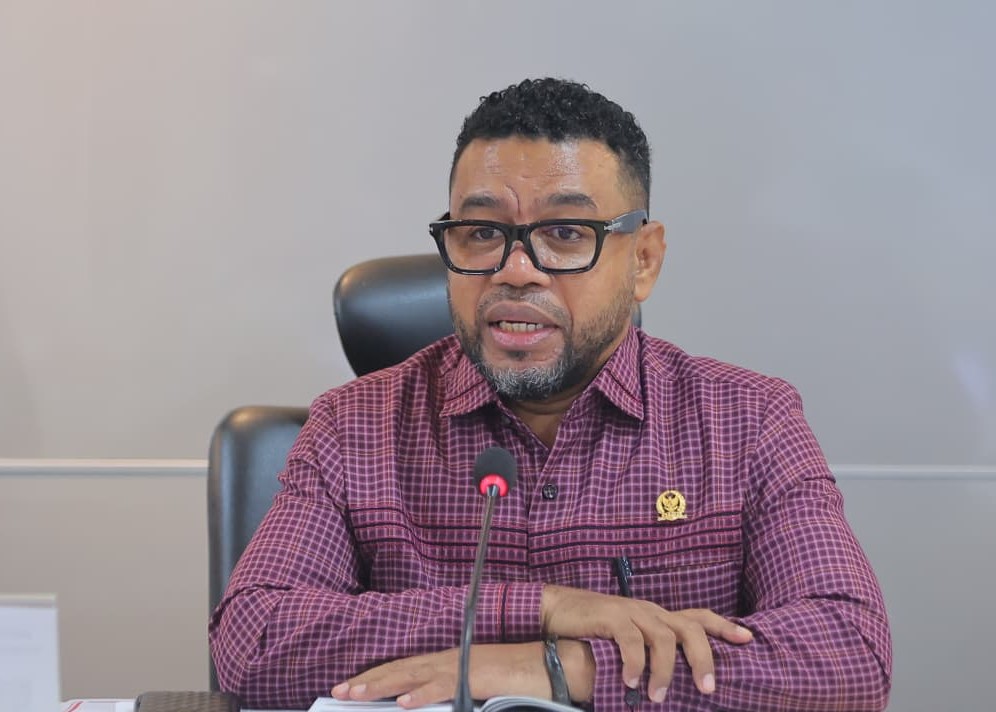
Jakarta, dpd.go.id — Senator from West Papua Dr. Filep Wamafma, S.H., M.Hum., C.L.A., said the deliberation of the Oil and Gas Bill (RUU Migas) needs to provide stronger guarantees for the rights of oil- and gas-producing regions, including certainty over regional revenues, Participating Interest (PI), protection of indigenous communities, and access to oil and gas production and revenue data.
He made the statement based on his review of the Clean Draft of the Oil and Gas Bill dated August 15, 2026, which identified several provisions that, from the perspective of producing regions, still require strengthening during the legislative process.
“The Oil and Gas Bill should not only regulate the obligations of regional governments to support upstream activities. At the same time, the fiscal and economic rights of producing regions must be clearly accommodated in the law. Provisions that are most critical to the regions should not be left entirely to Government Regulations,” Senator Filep said.
According to Filep, one of the fundamental issues in the draft concerns revenue sharing for producing regions. Article 50 paragraph (1) states that producing regions are entitled to receive a share of net oil and gas revenues from the government's share of production. However, the provision does not yet establish the percentage, calculation formula, definition of “net,” disbursement schedule, or correction mechanism in the event of underpayments or overpayments.
Therefore, he believes that the minimum percentage, basic formula, reconciliation mechanism, payment adjustments, and the regions’ right to raise objections should be stipulated directly in the body of the law.
“The rights of producing regions require a clear legal basis and clear provisions. There must be figures, formulas, disbursement mechanisms, and oversight mechanisms that can be verified,” he added.
10 Percent Participating Interest Must Be Clearly Defined as a Right of Producing Regions Filep, who also chairs a DPD RI committee, further highlighted Article 27 concerning a minimum 10 percent Participating Interest (PI). Under the draft, contractors are required to offer a 10 percent PI to regionally owned enterprises (BUMD). However, the review noted that the provision does not explicitly establish PI as a right of producing regions and does not comprehensively address financing, cross-regional working areas, carried interest, risks, dividends, and the utilization of PI proceeds.
“We believe that the 10 percent PI must be formulated as a right of producing regions, to be exercised through BUMDs designated by the regions. If a BUMD lacks the financial capacity, there must be a financing scheme that does not undermine the region’s ownership and economic benefits,” Filep added.
The review also recommends that the principles governing PI, sources of financing, governance, transparency, and minimum regional benefits be established at the statutory level, while implementing regulations should only cover technical matters.
Beyond fiscal aspects, Filep said the Oil and Gas Bill needs to provide more operational provisions concerning indigenous communities. Article 13 paragraph (6) letter r already contains provisions on community development and guarantees for indigenous peoples’ rights. However, the review considers these provisions too general, as they do not provide detailed regulations on economic rights, benefit sharing, consultation, consent, remedy, and conflict-resolution mechanisms.
A similar issue arises in the regulation of land use for upstream activities. The review recommends strengthening provisions concerning recognition of customary territories, meaningful consultation, consent from indigenous communities in accordance with applicable law, fair compensation, the sharing of economic benefits, and post-operation restoration.
“For Papua and other regions with indigenous communities, oil and gas development cannot focus solely on investment and production. There must be certainty regarding the protection of rights, compensation, economic benefits, and the restoration of social and environmental impacts,” Filep said. Strengthening the Position and Role of Regional Governments
Filep also examined several provisions that place regional governments in a coordinating or consultative role. For example, Article 16 paragraph (3) regulates coordination between the Minister and regional governments in determining Working Areas. The review notes that coordination is not the same as approval, meaning that producing regions still have a limited role in determining areas of operation.
A similar issue arises in the approval of the Plan of Development (POD), where provincial governments are positioned as consultees, even though the POD determines production timelines, volumes, infrastructure, and factors that affect regional revenues.
“Producing regions must have meaningful opportunities to participate, particularly in matters directly related to regional authority, spatial planning, the environment, infrastructure, labor, and local communities,” he said.
More broadly, Filep said that regional governments also need access to the data used as the basis for calculating revenues. Producing regions should have access to production, lifting, reserves, prices, relevant costs, and revenue data for planning, oversight, and verification of Revenue Sharing Funds (DBH). In addition, regions should receive information on and have the right to review the cost components used to calculate the government’s share and DBH.
On the occasion, the doctoral graduate of Hasanuddin University (Unhas) in Makassar outlined seven key agendas that need to be addressed in the deliberation of the Oil and Gas Bill:
“The Oil and Gas Bill must strike a balance between national interests, investment certainty, the rights of producing regions, and the protection of indigenous communities,” Senator Filep Wamafma concluded.
AGENDA KEGIATAN
DEWAN PERWAKILAN DAERAH REPUBLIK INDONESIA