Informasi Seputar Kegiatan di DPD RI
AGENDA KEGIATAN
DEWAN PERWAKILAN DAERAH REPUBLIK INDONESIA
28 September 2026 oleh admin
Jakarta, dpd.go.id — The inauguration of the Bing Slamet Museum at Jalan Arimbi No. 7, Tanah Tinggi, Johar Baru, Central Jakarta, on Sunday (27/9/2026), marks a crucial moment in preserving the nation's collective memory of one of Indonesia's most versatile artistic maestros.
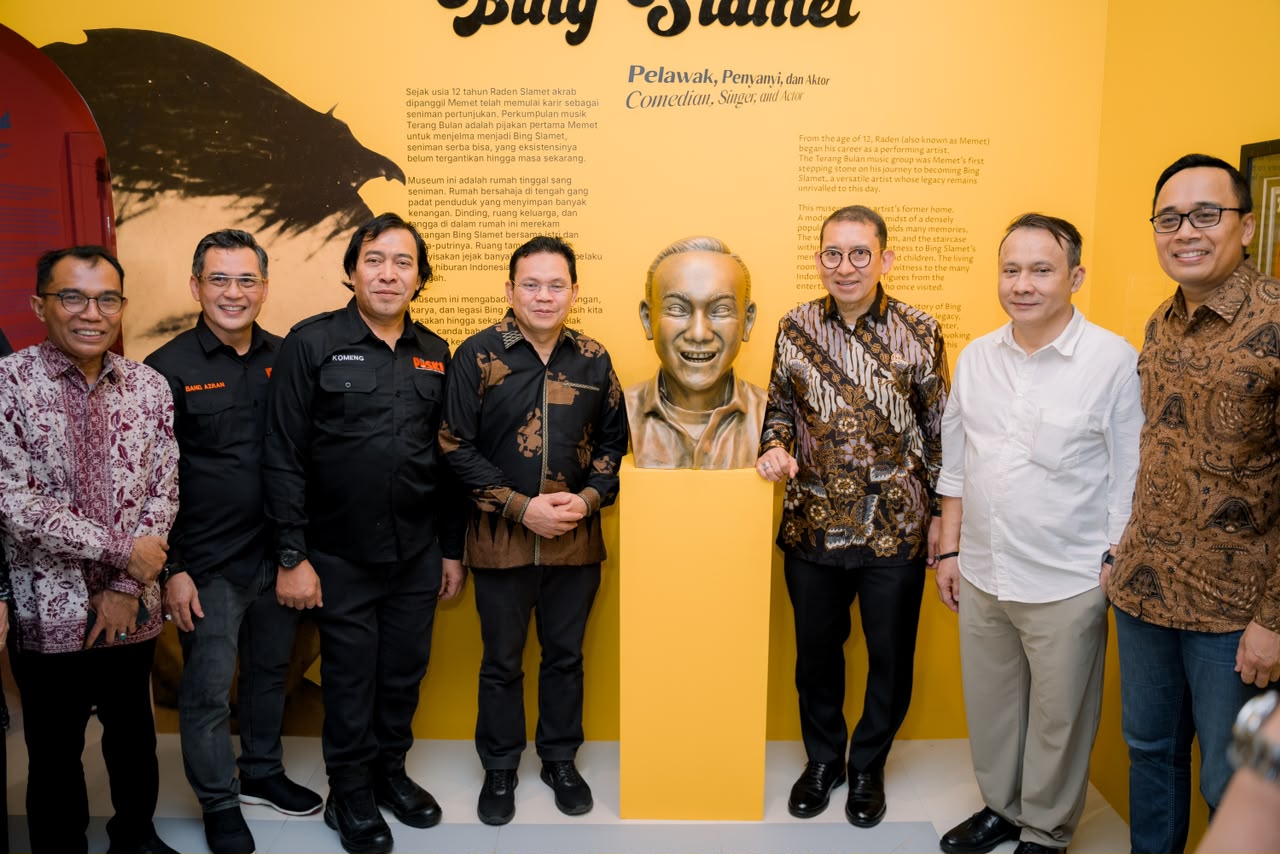
The museum, carrying the theme "Remembering the Works and Legacy of Bing Slamet for Indonesia," was inaugurated by Minister of Culture Fadli Zon, coinciding with National Comedy Day celebrated every September 27.
Achmad Azran, a member of the DPD RI/MPR RI representing the DKI Jakarta electoral district, praised the Ministry of Culture's step in establishing a museum dedicated to remembering Bing Slamet's journey and works. According to him, a museum is not merely a space to store historical items, but also a medium to connect current generations with the values, works, and exemplary character of past figures.
"Bing Slamet was not just a comedian. He was a versatile artist who brought music, comedy, film, and various forms of art to life for the public. Therefore, this museum is important so that the younger generation does not just recognize his name, but also understands his works and life journey," said Bang Azran.
According to Bang Azran, the presence of the Bing Slamet Museum becomes even more essential amid changing times and the rapid development of the entertainment industry. The legacy of maestros, he said, needs to be nurtured so that the new generation understands that Indonesian culture was built through a long process and the contributions of many artists across eras.
"We must not let the younger generation know Bing Slamet only by name without knowing why he was so important in the history of Indonesian art. This museum can serve as a bridge between generations and a learning space showing that creativity, perseverance, and the courage to create are integral to the nation's cultural journey," he stated.
Bing Slamet was known as a singer, musician, songwriter, comedian, and actor. His artistic journey spanned a long period, from the pre-independence era through the 1970s. He gained renown through his active role in music, comedy, radio, and national cinema.
Throughout his career, Bing Slamet was notably known for his work in Trio Los Gilos and Kwartet Jaya alongside Ateng, Iskak, and Eddy Sud, as well as his musical endeavors with Eka Sapta. He also starred in numerous films and produced musical works that became part of Indonesia's popular art history.
The museum inauguration was attended by several figures and legendary artists close to Indonesia's arts and entertainment journey. Aside from Culture Minister Fadli Zon, DPD RI member for West Java Alfiansyah Komeng, Bing Slamet's son Adi Bing Slamet, and senior artists such as Tarzan and Munaroh were also present.
The presence of figures across generations demonstrates that Bing Slamet is not merely a name in entertainment history, but a figure with a broad network of influence across national performing arts and the entertainment industry.
Culture Minister Fadli Zon noted that the Bing Slamet Museum's layout depicts the maestro's journey as a multi-talented Indonesian artist. This journey highlights his roles as a songwriter, singer, actor, and comedian who helped shape the development of Indonesian culture.
"If we look at the timeline and exhibition setup, we see that Bing Slamet was a multi-talented artist. He was a songwriter, a baritone singer, an actor, and a comedian through the famous Trio Los Gilos and Kwartet Jaya groups," Fadli Zon told reporters after the museum inauguration in Central Jakarta on Sunday (27/9/2026).
Fadli explained that Bing Slamet's name was also tied to his baritone vocal quality, which bore similarities to renowned Indonesian singer Sam Saimun. Bing Slamet's journey in music and comedy reflects a long career that enriched the development of national art in Indonesia.
The museum displays various collections related to Bing Slamet's life and works throughout his career up to the end of his life. Visitors can see film posters, vinyl records, cassettes, clothing, work passes, and various original memorabilia left behind by the artist.
"In this museum, there are film posters, vinyl records, cassettes, clothing, work passes, and original Bing Slamet memorabilia. On the upper floor, there is also a small studio that can later be developed for film screenings," Fadli said.
He added that the museum retains parts of Bing Slamet's original home, including the staircase, which remains an iconic feature. Preserving these original elements ensures the space is not just an exhibition venue, but one that conveys the atmosphere of the maestro's life and the creative environment that was part of his journey.
Meanwhile, Bing Slamet's son, Adi Bing Slamet, expressed his gratitude to the Ministry of Culture. He shared how moved he was that the family home now stands officially as the Bing Slamet Museum, open for the public to visit.
Adi shared that the house previously served as a creative headquarters and a gathering place for maestros and artists across generations. Great ideas, according to him, were born right in the living room and porch—spaces that played an essential role in his family's story.
"From this modest place, big ideas, legendary works, and comedy scripts that entertained millions of people were born. The warm conversations among artists in this house helped lay the foundation for the country's entertainment industry at that time," Adi said.
Bang Azran noted that this story shows culture does not always originate from grand spaces or formal institutions. Homes, gathering spots, conversations between artists, and the courage to create can also form vital parts of cultural history.
"What we are preserving through this museum is not just Bing Slamet's relics, but also the spirit of creativity that grew from this house. There are historical, cultural, and human values that deserve to be passed down to the next generation," Bang Azran said.
He expressed hope that the Bing Slamet Museum will become an educational and cultural destination in Jakarta—especially for the younger generation, students, art communities, and the public wanting to get closer to the journey of one of Indonesia's entertainment maestros.
"May this museum stay vibrant. Not just busy during its inauguration, but continuing to be a space for learning, appreciation, and a meeting point between the old and new generations. A maestro's legacy like Bing Slamet's must remain alive among the new generation," Bang Azran concluded. (* )
AGENDA KEGIATAN
DEWAN PERWAKILAN DAERAH REPUBLIK INDONESIA