Informasi Seputar Kegiatan di DPD RI
AGENDA KEGIATAN
DEWAN PERWAKILAN DAERAH REPUBLIK INDONESIA
25 February 2026 oleh mediadpd
BANDUNG (24/02), dpd.go.id – Member of Committee III of The House of Regional Representatives of the Republic of Indonesia (DPD RI) of West Java (Jabar) Agita Nurfianti emphasized that changes in the governance of the Hajj organization, including the transfer of authority from the Ministry of Religious Affairs to the Ministry of Hajj and Umrah, must be accompanied by strengthening regional readiness. According to her, although in terms of experience, regional Human Resources (HR) are relatively ready because they come from the previous structure, the limited number of personnel and post-transition administrative issues need immediate and serious attention from the central government.
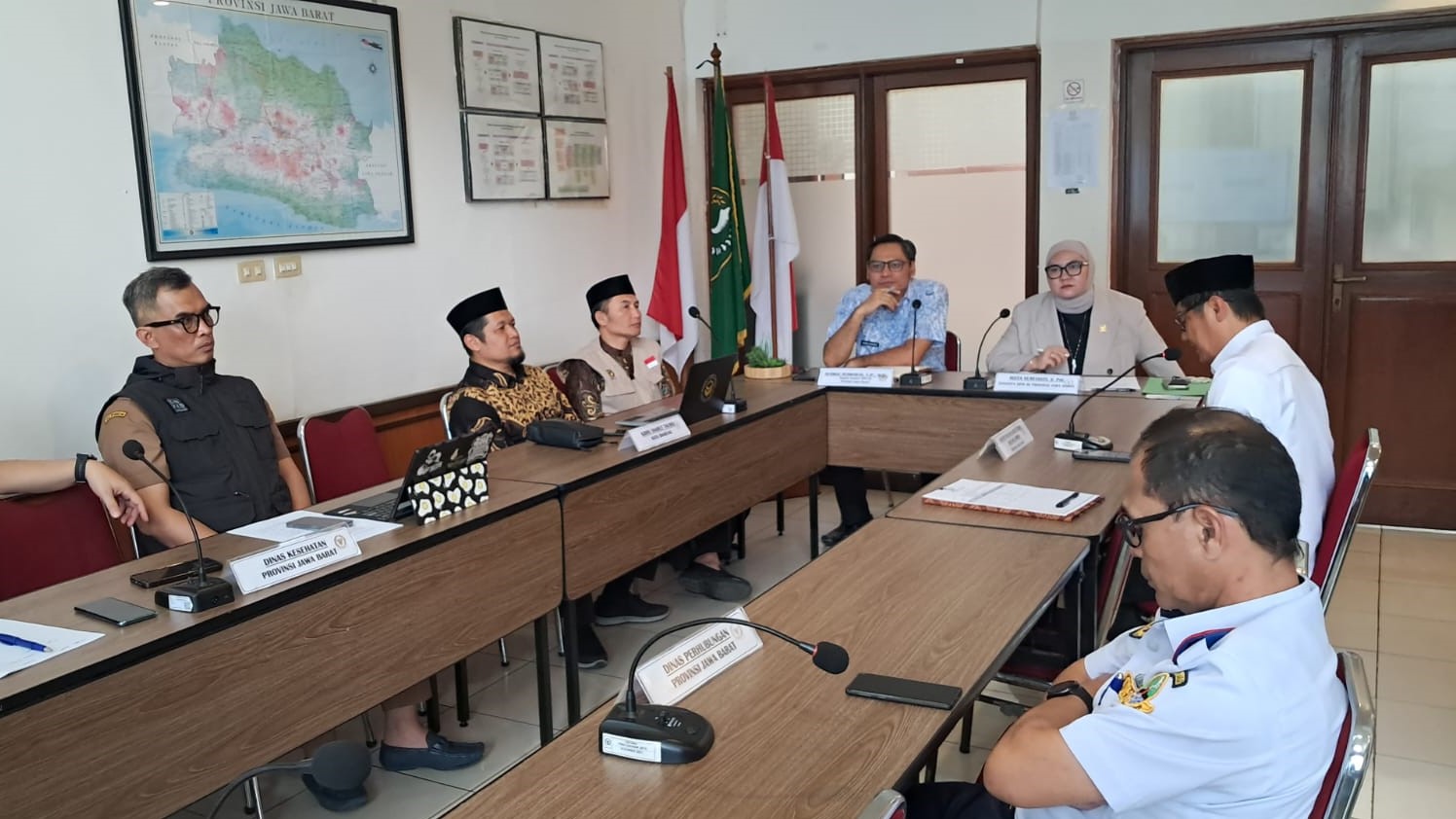
She conveyed this during the Community and Regional Aspiration Absorption Recess Activity on Monday (23/2) at the West Java Provincial DPD RI Office. This activity was carried out in order to inventory the supervisory material for the implementation of Law Number 14 of 2025 concerning the Third Amendment to Law Number 8 of 2019 concerning the Implementation of the Hajj and Umrah Pilgrimages, specifically regarding preparations for the implementation of the 1447 H/2026 AD Hajj pilgrimage in the regions.
The meeting aimed to assess various issues related to preparations for the 1447 H/2026 AD Hajj pilgrimage and to gather input from the community and regional governments regarding the preparations. Representatives from the West Java Provincial Office of the Ministry of Hajj and Umrah, the West Java Provincial Health Office, the West Java Provincial Transportation Office, and the Daarut Tauhid Hajj and Umrah Guidance Group (KBIHU) attended the meeting.
Agita appreciated the change in the calculation and distribution method for West Java's 2026 Hajj quota, which is now based on the provincial waiting list. She considered this policy fairer in terms of waiting time, but it has significant impacts on several regencies/cities.
As revealed at the forum, these changes have created new dynamics in the regions, ranging from drastically reduced quotas in certain areas to sudden financial challenges for pilgrims. It is hoped that these changes can be addressed to prevent empty seats leading up to departure.
Regarding the payment of Hajj fees, the forum stated that although the target has almost been reached, the number of reserve pilgrims remains very limited. It is hoped that consideration will be given to opening additional payment phases to strengthen the reserve of pilgrims, thus avoiding losses for the state or pilgrims already ready to depart.
In terms of embarkation readiness and facilities, Agita commended the readiness of the Jakarta-Bekasi embarkation and the Kertajati/Indramayu Hajj Dormitory, including the improvement of dormitory facilities, which are designed to be equivalent to a three-star hotel, as part of the pilgrims' familiarization program. She considered this step crucial, especially for elderly pilgrims and those from remote areas, to better prepare them for the conditions in the Holy Land.
Agita also paid special attention to the health of pilgrims. With the majority of pilgrims being elderly, disabled, and those with comorbidities, she emphasized the importance of strengthening the health workforce and accelerating vaccine distribution, particularly the delayed polio vaccine.
"The health readiness of the congregation is key. We must ensure that the workload of our staff is excessive, or that health services are suboptimal due to a lack of personnel," he stressed.
Furthermore, Agita appreciated the regional affirmative action policy allocating 30 percent of Hajj pilgrimage guides to women as part of the commitment to a women-friendly Hajj. She also assessed the increasingly strategic role of Hajj Guidance Groups (KBIH), particularly in providing guidance on Hajj rituals (manasik), mentoring the elderly, and improving pilgrims' literacy, despite still facing funding constraints.
Closing the recess, Agita Nurfianti emphasized that all input and findings in West Java would be summarized and used as oversight by the DPD RI in overseeing the 2026 Hajj pilgrimage, both domestically and in Saudi Arabia. She assured that the DPD would convey these crucial issues to the central government so that the 1447 Hijj/2026 Hajj pilgrimage would be more orderly, fair, and provide the best service for pilgrims.
AGENDA KEGIATAN
DEWAN PERWAKILAN DAERAH REPUBLIK INDONESIA