Informasi Seputar Kegiatan di DPD RI
AGENDA KEGIATAN
DEWAN PERWAKILAN DAERAH REPUBLIK INDONESIA
14 April 2026 oleh admin
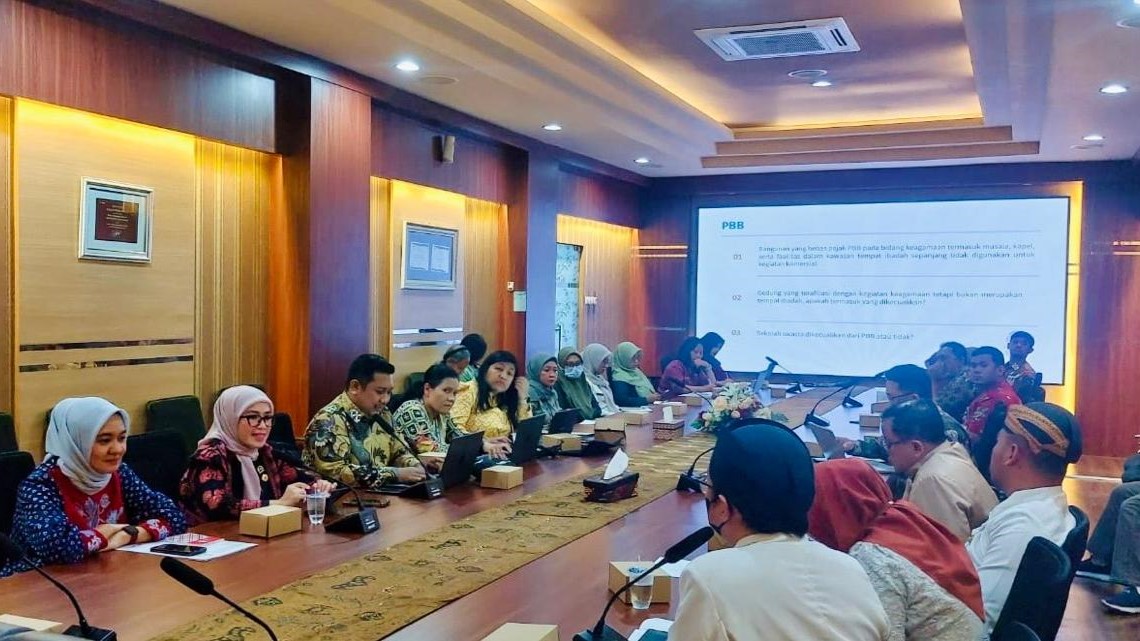
Jakarta, dpd.go.id – Agita Nurfianti, a member of Committee III of the House of the Regional Representatives of the Republic of Indonesia (DPD RI) for the Electoral District of West Java, conveyed several strategic concerns during the Working Meeting of Committee III of the DPD RI with BPJS Kesehatan on Tuesday (14/4) at the DPD RI Office in Senayan, Central Jakarta. This meeting was held to inventory the supervisory materials for the implementation of Law Number 11 of 2009 concerning Social Welfare, particularly regarding the implementation of the integration of the National Single Social and Economic Data (DTSEN).
At the forum, Agita highlighted the issue of healthcare services for BPJS Kesehatan (Social Security Agency) members whose memberships have been deactivated but are in the process of being reactivated. She noted that this issue is a serious concern, particularly in West Java, which faces a high number of deactivated participants and challenges in financing National Health Insurance (JKN) premiums by local governments.
"Based on the results of the previous recess visit, the hospital is not allowed to refuse patients with deactivated BPJS who are in the process of reactivating their insurance. So, does this apply to all patients with certain types of illnesses, or only catastrophic ones?" Agita asked.
She added that the high shortage of the West Java Regional Government's JKN contribution budget and the large number of inactive participants have the potential to concern for hospitals in accepting patients who are waiting for the membership reactivation process.
"Given the significant shortfall in the West Java Regional Government's JKN contribution budget and the high number of inactive participants in West Java, could this be a concern for hospitals accepting patients in the reactivation phase? Public health must also be prioritized," she stressed.
Responding to this, the President Director of BPJS Kesehatan, Prihati Pujowaskito, emphasized that increasing active participation remains a national challenge that requires collaboration between all stakeholders.
"It's our shared challenge to work together to increase the number of inactive BPJS Kesehatan participants. So, that's part of our future challenge: increasing active participants. The target in the RPJMN is 83.5 percent. Reaching even one percent is indeed difficult. But once again, this is our responsibility. We ask for your support in increasing active participants. This is part of protecting our people," Prihati explained.
He also emphasized the importance of a shared understanding across the healthcare ecosystem that the implementation of JKN is oriented towards meeting the needs of the community through quality and targeted services.
"The entire ecosystem, all stakeholders, must understand that we are implementing this program solely to meet a need. Quality services are needed for the people. Therefore, this quality service is tailored to what is needed, not what is desired. This can sometimes create a gap, leading to miscommunication in the field," he added.
Agita emphasized that oversight of the implementation of the National Socioeconomic Single Data (DTSEN) integration must ensure that no vulnerable population loses access to health services due to administrative issues or data synchronization. She stated that the state must be present to ensure the continuity of health services, especially for those most in need.
Serious Attention to BPJS Membership Deactivation
For information, on that occasion, Committee III of the DPD RI paid serious attention to the process of deactivating BPJS Health membership for the Contribution Assistance Recipient (PBI) group.
"The shutdown has caused unrest and panic, especially for people with chronic illnesses who require immediate and continuous healthcare services that cannot be interrupted. Suddenly, when they need healthcare, they are turned away by hospitals," said Filep Wamafma, Chairperson of Committee III of DPD RI.
According to him, the deactivation of the National Health Insurance (JKN) PBI participant status is an implication of the implementation of the DTSEN policy for social security administration. This is in accordance with Presidential Instruction No. 4 of 2025 concerning DTSEN.
BPJS Kesehatan President Director Prihati Pujowaskito revealed data showing a continued increase in the number of inactive participants from 2024 to 2026.
"The most impacted regions, West Java, Central Java, and East Java, recorded the highest number of inactive participants. This situation poses a serious challenge to the sustainability of the National Health Insurance (JKN) program because it impacts the stability of national premium revenue," he explained.
Prihati also stated that it is implementing a reactivation strategy by shifting membership to other segments.
"We're transferring participants to the Regional Government Non-Wage Workers (PBPU). We're advocating with the regional government regarding potential PBPU participant data sourced from inactive PBI health insurance," Prihati explained.
AGENDA KEGIATAN
DEWAN PERWAKILAN DAERAH REPUBLIK INDONESIA