Informasi Seputar Kegiatan di DPD RI
AGENDA KEGIATAN
DEWAN PERWAKILAN DAERAH REPUBLIK INDONESIA
01 March 2026 oleh admin
Yogyakarta, dpd.go.id - International law must not be subject to geopolitical interests. When law loses its authority, all that remains is the politics of power. If the logic of weapons overrides the logic of diplomacy, global stability collapses, and developing countries like Indonesia pay the highest price.
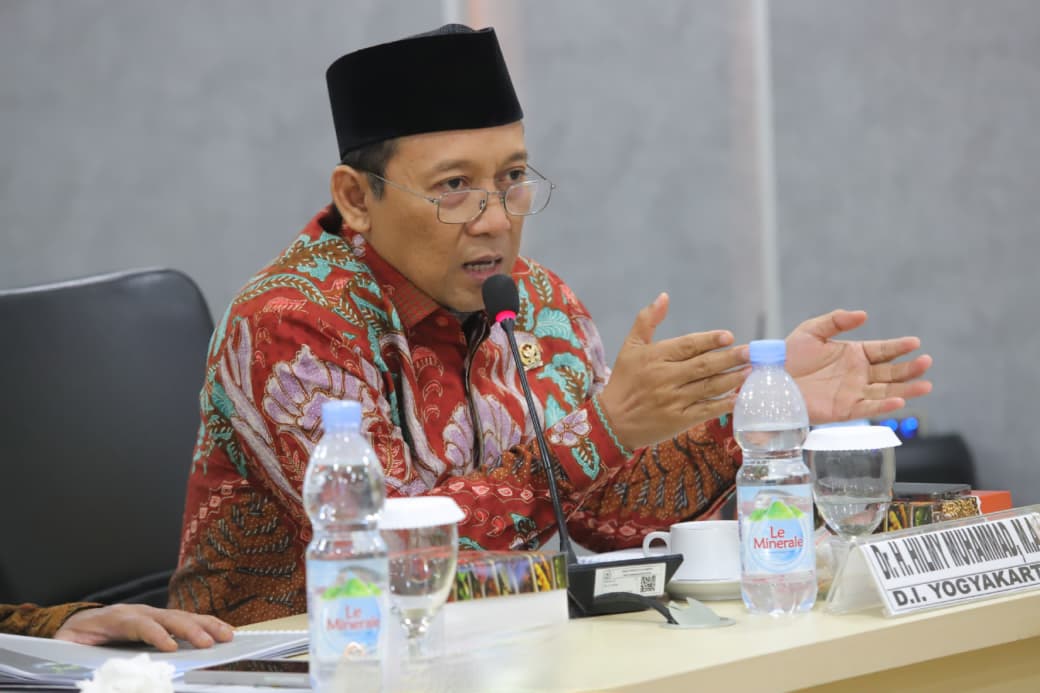
This statement was delivered by a member of The House of Regional Representatives of the Republic of Indonesia (DPD RI), Dr. H. Hilmy Muhammad, M.A., in response to the escalation of the military conflict between Iran, the United States and Israel, which continues to heat up and has the potential to spread.
He argued that the use of armed force without respect for state sovereignty only widens the cycle of violence and increases civilian casualties. Failure to negotiate should not lead to war.
"If diplomacy fails and is replaced by military action, the world is moving backward. Security doesn't come from bombs, but from agreements that respect sovereignty," the Senator from Yogyakarta emphasized in a written statement on Sunday (1/3).
Gus Hilmy, as he's familiarly known, believes this conflict isn't a regional issue. The Middle East is a strategic global energy route. If escalation disrupts oil distribution, energy prices will spike. The impact will be felt in inflation, subsidy burdens, and pressure on developing countries' budgets.
The Secretary of the Nahdlatul Ulama Executive Board (PBNU) also highlighted the role of the United Nations (UN). He argued that if there are allegations of violations of the UN Charter, international mechanisms must be implemented consistently, without discrimination, even if the country is a major donor.
"The UN shouldn't just condemn. As a global institution, it has sanctions instruments. The Security Council can issue resolutions calling for a ceasefire, arms embargoes, economic restrictions, and, if necessary, bring violations to international legal mechanisms. If these measures are applied only to weak states and not to strong ones, the UN loses its moral legitimacy. This means the UN must have the courage to impose sanctions on the United States if it is proven to have violated the UN Charter," he said.
As the member of Committee II of DPD RI, he emphasized that the Security Council's deadlock due to the veto power should not be an excuse for neglect. If the veto continues to hamper justice, global structural reform is urgently needed.
On the other hand, President Prabowo Subianto is being urged to be more active, not just offering dialogue. Furthermore, his position is considered inappropriate given Indonesia's close ties with the United States and its membership in the Board of Peace (BoP) established by United States President Donald Trump. However, as an active member of the UN and involved in international peace initiatives, President Prabowo can leverage his close ties for diplomatic missions.
"Indonesia cannot simply offer itself as a mediator. The question is, do we have the courage to take a firm stance when international law is violated by a powerful nation? Meanwhile, the BoP itself is no longer applicable with the attack on Iran. We hope Mr. Prabowo will use diplomatic closeness to de-escalate, not simply maintain relations," he stressed.
According to Gus Hilmy, President Prabowo's diplomacy must produce strategic impact, not just economic gains. He recalled that President Sukarno once fostered non-aligned solidarity amidst superpower rivalry. Indonesia was respected at the time for consistently defending the interests of nations lacking substantial military power.
"We want to see the results of Mr. Prabowo's presidential trips around the world, also resulting in world peace, not just opening up investment for Indonesia while the world is moving towards open conflict. We hope Mr. Prabowo's diplomacy will have an impact, especially for the third world, so that they are protected from the harsh battles between the superpowers. This spirit is perhaps what President Sukarno once carried out, amidst the turmoil of the harsh situation between America and its allies, and the Soviet Union and its cronies. So his interests were not only for Indonesia. That is what made President Sukarno respected by the powerless countries that later formed the non-aligned forces," explained the caretaker of the Krapyak Islamic Boarding School in Yogyakarta himself.
This conflict, according to Gus Hilmy, poses a serious test for the global order. If global institutions fail to respond fairly and consistently, the world will need collective strength to push for even more urgent reform of international institutions.
"The world must not be allowed to run on the logic of war. If law is defeated by geopolitical interests, what will prevail is not peace, but global uncertainty," concluded Gus Hilmy.
AGENDA KEGIATAN
DEWAN PERWAKILAN DAERAH REPUBLIK INDONESIA