Informasi Seputar Kegiatan di DPD RI
AGENDA KEGIATAN
DEWAN PERWAKILAN DAERAH REPUBLIK INDONESIA
15 October 2026 oleh admin
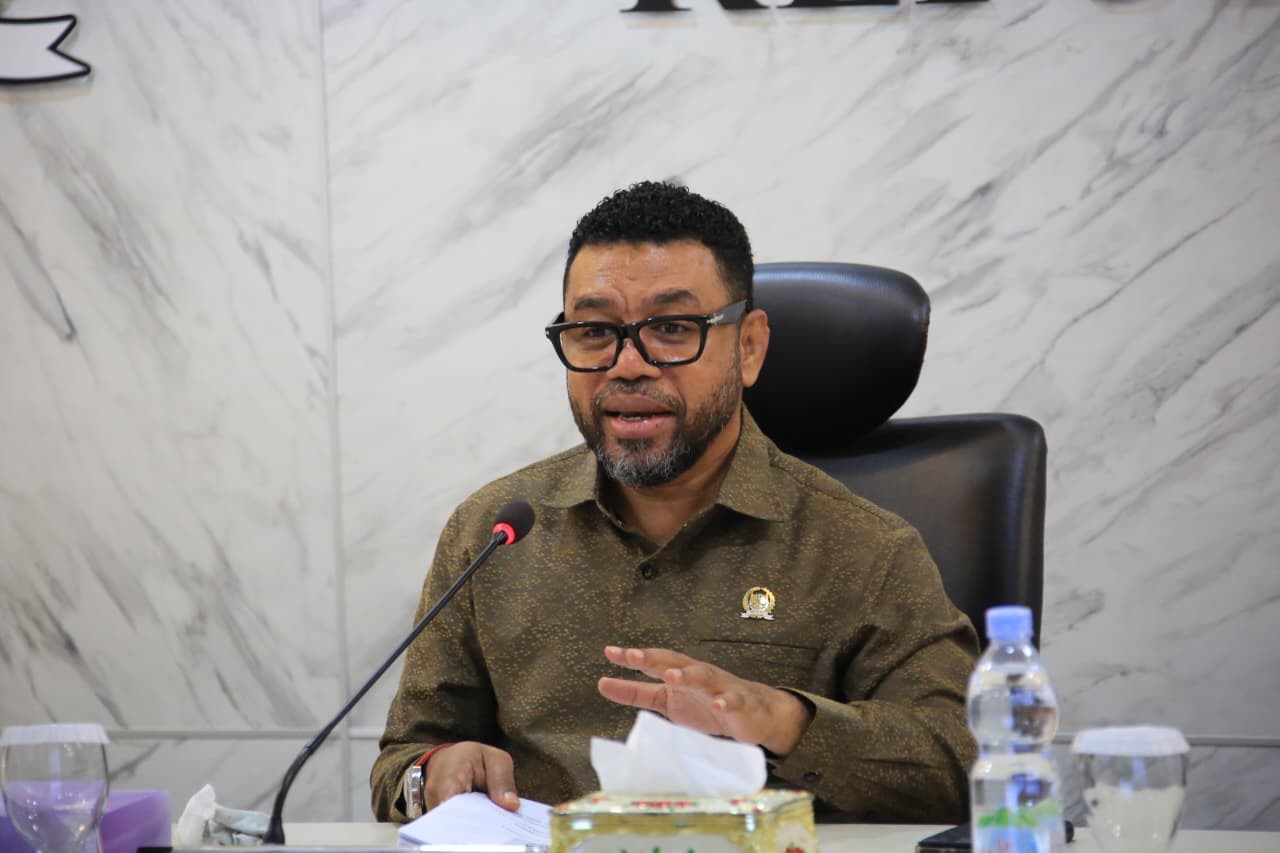
West Papua, dpd.go.id – West Papua Senator and Chairperson of Committee III of the DPD RI, Dr. Filep Wamafma, S.H., M.Hum., C.L.A., expressed his appreciation to the Ministry of Health of the Republic of Indonesia for responding to regional aspirations through the 2026 National Priority Healthcare Worker Higher Education Affirmative Funding Assistance Program.
Filep assessed that the affirmative action policy for healthcare education is a strategic step toward addressing fundamental issues in regional health development—particularly the shortage and uneven distribution of healthcare workers, as well as the difficulties faced by communities in remote areas in accessing adequate healthcare services. “Regional aspirations championed must lead to concrete policies. Affirmative education is a vital instrument to broaden opportunities for local youth to pursue health education while strengthening public health services. We appreciate and welcome this program,” Filep stated on Thursday (10/15/2026).
Filep emphasized that infrastructure development must be supported by a balanced development of healthcare human resources. The availability of competent healthcare personnel and their equitable deployment are critical issues that must be addressed earnestly.
Based on regional development planning documents containing health data, in 2024 only 19.2 percent of community health centers (puskesmas) in West Papua had all nine standard types of healthcare personnel. These nine categories include general practitioners, dentists, nurses, midwives, public health workers, environmental sanitation officers, medical laboratory technicians, nutritionists, and pharmacy personnel.
Meanwhile, data from the West Papua Provincial Health Office published by the Papua Steering Committee in 2025 revealed that out of 80 puskesmas listed, 11 lacked general practitioners and 57 lacked dentists. The same data highlighted that several regencies continue to face disparities in fulfilling healthcare staffing requirements.
Affirmative Education as a Long-Term Solution to Health Issues
Filep noted that the affirmative education program for healthcare workers can be directed toward building regional human resource capacity in a sustainable manner. “The shortage and inequitable distribution of healthcare personnel require policy commitment. Affirmative education must serve as a pathway to open opportunities for local youth to attain higher education and contribute to improving public health services,” he added.
According to Filep, the affirmative action policy needs to account for the specific healthcare staffing needs of each regency, including requirements for general practitioners, dentists, medical specialists, nursing staff, midwives, nutritionists, laboratory technicians, and other health personnel. “However, it should be noted that educational assistance alone is not enough. The government must also ensure career opportunities through healthcare staffing demand planning, support during studies, as well as placement and retention policies in accordance with applicable regulations. Remote areas and regions with limited transportation access require a tailored approach. Incentives, official housing availability, service facilities, and guarantees of job safety and comfort must form part of the strategy for equitable healthcare worker distribution,” explained the Senator nicknamed Pace Jas Merah.
Health Insurance Coverage Must Be Matched with Adequate Service Availability
Furthermore, according to the Chairman of Committee III of the DPD RI overseing healthcare affairs, beyond human resource issues, another major challenge is ensuring that the public can actually access healthcare services.
For instance, the Papua Barat Sehat (Healthy West Papua) program recorded an active participation rate of 98.68 percent as of September 1, 2026, leaving a remaining quota of approximately 16,910 individuals that still needs to be optimized through data verification and updating. “Active enrollment does not automatically guarantee that the public will receive easy and prompt care if health centers lack personnel, medicine is unavailable, or patients must travel long distances to receive treatment. Therefore, coordination among the Ministry of Health, provincial governments, regency governments, BPJS Kesehatan, and health service facilities must be strengthened,” he noted.
Additionally, Filep emphasized the importance of oversight in implementing government programs to ensure that benefits can be measured in real terms.
According to him, the success of the affirmative program can be measured by an increase in competent health personnel, improved placement distribution, and better public access to healthcare services.
He encouraged the Ministry of Health to transparently disclose recipient requirements, quotas, funding coverage, and selection mechanisms. “Furthermore, local governments need to proactively compile integrated data on healthcare staffing needs so that educational support truly addresses shortages on the ground,” he stated.
Filep reiterated that advocating for regional aspirations is part of institutional responsibility to ensure that national policies address the needs of communities facing geographical hurdles and limited service access. “We welcome this program and will oversee it to ensure it opens educational access for local youth and contributes to resolving existing challenges by delivering competent, evenly distributed healthcare workers ready to serve communities even in the most remote areas,” he concluded.***
AGENDA KEGIATAN
DEWAN PERWAKILAN DAERAH REPUBLIK INDONESIA