Informasi Seputar Kegiatan di DPD RI
AGENDA KEGIATAN
DEWAN PERWAKILAN DAERAH REPUBLIK INDONESIA
17 April 2026 oleh admin
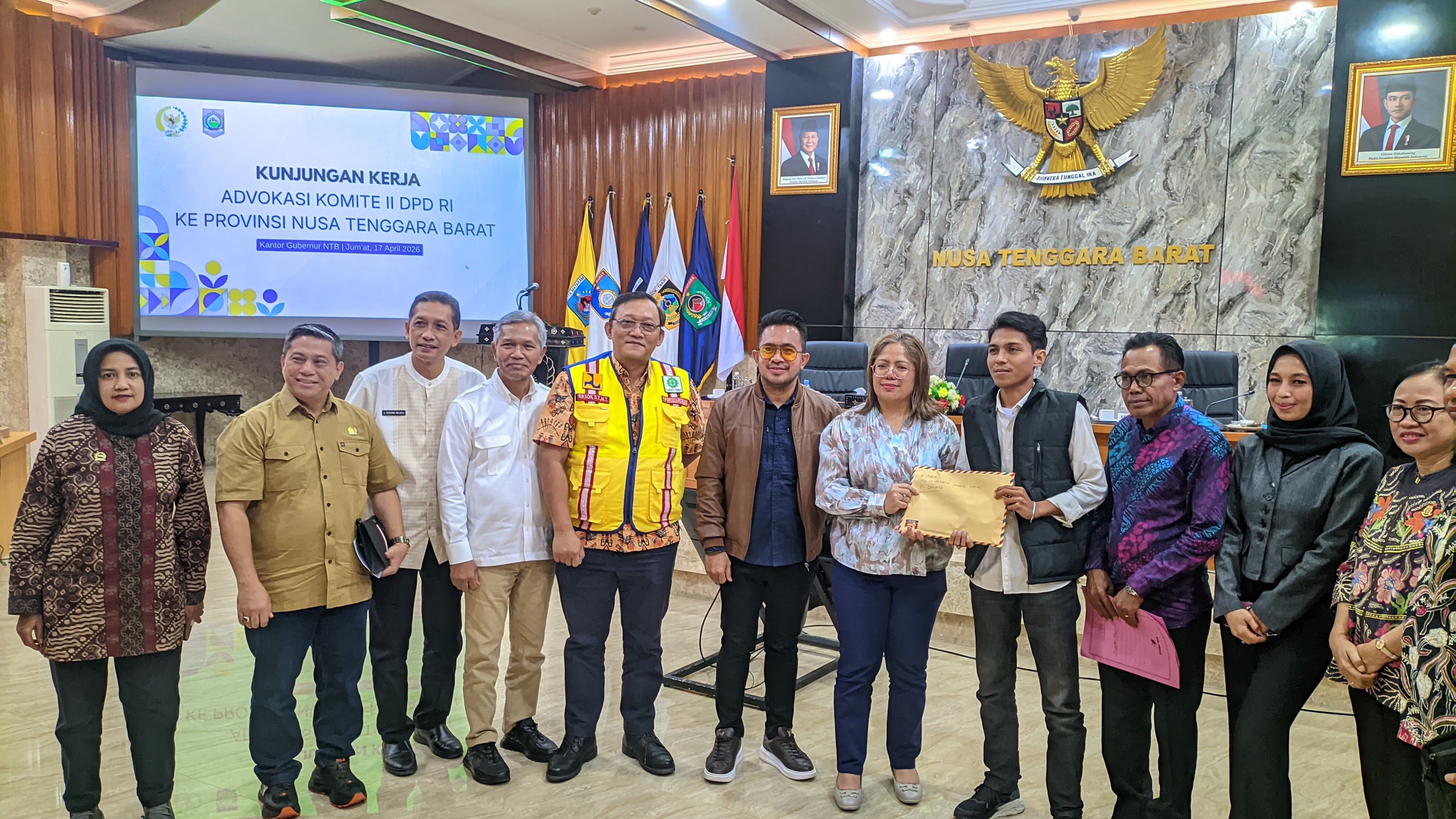
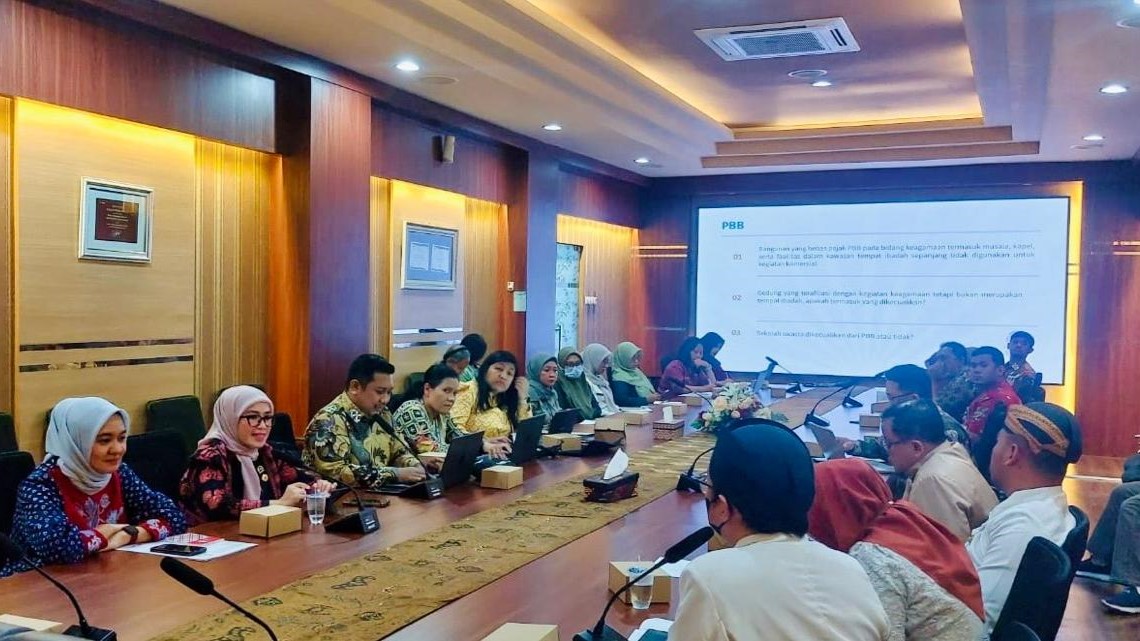
Mataram, dpd.go.id – Committee II of the House of Regional Representatives of the Republic of Indonesia (DPD RI) conducted a working visit to Mataram, West Nusa Tenggara (NTB), to examine the acceleration of regional road infrastructure repairs. The focus was specifically on the Waduruka–Pusu–Kerampi–Sarae Ruma route, where current conditions have directly impacted community mobility and access to basic services.
In a meeting with the regional government, vertical agencies, and relevant stakeholders, Committee II noted that road damage in the South Langgudu region is no longer just an infrastructure issue; it has evolved into a serious barrier to economic activity, goods distribution, and access to healthcare and education. This stretch of over 30 km serves at least four villages with a total population of approximately 6,233 people, most of whom rely on the agriculture, fisheries, and plantation sectors.
Mirah Midadan Fahmid, a Committee II member representing West Nusa Tenggara, emphasized that regional roads are the backbone of community mobility. "The majority of the road networks that determine the daily activities of the people fall under regional authority. In the context of NTB as an archipelagic province, connectivity is not merely an addition but a basic necessity for equitable development," she stated.
She added that the 2026 Regional Road Presidential Instruction Program (IJD) presents a strategic opportunity to accelerate repairs on this route. The program, which refers to Presidential Instruction (Inpres) No. 11 of 2025, focuses on strengthening connectivity in productive areas and logistics distribution, with funding sourced from both the National Budget (APBN) and Regional Budgets (APBD).
Furthermore, the Chairperson of Committee II, Badikenita Putri Br. Sitepu, asserted that this oversight is part of the DPD RI’s constitutional mandate to ensure that national policies are implemented effectively at the regional level and provide real benefits to the community. “We see that the condition of this road has become a bottleneck, hindering access to basic services and potentially disrupting national priority programs. Therefore, concrete and integrated steps are required so that repairs can be expedited,” she said.
The Committee also noted that various public complaints have been submitted through formal channels but have yet to yield concrete solutions on the ground. In fact, the dilapidated road conditions were reported to have led to tragic incidents, including the death of a toddler during a medical referral due to transportation delays.
From the local government’s perspective, fiscal limitations remain a primary challenge. The Regional Development Planning Agency (Bappeda) of Bima Regency stated that the Regional Budget (APBD) capacity is extremely limited, with the majority of the budget absorbed by operational spending. In recent years, allocations for road infrastructure have continued to decline, leading to a decrease in the overall road stability rate in the region.
Committee II of the DPD RI also stressed the importance of cross-sector synergy, including coordination between the local government, relevant ministries, and security forces, to ensure that planning, budgeting, and construction can proceed effectively and sustainably.
As a follow-up, Committee II is committed to monitoring the proposal for this road repair to ensure it is included in national priorities, including coordination with the Ministry of Public Works and cross-institutional support. Additionally, the Committee encouraged the local government to speed up the completion of all required documentation so that the proposal reaches optimal readiness.
Committee II of the DPD RI emphasized that infrastructure development is not only about physical connectivity but also concerns safety, access to basic services, and public welfare. Therefore, accelerating the repair of this road is a vital part of making the state’s presence felt by the community, especially in areas still facing limited access. The working visit was also attended by the Vice Chairperson of Committee II, La Ode Umar Bonte (Southeast Sulawesi), and Committee II member Yulianus Henock Sumual (East Kalimantan). (*)
AGENDA KEGIATAN
DEWAN PERWAKILAN DAERAH REPUBLIK INDONESIA